CARICOM Leadership Crisis Contines: Dr. Drew’s Chairmanship Faces Continued Backlash this time Over Venezuela Quake Response. Muted Response again Exposes a Troubling Leadership Void
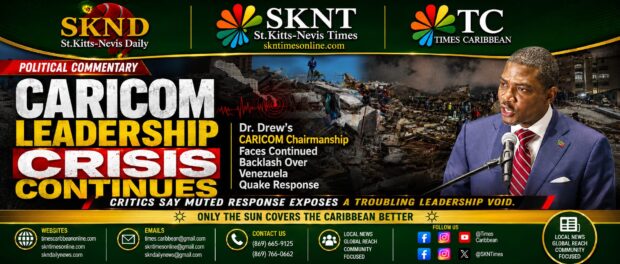
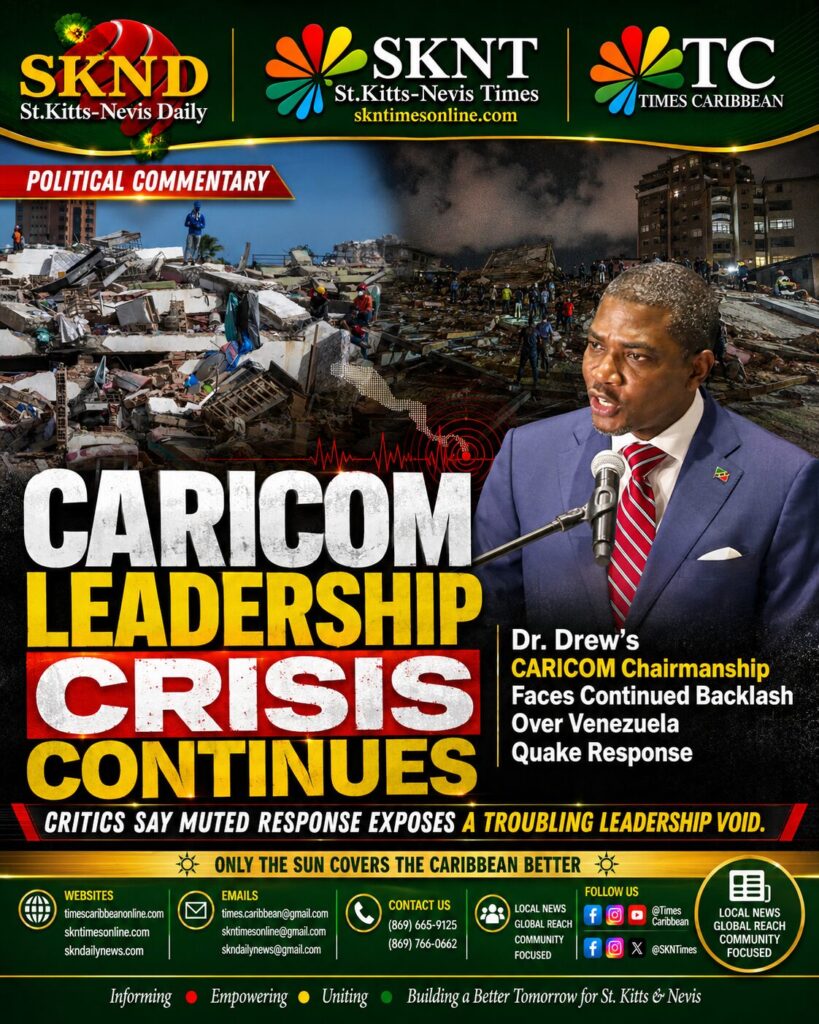
BASSETERRE, St. Kitts, June 30, 2026 — As Venezuela reels from the heartbreaking devastation of powerful back-to-back earthquakes, CARICOM Chairman and St. Kitts and Nevis Prime Minister Dr. Terrance Drew is facing renewed scrutiny over what critics describe as a weak, low-visibility regional response at one of the most painful moments for a Caribbean neighbour.
The earthquakes, which struck Venezuela on June 24, have left the country facing a deep humanitarian crisis. International reports indicate that more than 1,700 lives have been lost, thousands more have been injured, and hospitals are under severe pressure as emergency responders continue to confront damaged infrastructure, displaced families, and urgent medical needs.
CARICOM did issue an official message on June 25 expressing condolences, solidarity with the people of Venezuela, support for first responders, and prayers for the injured and displaced. Dr. Drew was also reported by WINN FM as saying that St. Kitts and Nevis had contacted Venezuela, extended condolences, and stood ready to assist where possible.
But for critics, that is precisely the point: in a disaster of this scale, they argue that a short institutional message and limited reported comments are not enough from the sitting Chairman of CARICOM.
At a time when Venezuela — a country with longstanding historical, diplomatic, cultural, and economic connections to the Caribbean — is facing one of its most devastating natural disasters in modern memory, observers say the region expected more visible leadership, more urgency, and a stronger public mobilization from the CARICOM Chair.
Dr. Drew’s tenure as CARICOM Chairman officially runs from January 1 to June 30, 2026, placing this crisis squarely in the final hours of his chairmanship. Instead of ending with a commanding show of regional unity, critics say his term is closing under a heavy cloud of questions about coordination, communication, and crisis leadership.
The concern being raised is not simply whether CARICOM posted a statement. The concern is whether the Chairman of the Community used the full weight of his office to rally Member States, activate humanitarian coordination, appeal publicly for assistance, and demonstrate that CARICOM is capable of swift, compassionate leadership when a neighbouring nation is in distress.
For months, Dr. Drew’s CARICOM chairmanship has been the subject of sharp political debate. Supporters have pointed to regional meetings, diplomatic engagements, and policy discussions as evidence of activity. Detractors, however, have described the period as controversial, uneven, and lacking the forceful regional leadership expected during a time of serious geopolitical, economic, and humanitarian challenges.
Now, the Venezuela earthquakes have added a final and deeply emotional test.
In moments of tragedy, leadership is measured not only by statements issued, but by presence, urgency, coordination, and moral clarity. Critics argue that the region needed to see the CARICOM Chairman at the front — not in the background — calling for a regional humanitarian response, encouraging medical and emergency support, and making clear that the Caribbean stands with Venezuela in action as well as words.
Venezuela’s crisis is not distant from the Caribbean. The country sits on the southern edge of the region’s consciousness and has played a major role in Caribbean energy, diplomacy, migration, and regional politics. For many Caribbean families, Venezuela is not a foreign headline; it is a place of relatives, workers, students, traders, and shared history.
That is why the muted nature of the public response has stirred concern.
With hospitals reportedly strained, health facilities damaged, and displaced citizens exposed to growing risks, according to international health reporting, this is the kind of moment that calls for regional coordination at the highest level.
Critics say a stronger CARICOM response could have included a direct televised statement from the Chairman, a special appeal to Member States, a public humanitarian coordination mechanism, engagement with regional disaster agencies, and a clear update on what assistance CARICOM countries are prepared to provide.
Instead, they argue, the region has seen another example of what they describe as a chairmanship that too often appeared reactive rather than commanding.
As Dr. Drew prepares to hand over the CARICOM chairmanship, the Venezuela disaster may become one of the defining final images of his term: a regional neighbour in distress, a Community expressing sympathy, but critics questioning whether the Chairman delivered the scale of leadership the moment demanded.
For the people of Venezuela, the immediate priority remains rescue, recovery, medical care, shelter, and rebuilding. For CARICOM, the question is larger and unavoidable: when disaster strikes close to home, will the Caribbean Community be a voice of ceremonial sympathy, or a force of organized regional action?
As the Drew chairmanship comes to an end, that question may be the most powerful indictment of all.
















Leave a comment
You must be logged in to post a comment.