U.S. VISA SHOCKER: Grenada Hit With New American Visa Bond Rule as Washington Tightens Entry Gate

TIMES CARIBBEAN | SPECIAL REPORT
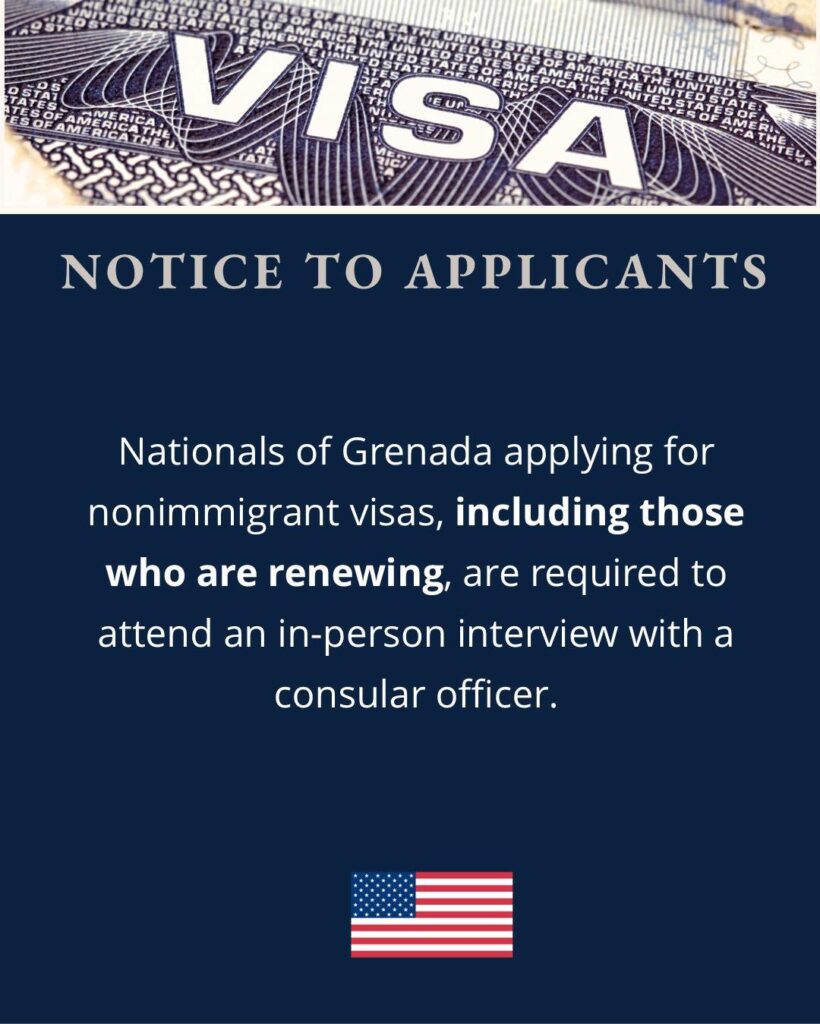
ST. GEORGE’S, GRENADA / WASHINGTON, D.C., April 29, 2026 — In a major diplomatic and travel development with potentially far-reaching implications for Grenadians at home and abroad, the United States Department of State has officially identified Grenada as one of the countries whose nationals may now be subject to U.S. visa bond requirements, effective April 2, 2026.
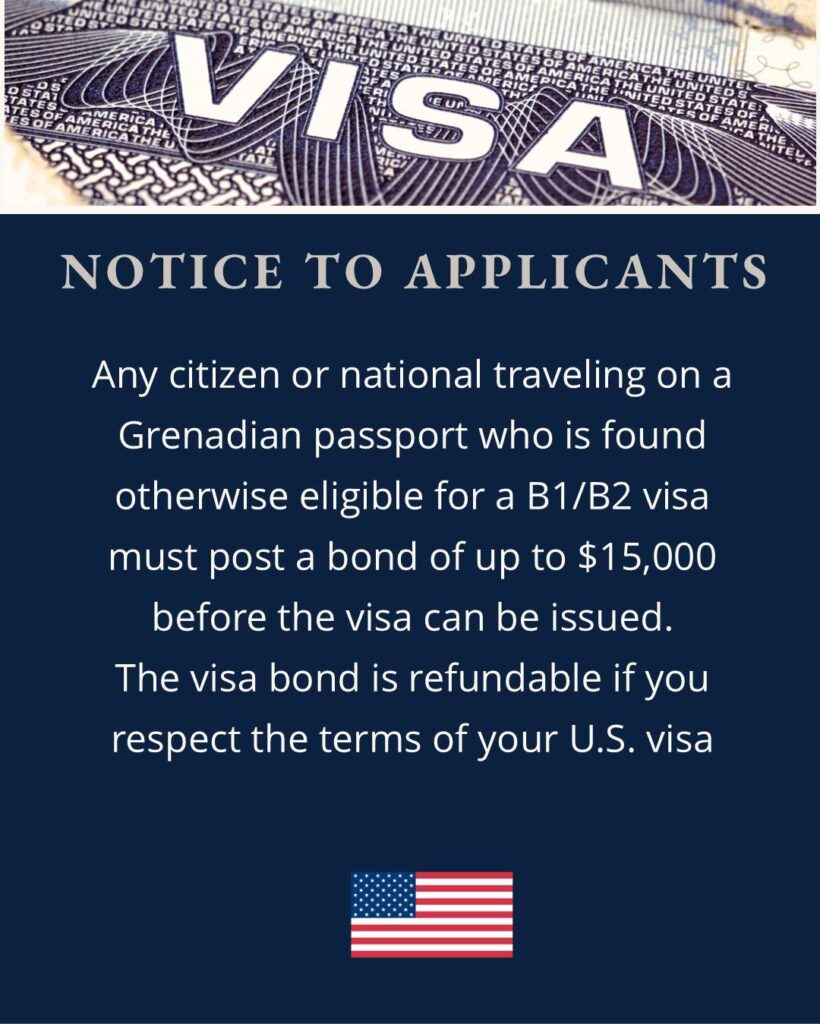
The decision places Grenada among a growing list of nations whose citizens applying for certain B1/B2 visitor visas—used for tourism, family visits, and business travel—could be required to post a refundable financial bond of up to US$15,000 before a visa is issued.
For many across the Caribbean, the move has landed like a thunderclap.


Why Grenada? The Deeper Question
The U.S. government says the visa bond pilot programme is aimed at reducing visa overstays and ensuring travelers comply with the conditions of their visas. Officials have pointed to high compliance rates among those already subjected to bonds, claiming nearly 97% of participants did not overstay.
But Grenada’s inclusion raises a politically sensitive question:
What data or risk indicators led Washington to place one of CARICOM’s most stable democracies under this category?
Grenada is globally known for tourism, education, diplomacy, and its Citizenship by Investment (CBI) programme—not mass irregular migration. Yet now its passport holders may face an additional layer of scrutiny and cost.
How the Programme Works
Under the State Department framework:
- Some otherwise eligible applicants are interviewed first.
- If selected, they may be instructed to pay a bond of US$5,000, US$10,000 or US$15,000.
- Payment is made after the interview using official U.S. government instructions.
- If the traveler obeys visa rules and departs on time, the bond may be refunded.
- If terms are violated, the money can be forfeited.
This means approval no longer depends only on documents and interview outcomes for some applicants—but potentially also on access to substantial funds.
Economic Impact: A Hidden Barrier
For ordinary Grenadians, the issue may be less about legality and more about affordability.
A refundable bond sounds technical. In reality, it can function as a major financial barrier:
- Families visiting relatives in the U.S.
- Students attending short academic programmes
- Entrepreneurs exploring trade opportunities
- Patients seeking medical consultations
- Tourists traveling for weddings or funerals
Many may simply be unable to tie up thousands of U.S. dollars for weeks or months.
Critics say such policies create a two-tier visa system: one for those with liquidity, another for those without.
Caribbean Optics Matter
Grenada’s addition also carries symbolic weight in the Caribbean.
At a time when Washington says it wants stronger hemispheric partnerships, improved Caribbean security cooperation, and deeper economic ties, imposing bond requirements on small island allies could be interpreted by many as a message of distrust.
That perception matters.
Diplomacy is not only about policy—it is also about tone.
CBI Programmes Under Renewed Spotlight?
Some immigration analysts believe countries with active Citizenship by Investment programmes may face increased scrutiny globally, especially where passport acquisition pathways are viewed internationally as needing tighter oversight.
Grenada operates one of the region’s most respected CBI programmes, but broader geopolitical pressure on investment migration systems has intensified in recent years.
Whether that influenced this U.S. decision remains officially unstated.
What Grenadians Should Know Now
The key point is this: not every Grenadian applicant will automatically pay a bond.
The rule applies to certain applicants selected under the programme, with decisions made case-by-case by consular officers.
Still, the uncertainty alone may discourage applications and complicate travel planning.
Regional Questions Ahead
Will other CARICOM states face future additions?
Could regional governments collectively seek clarification from Washington?
Will visa overstay data be publicly explained?
And how should small states respond when mobility for their citizens becomes increasingly conditional?
Those questions are now live.
Bottom Line
Grenada’s inclusion in the U.S. visa bond programme is more than an immigration update—it is a geopolitical signal, an economic hurdle, and a reminder that in today’s world, even friendly nations can wake up to find new barriers at the border.
For many Grenadians, the dream of a simple trip to America may now come with a new phrase attached:
Security deposit required.

















Leave a comment
You must be logged in to post a comment.