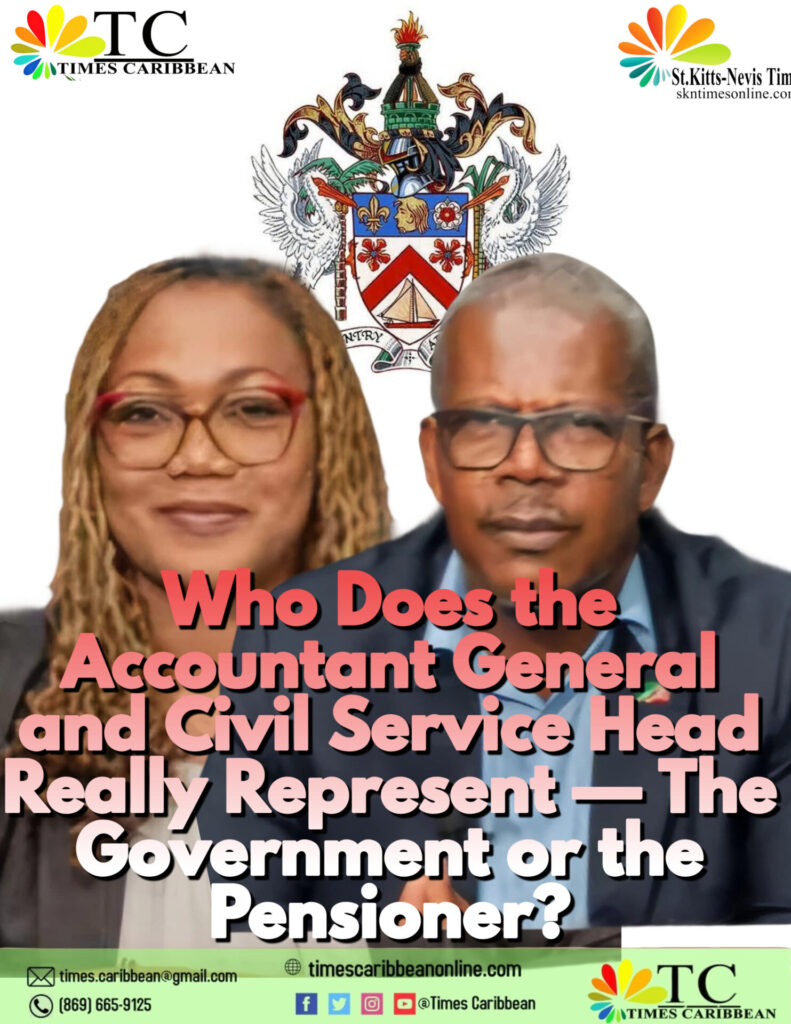
Commentary: Who Does the Accountant General Really Represent — The Government or the Pensioner?

By Senior Civil Servant,
In a move that raises urgent questions about governance and legal compliance, the Government has made the Accountant General—its own financial gatekeeper—the custodian of the national pension fund, and the very person who determines what is paid out to pensioners. On its face, this may appear efficient, but beneath that surface lies a dangerous and legally questionable concentration of power.
The Accountant General is not an independent entity. He works for the Government. He is, without doubt, the Government’s representative. Yet he is now being asked to perform a dual role: on one hand, safeguarding a pension fund meant for retired public servants, and on the other, enforcing Government policy on how pensions are administered and paid. This is a textbook case of conflict of interest.
Most alarmingly, the Government has not appointed any independent trustees—a fundamental and legal requirement for any legitimate pension scheme. Under proper pension governance models, trustees are meant to act exclusively in the interest of the beneficiaries, ensuring that the fund is managed with transparency, accountability, and in accordance with fiduciary standards.
If there’s ever a dispute between the Government and a pensioner—about eligibility, payout amounts, or withheld benefits—who does the Accountant General represent?
Can someone paid and appointed by the Government truly act in the best interests of pensioners who are making claims against that same Government?
To underscore the legal obligations involved, refer to the Insurance Act, specifically Part VIII, Sections 186 to 197 of the Revised Laws of St. Kitts and Nevis (2017). These sections clearly set out the governance structure required for pension and retirement schemes, including the mandatory appointment of independent trustees, the separation of roles, and the fiduciary responsibilities owed to contributors and beneficiaries.
Here is the relevant legal reference:
Insurance Act – Part VIII, Sections 186 to 197
Until this serious governance flaw is addressed—through the proper appointment of independent trustees and clear separation of powers—the current arrangement cannot be seen as legally sound or ethically fair. The appearance (and reality) of the system serving the Government first, and the pensioner second is not just troubling—it’s unacceptable.
















Leave a comment
You must be logged in to post a comment.