CARIBBEAN TENSION AT SEA RISES-U.S. Sends Giant Carrier Strike Force Near Venezuela—Regional Security at Breaking Point
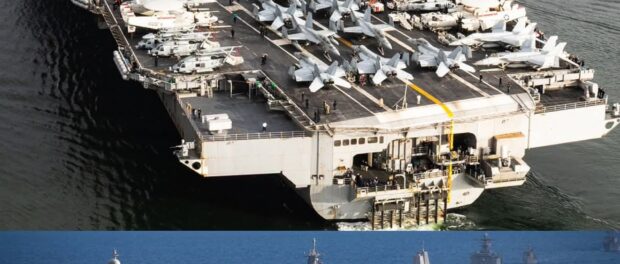
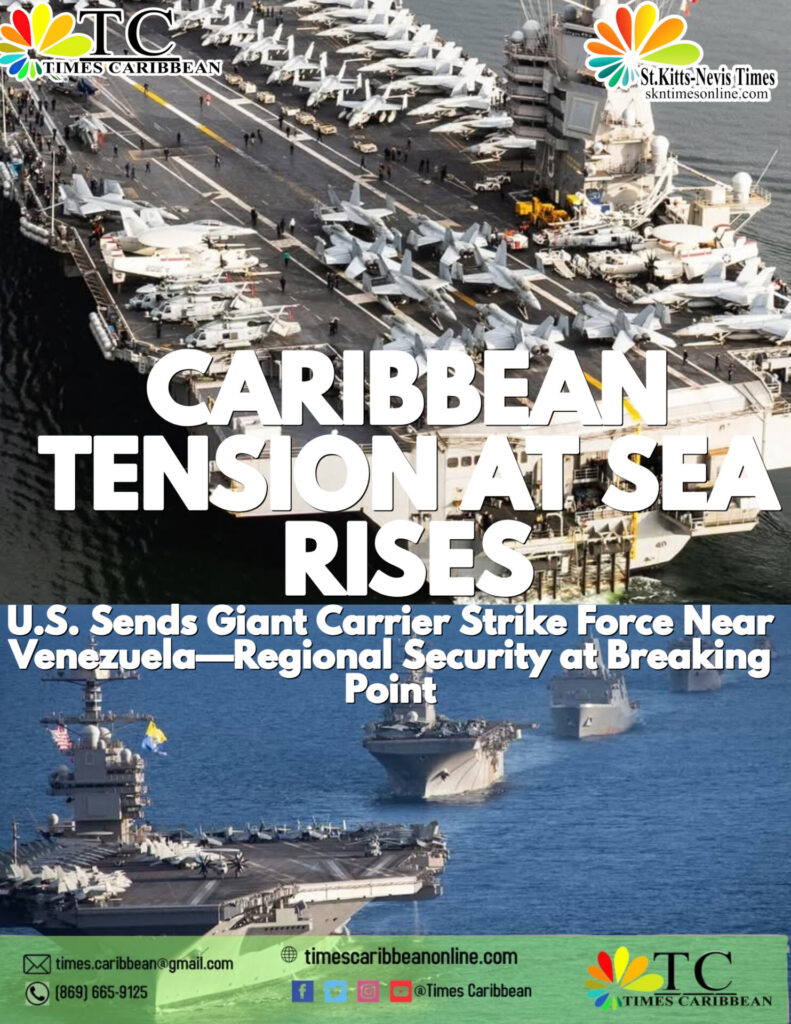
In a watershed moment raising alarm bells across the Caribbean and Latin America, the USS Gerald R. Ford (CVN‑78) aircraft carrier strike group—described as the “largest carrier warship on the planet”—has been deployed by the Donald Trump administration to waters near Venezuela in what officials insist is a campaign against drug-smuggling and “narco-terrorism”, but regional analysts warn may amount to a de facto show of force against the government of Nicolás Maduro.
The Ford group—supported by multiple destroyers, advanced F-35 fighter jets and global surveillance assets—has been ordered to the United States Southern Command area of responsibility, which covers the Caribbean Sea and Latin America. According to Pentagon briefings, the deployment is designed to “bolster U.S. capacity to detect, monitor, and disrupt illicit actors” in the Western Hemisphere.
Why This Matters for the Islands
For small-island states like those of the Caribbean Sea, including our own federation, the implications are profound:
- A major military escalation in the region puts marine and island nation security on high alert, potentially dragging even non-belligerents into crisis.
- The stated objective of counter-narcotics is complicated by simultaneous signals aimed at regime pressure in Venezuela, which raises sovereignty, legality and stability questions.
- Islands traditionally reliant on tourism, shipping lanes and maritime safety could now face disruptions, increased militarisation of nearby waters, and collateral risk from operations of this scale.
A Hidden Agenda?
While Washington frames the campaign as “fighting narco-terror”, multiple analysts argue that the hardware and posture suggest a much broader ambition—one that extends beyond busting drug-boats and may well involve pressure, if not overthrow, of Maduro’s government.
The scale is staggering: The Ford and its strike group are being deployed amid a string of U.S. naval and air operations which have already killed dozens of alleged “trafficking vessels” around the Caribbean Sea since early September.
What Happens Next?
- With such a formidable force deployed, the margin for error is slim. A miscalculation—whether a collision at sea, an intercepted vessel, or a stray strike—could escalate quickly.
- The Caribbean island nations must now navigate carefully: aligning with U.S. counter-narcotics goals may bring support, but siding or being caught amid a Venezuela-U.S. confrontation risks unintended consequences.
- Transparent diplomacy and regional coordination under CARICOM will be crucial to preserving sovereignty and stability in this volatile period.
Final Assessment
The deployment of the Gerald R. Ford strike group is more than a counter-drug operation—it is a signal of power, a potential pivot point for hemispheric geopolitics, and a test for small states in the Caribbean. As U.S. warships loom in the region, island-state leaders must assess whether their waters will become battlefields in someone else’s war.
















Leave a comment
You must be logged in to post a comment.