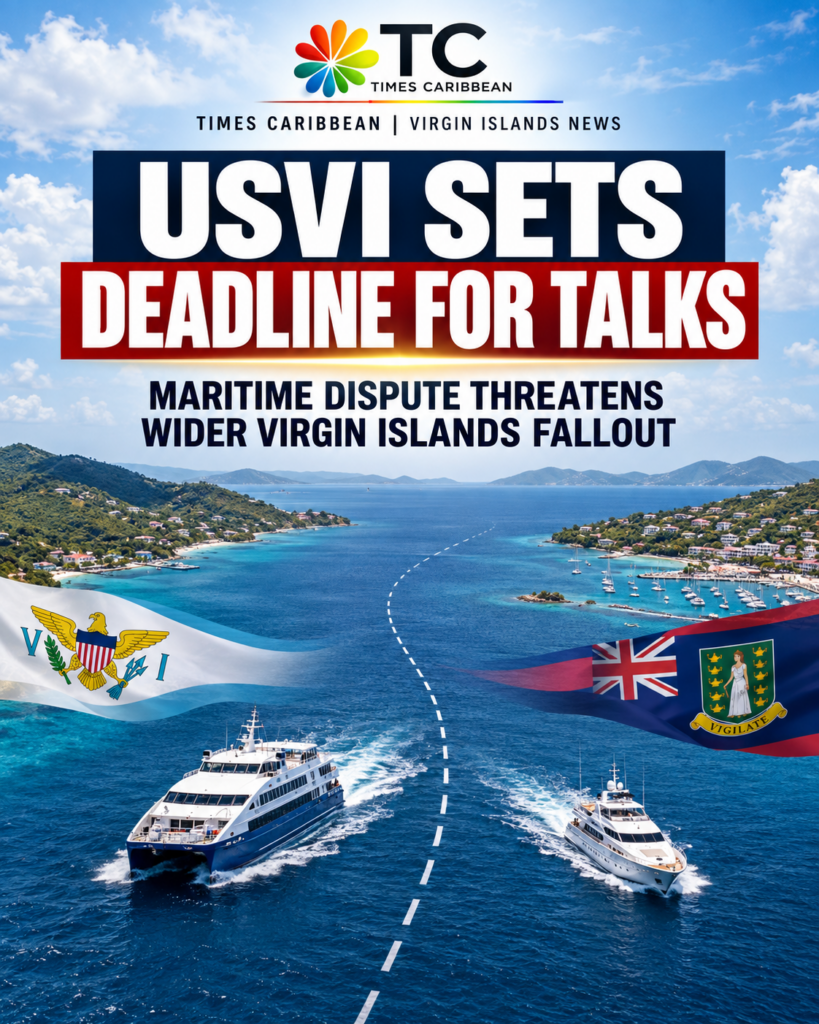
USVI SETS DEADLINE FOR TALKS AS MARITIME DISPUTE THREATENS WIDER VIRGIN ISLANDS FALLOUT

ST. THOMAS, U.S. VIRGIN ISLANDS — Tensions between the United States Virgin Islands and British Virgin Islands are reportedly approaching a decisive stage, with BVI Premier Dr. Natalio Wheatley being pressed to commit to high-level talks aimed at resolving the escalating charter-vessel dispute.
According to reports, the USVI has requested a response by September 25, 2026, regarding a proposed summit during the week of October 12. The talks would reportedly involve USVI officials, BVI representatives and relevant United States federal agencies.
At the centre of the dispute are the BVI’s commercial recreational vessel licensing fees, entry limits and regulatory requirements affecting foreign-based charter operators.
The USVI Government maintains that the cumulative cost and complexity of the BVI system are placing St. Thomas and St. John operators at a competitive disadvantage. The BVI has previously defended its regulatory framework as part of efforts to modernise and protect its maritime sector.
In April 2025, both governments publicly reported agreement on approximately 95 percent of the proposed framework. The BVI’s published fee structure included annual charges of up to $24,000 for unlimited entries by some foreign-based term-charter vessels.
But the relationship has since deteriorated.
USVI Governor Albert Bryan Jr. has called for a written work plan, firm implementation deadlines and interim protection for affected businesses. The Bryan administration has also indicated that, if the matter remains unresolved, federal agencies could independently examine maritime safety, customs, immigration, transportation, trade and border-security issues.
That is where the possible consequences become much bigger than luxury yachts.
Ferry passengers could feel it first
Stricter customs, immigration and maritime-safety inspections could produce longer processing times for commercial ferries entering St. Thomas and St. John from the BVI.
Any slowdown could affect residents, workers and visitors who regularly move between the two territories. Red Hook and Cruz Bay could become major pressure points.
No federal agency has publicly announced a blanket crackdown on BVI ferries. However, more rigid enforcement within existing law remains possible if the diplomatic dispute worsens.
Island-hopping tourism faces uncertainty
Day trips between the USVI and popular BVI destinations are an important part of the wider Virgin Islands tourism product.
Higher BVI licensing charges, combined with longer clearance procedures on the American side, could make some excursions more expensive or operationally difficult. That could affect boat operators, taxi drivers, restaurants, beach businesses and tourism workers on both sides of the channel.
The USVI and BVI are separate jurisdictions. Economically, however, their maritime tourism industries are deeply connected.
Cargo and consumer prices could come under pressure
The BVI depends on regional shipping and commercial connections through St. Thomas for a range of food, merchandise and construction supplies.
There has been no confirmed announcement of new United States cargo tariffs against the BVI. Still, industry stakeholders may be concerned that tougher inspections, administrative delays or additional compliance costs could eventually raise transportation expenses.
Those costs rarely remain at the dock. They can reach supermarket shelves and construction sites.
Reciprocal charter arrangements at risk
In 2022, the two governments announced a reciprocal regulatory programme designed to recognise vessel licensing and inspections across both territories, subject to customs, entry-fee and Coast Guard requirements.
If that cooperation breaks down, BVI water taxis and charter vessels could face more demanding United States licensing and inspection procedures. USVI operators could encounter similar difficulties when entering BVI waters.
Visa-free access raises deeper concern
BVI nationals residing in the territory currently benefit from a specific federal exemption under 8 CFR §212.1(b), allowing qualifying residents to visit the USVI without a visa.
Any change to that exemption would require action by the appropriate United States federal authorities. No formal revocation has been announced.
Still, the possibility carries significant public concern because family, employment, medical, educational and commercial ties connect the two territories. If the exemption were removed, BVI residents requiring visitor visas could face additional expense and travel for consular processing.
Foreign yacht guests also face stricter scrutiny
International visitors arriving aboard private or charter vessels must satisfy applicable United States immigration requirements. An ESTA is not itself a visa, and private carriers transporting Visa Waiver Program passengers must meet federal signatory-carrier requirements.
Passengers should therefore confirm their documentation directly with CBP before travelling. Penalties or refusal of admission may arise where legal entry requirements are not met, but individual cases depend on nationality, documentation, carrier status and other circumstances.
For both governments, the message is now clear: this is no longer only a disagreement over charter-boat fees.
It is a test of whether two closely connected Virgin Islands jurisdictions can protect their individual economic interests without disrupting the families, workers, businesses and visitors who depend on moving freely between them.
TIMES CARIBBEAN | VIRGIN ISLANDS NEWS
















Leave a comment
You must be logged in to post a comment.