SENEGAL TIGHTENS LGBTQ+ LAWS: President Faye Signs Sweeping Legislation Doubling Prison Terms — Rights Debate Intensifies Across Africa
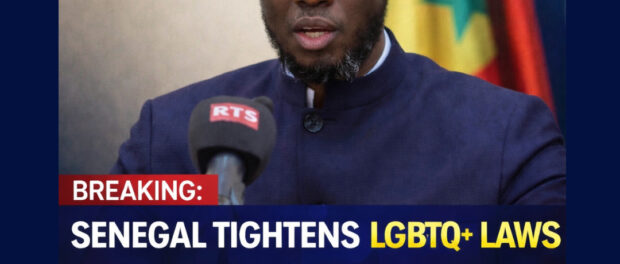
In a move sending shockwaves through global human rights circles while galvanizing strong domestic backing, has signed into law a controversial bill that dramatically tightens Senegal’s stance on same-sex relations, doubling prison terms and expanding criminal liability to include what authorities define as the “promotion” of homosexuality.
The legislation, passed with overwhelming support in Senegal’s National Assembly earlier this month, fulfills a key campaign promise made by Faye and Prime Minister during their historic 2024 electoral victory.
WHAT THE NEW LAW CHANGES
The newly enacted law represents one of the most sweeping legal escalations on LGBTQ+ issues in West Africa in recent years.
Key provisions include:
- Prison sentences doubled — up to 10 years for same-sex relations
- Expanded criminal scope to include individuals accused of:
- “Promoting” homosexuality
- Providing financial or organizational support
- Significantly increased fines, raising the economic stakes alongside criminal penalties
Legal analysts say the law’s broad and ambiguous definitions could allow for wide interpretation, potentially exposing activists, civil society actors, and even private individuals to prosecution.
A POLITICAL PROMISE DELIVERED
For President and Prime Minister , the law is not merely policy — it is political fulfillment.
During the 2024 campaign, both leaders positioned themselves as defenders of:
- Cultural sovereignty
- Religious values
- National identity
Their electoral messaging resonated strongly with a large segment of Senegalese society, where conservative social norms remain deeply rooted.
By enacting the law early in their tenure, the administration signals:
- Decisiveness in governance
- Alignment with campaign pledges
- Willingness to confront international pressure
GLOBAL OUTCRY VS DOMESTIC SUPPORT
The reaction has been swift — and sharply divided.
🌍 International Response
The United Nations has emerged as one of the most vocal critics.
warned that the law:
- Undermines fundamental human rights
- Threatens privacy, dignity, and freedom of expression
- Risks legitimizing broader patterns of discrimination
Human rights organizations across Europe, North America, and Africa have echoed similar concerns, calling for reconsideration or repeal.
Domestic Sentiment
Inside , however, the picture is markedly different.
Public sentiment in many quarters supports:
- Stronger moral and legal frameworks
- Protection of traditional and religious values
- Resistance to what is often framed as external cultural imposition
For the Faye administration, this domestic backing provides a powerful political shield against international criticism.
A CONTINENTAL FLASHPOINT
Senegal’s move places it at the center of a widening African debate over LGBTQ+ rights, governance, and sovereignty.
Across the continent:
- Some countries have tightened restrictions
- Others have moved toward decriminalization or tolerance
- Many remain deeply divided
This law reinforces a broader trend where African governments increasingly assert:
The right to define social policy independent of Western influence
Yet critics argue this framing risks:
- Marginalizing vulnerable populations
- Entrenching legal discrimination
- Isolating countries diplomatically
ANALYSIS: POWER, POLITICS, AND PRINCIPLE
The decision by is as much about political consolidation as it is about social policy.
It reflects three intersecting dynamics:
1. Populist Legitimacy
Delivering on culturally resonant promises strengthens political capital among core supporters.
2. Sovereignty Narrative
Framing the law as resistance to foreign pressure reinforces national pride and independence.
3. Risk of International Fallout
Potential consequences include:
- Strained diplomatic relations
- Pressure from international organizations
- Possible impacts on aid, partnerships, and global reputation
WHAT COMES NEXT?
The passage of this law marks not an endpoint, but the beginning of a prolonged legal, political, and moral debate.
Key questions now emerge:
- Will international pressure translate into tangible consequences?
- How will enforcement of the law unfold on the ground?
- Could this trigger similar legislative moves across the region?
TIMES CARIBBEAN GLOBAL ANALYSIS
Is this a defense of cultural identity — or a dangerous rollback of human rights?
Senegal has drawn a firm line.
And in doing so, it has ignited a global conversation that goes far beyond its borders — one that touches on sovereignty, identity, power, and the evolving definition of freedom in the 21st century.
















Leave a comment
You must be logged in to post a comment.