OUTMATCHED AND OVERWHELMED: Venezuelan Defence Forces Crumble as Maduro Is Seized in Lightning Operation
Times Caribbean | Special Report
The dramatic capture of unfolded with shocking speed and finality, as Venezuela’s Defence Forces appeared powerless to mount any meaningful resistance during what security analysts are describing as a swift, overwhelming, and highly coordinated operation.
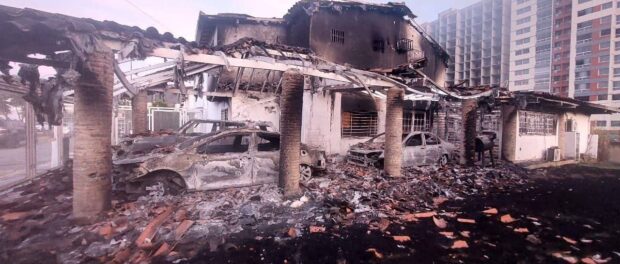
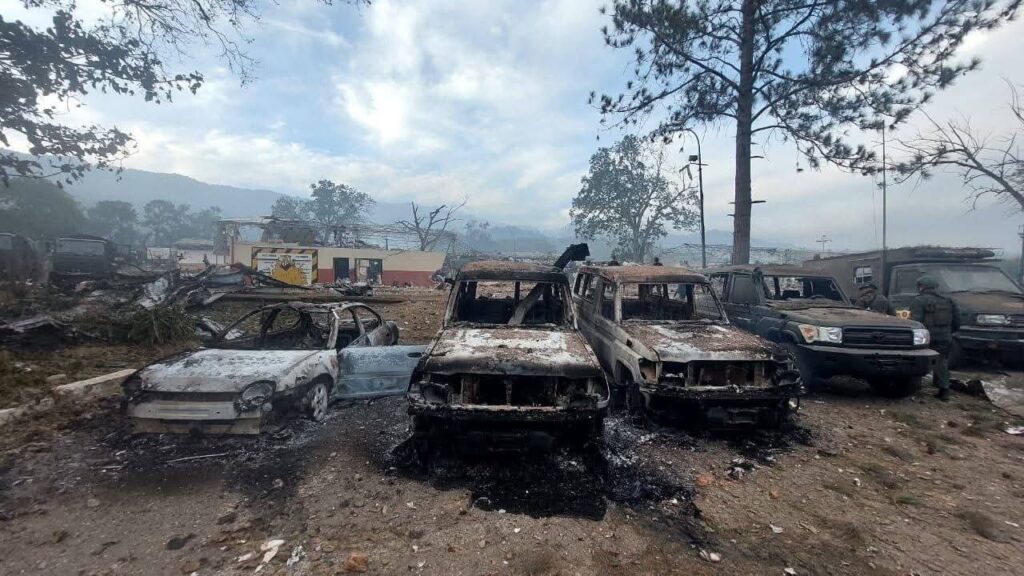
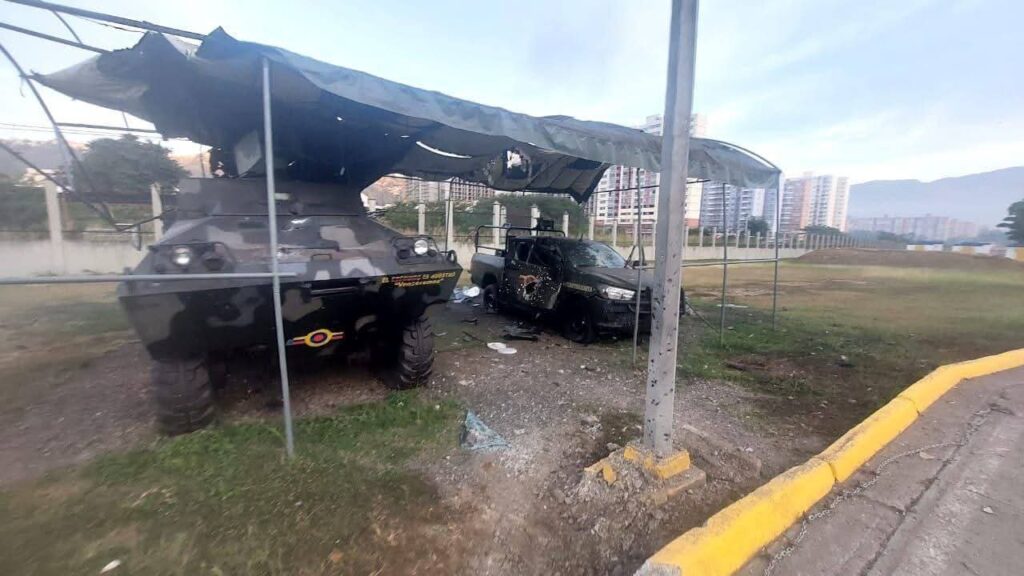
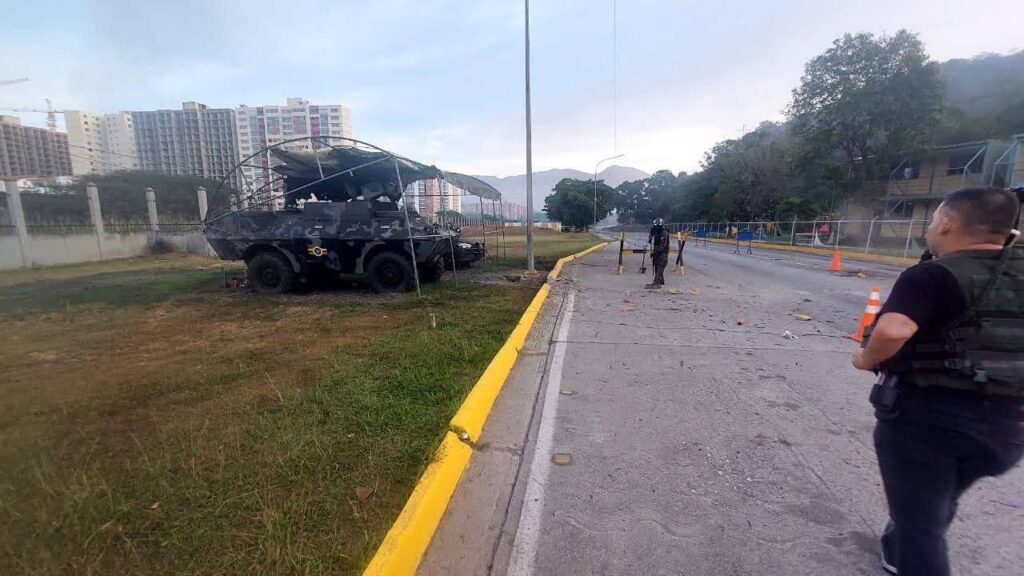
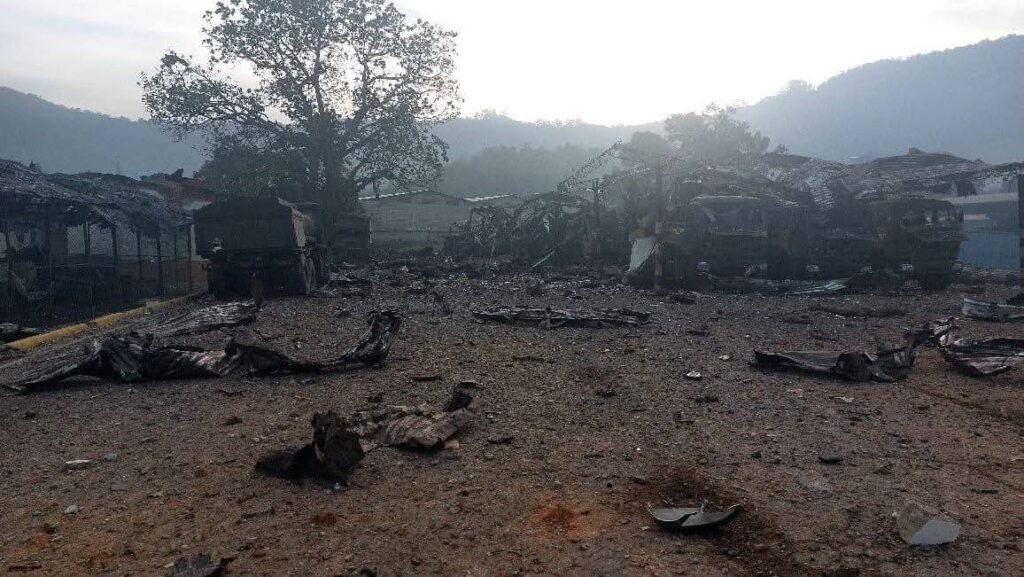
Images emerging from multiple locations show charred armored vehicles, disabled troop carriers, scorched facilities, and debris-strewn compounds—visual confirmation of a defence apparatus caught flat-footed. In several scenes, military assets lie gutted by fire, while checkpoints and garages appear abandoned or hastily overrun, underscoring the imbalance of force at play.
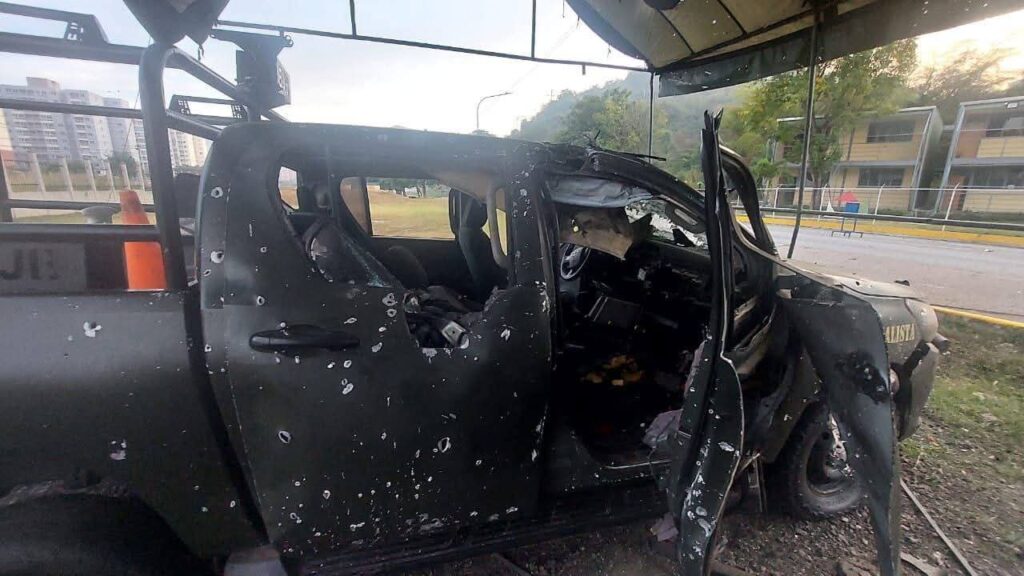
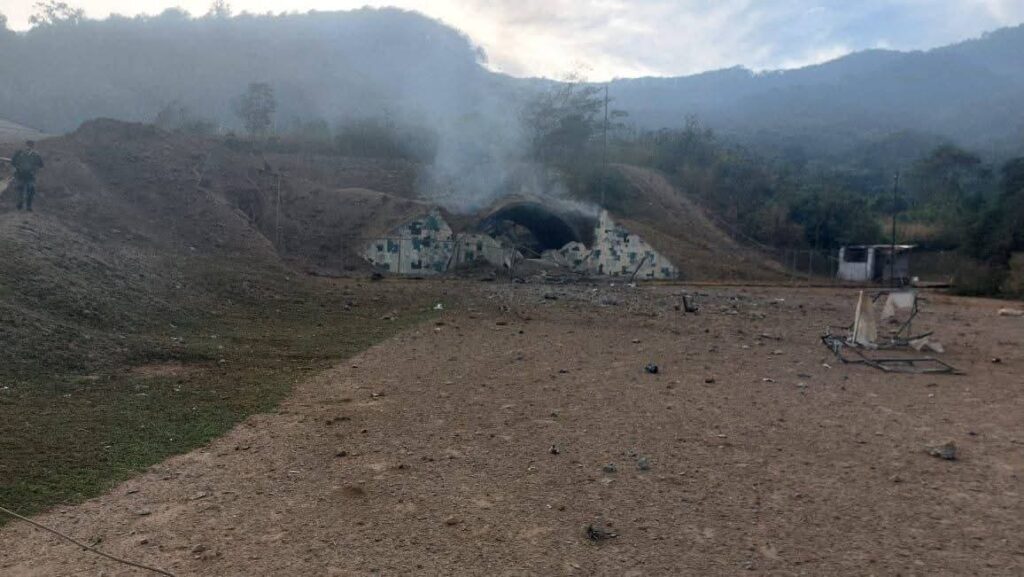
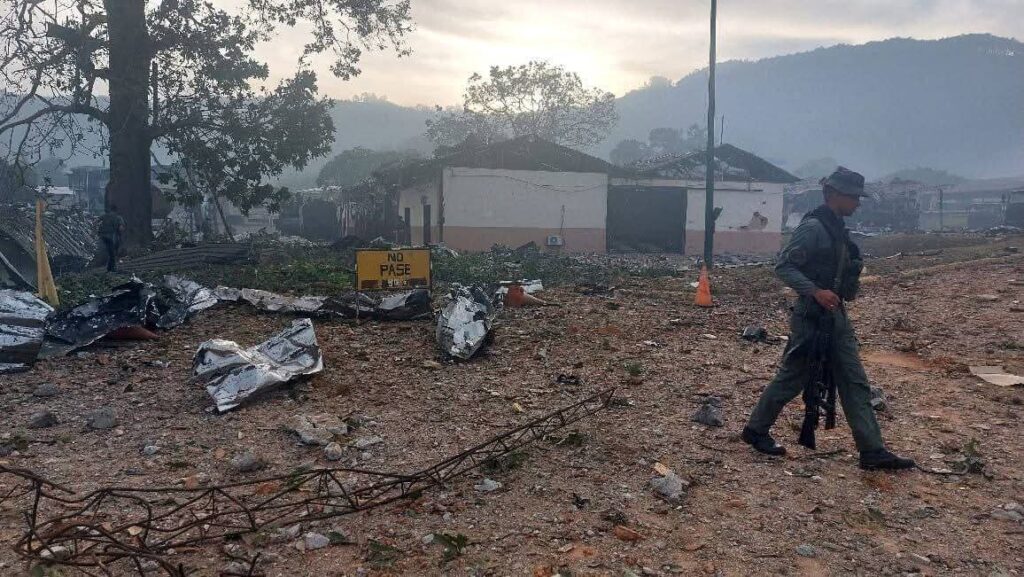
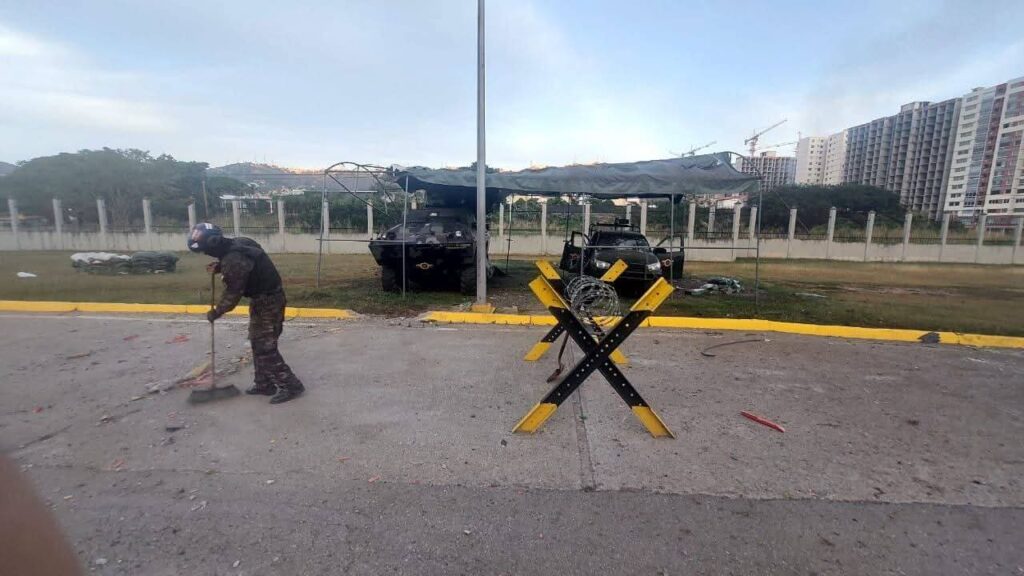
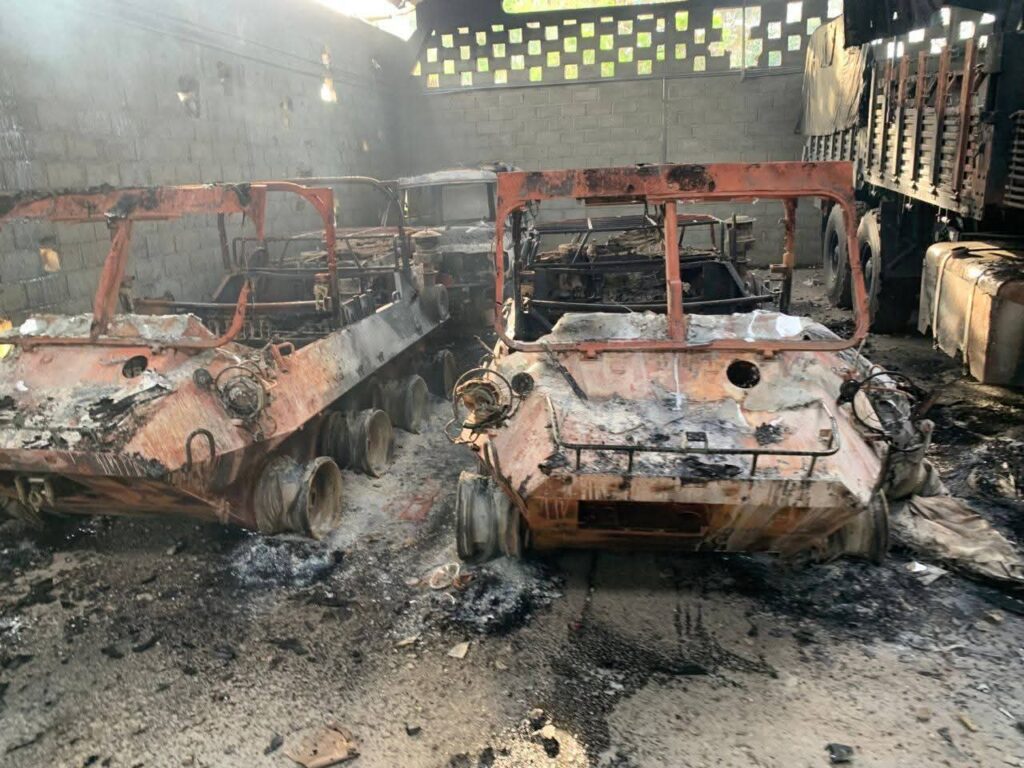
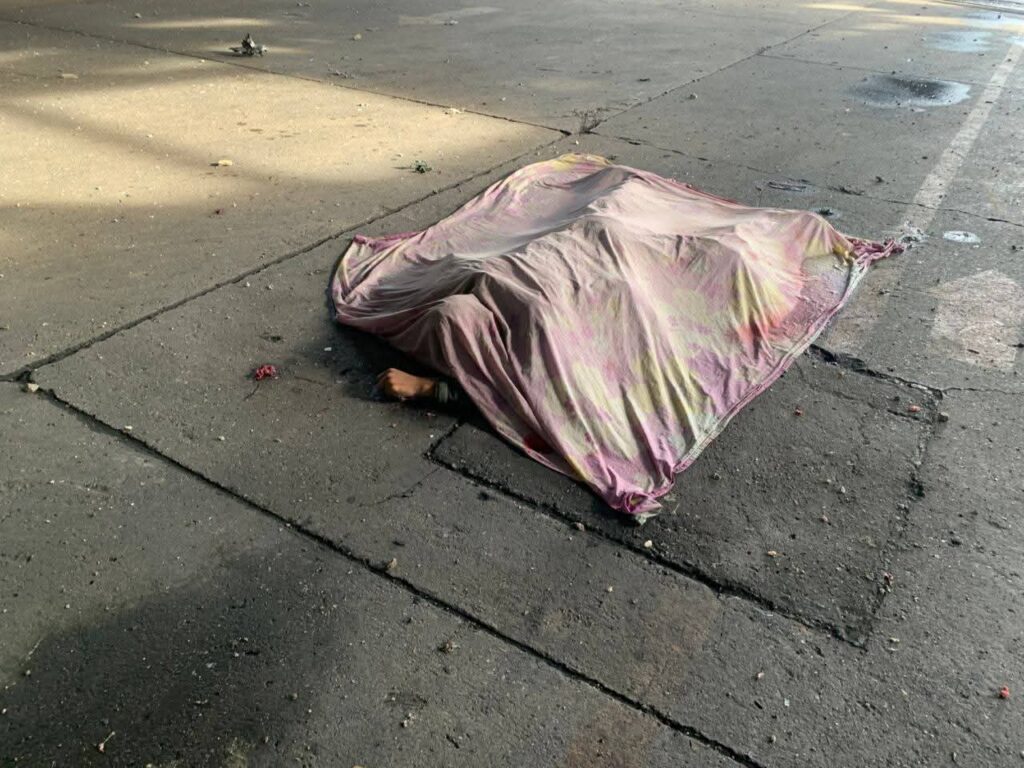
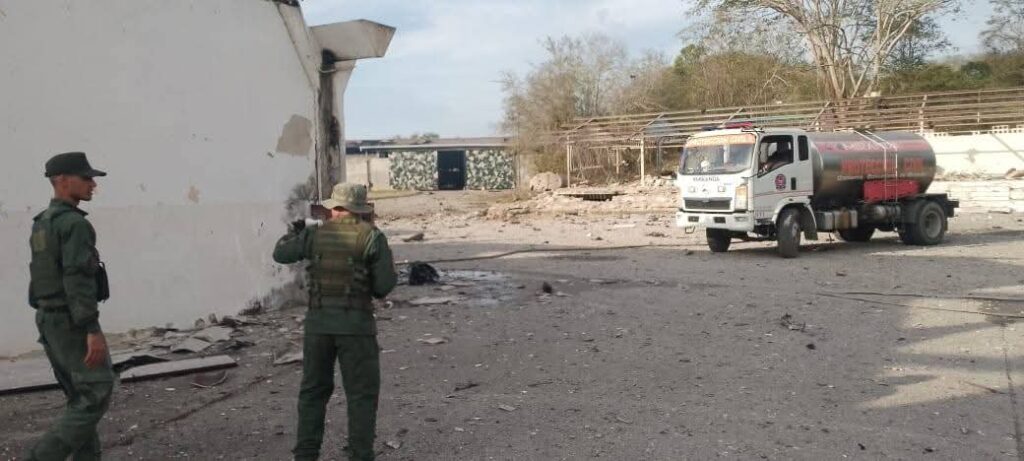
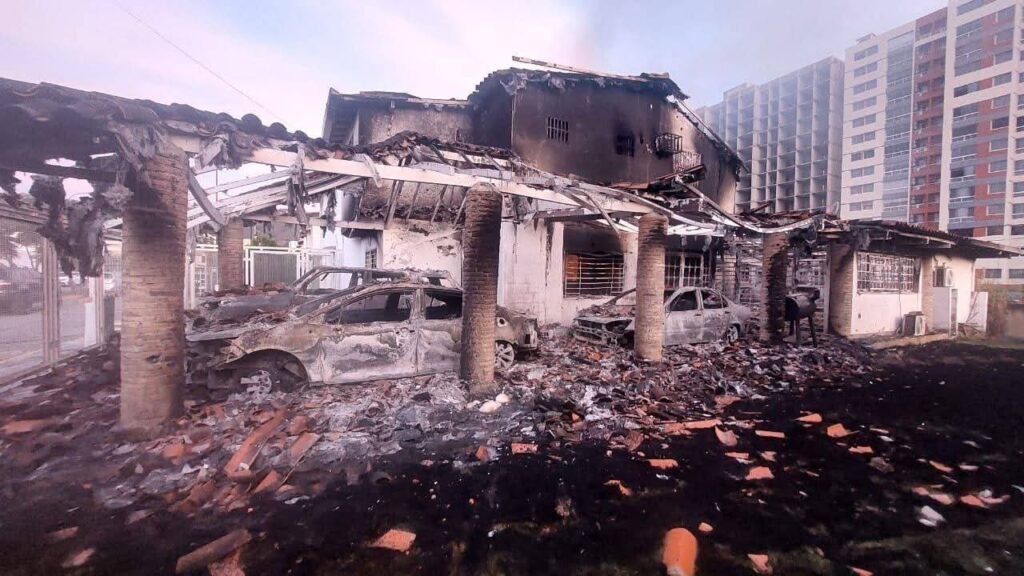
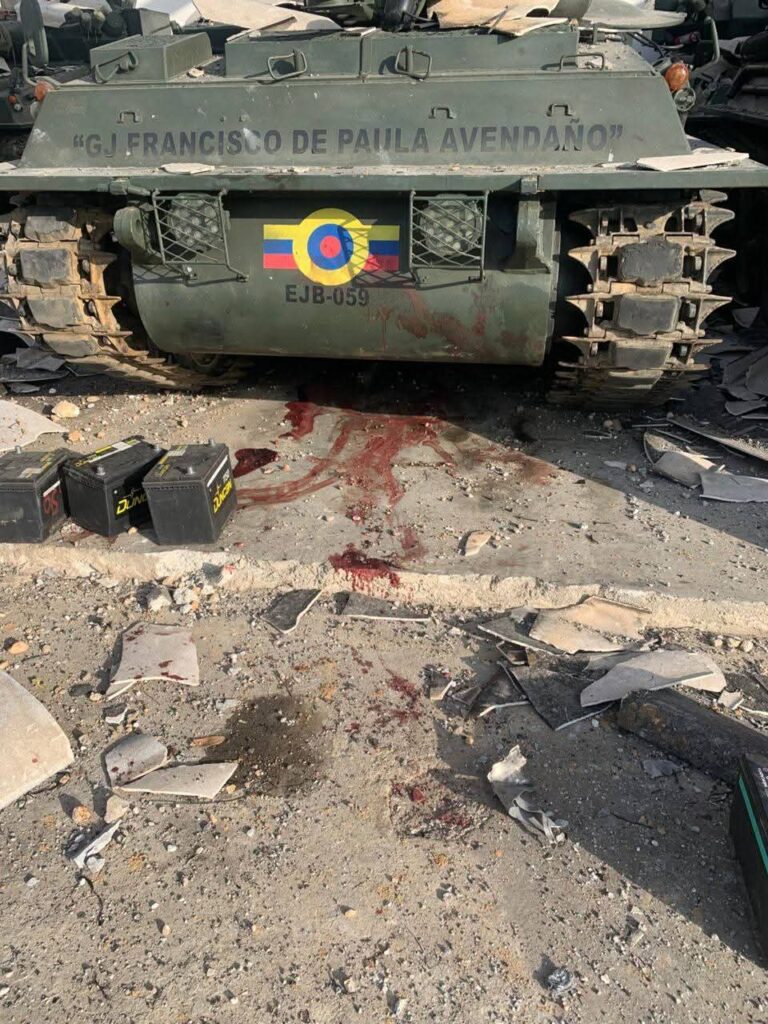
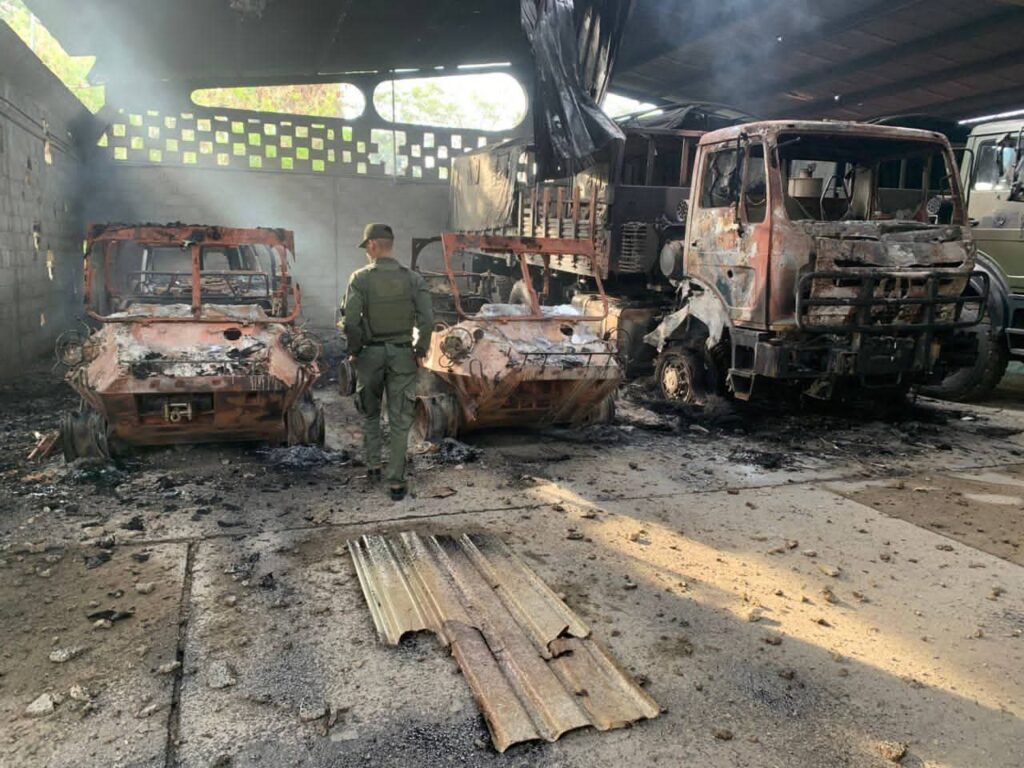
According to regional security observers, the operation exploited long-standing weaknesses inside the —including fractured command structures, low morale, aging equipment, and internal distrust. The result was a collapse that unfolded in hours, not days. No sustained counteroffensive materialized. No coherent defensive perimeter held.
One particularly stark image shows armored vehicles burned down to their frames inside what appears to be a secured compound, while another captures roadside barricades hastily erected—then rendered useless. Elsewhere, the aftermath suggests confusion rather than combat: equipment abandoned, installations disabled, and personnel conspicuously absent.
Regional military analysts say the operation bore the hallmarks of modern asymmetric dominance: precise targeting, intelligence superiority, speed, and psychological shock. “This was not a battle—it was a seizure,” one Caribbean-based security expert told Times Caribbean. “Once the first nodes fell, the rest of the system unraveled.”
Equally striking is what did not happen. There was no prolonged firefight in Caracas. No visible mass mobilization of loyalist units. No successful effort to shield or evacuate Maduro. Within a narrow window, the Venezuelan state’s coercive power—long projected as formidable—simply evaporated.
The implications are seismic. For Venezuela, it marks the abrupt end of an era defined by militarized politics and authoritarian control. For the region, it raises urgent questions about sovereignty, precedent, and security architecture in the Caribbean Basin and northern South America.
As the dust settles, one conclusion is inescapable: when the decisive moment arrived, Venezuela’s Defence Forces did not stand a chance. The capture of Nicolás Maduro was not just a political turning point—it was a stark demonstration of how swiftly power can collapse when force, legitimacy, and loyalty no longer align.
This is a developing story.
















Leave a comment
You must be logged in to post a comment.