FINCEN RESCINDS 2014 ADVISORY TARGETING ST. KITTS & NEVIS CBI — ALL PASSPORTS CITED NOW EXPIRED, A DECADE-OLD CLOUD LIFTED

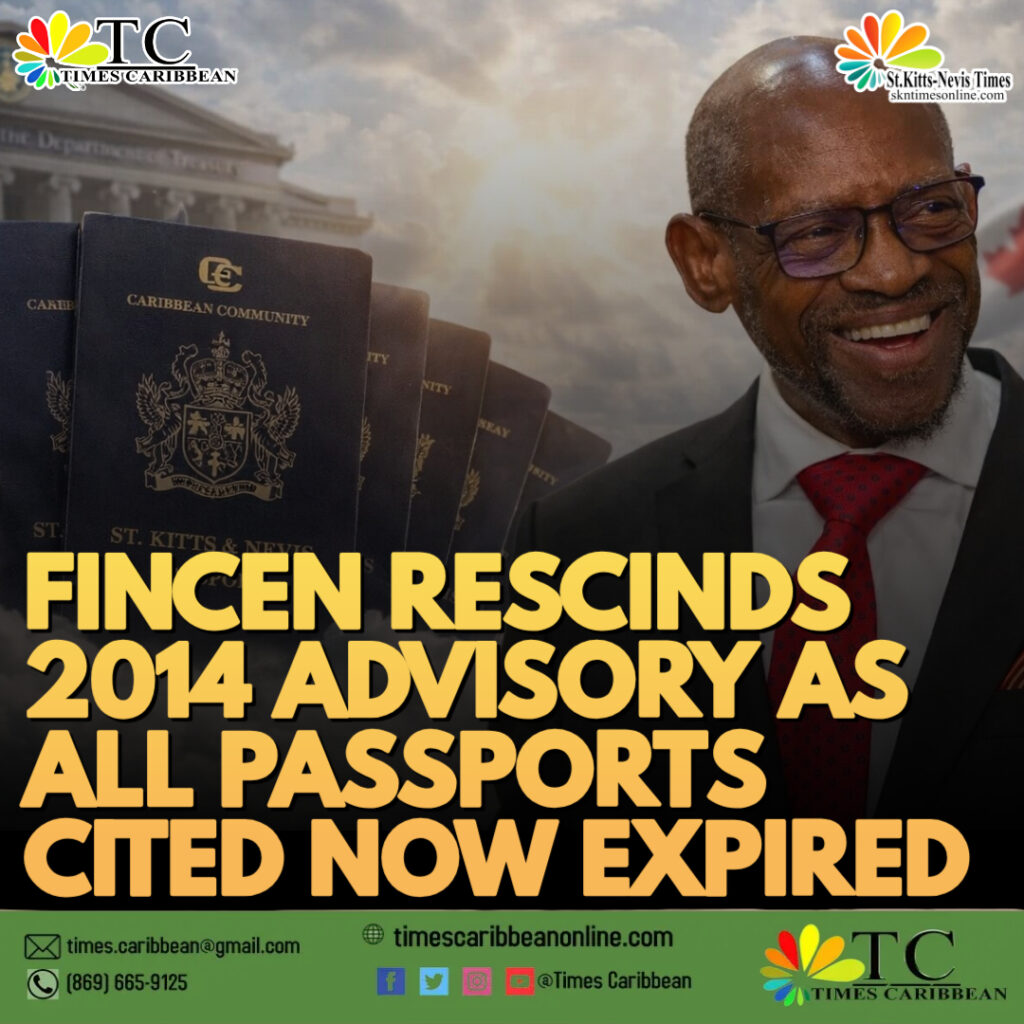
BASSETERRE, ST. KITTS & NEVIS — In a dramatic and long-awaited development, the United States Department of the Treasury’s Financial Crimes Enforcement Network (FinCEN) has formally rescinded its 2014 Advisory that once cast a damaging international spotlight on the Citizenship-by-Investment (CBI) Programme of St. Kitts and Nevis.
The original advisory, issued May 20, 2014, warned U.S. financial institutions that certain foreign nationals were allegedly abusing the Federation’s CBI programme to obtain passports for illicit financial activity. Today, that same document carries a clear notation: “This document has been rescinded.”
The Critical Reality: The 2014 Passports Have Expired
FinCEN’s rescission is grounded in a simple but powerful fact — the specific passports cited during that 2014 period have all expired.
For over a decade, that advisory remained a reputational scar, frequently referenced by critics as evidence of past compliance failures. Its withdrawal marks the formal closing of a contentious regulatory chapter.
2014: The Year That Shook the Programme
The advisory emerged amid mounting concerns over what many described as weak oversight and inadequate due diligence controls under the then Dr. Denzil Douglas-led administration. At the time, FinCEN stated the programme, “as administered, maintains lax controls as to who may be granted citizenship.”
The diplomatic consequences were swift. Canada revoked visa-free access for St. Kitts and Nevis passport holders, delivering a blow that affected thousands of ordinary citizens. The Federation’s passport ranking suffered, and international confidence wavered.
2014 became synonymous with reputational crisis.
What This Means Now
The rescission does not erase history — but it formally acknowledges that the risk identified in 2014 is no longer active.
In regulatory terms, the advisory is no longer in force.
That distinction matters.
It signals that U.S. authorities no longer maintain the formal warning issued during that turbulent period. For the Federation, it represents both vindication of subsequent reforms and a reminder of the cost of governance lapses.
A Decade Later: Lessons Carved in Policy
The CBI programme has since undergone significant restructuring, enhanced vetting protocols, and greater international cooperation. The rescission underscores a broader truth: compliance failures can damage a nation’s brand overnight — but reform, vigilance and credibility restoration take years.
The 2014 advisory is now rescinded.
The passports cited are expired.
But the lessons of 2014 remain indelible — a cautionary chapter in the history of the world’s oldest Citizenship-by-Investment programme.
















Leave a comment
You must be logged in to post a comment.