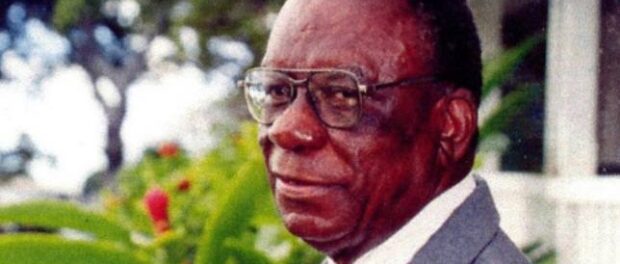
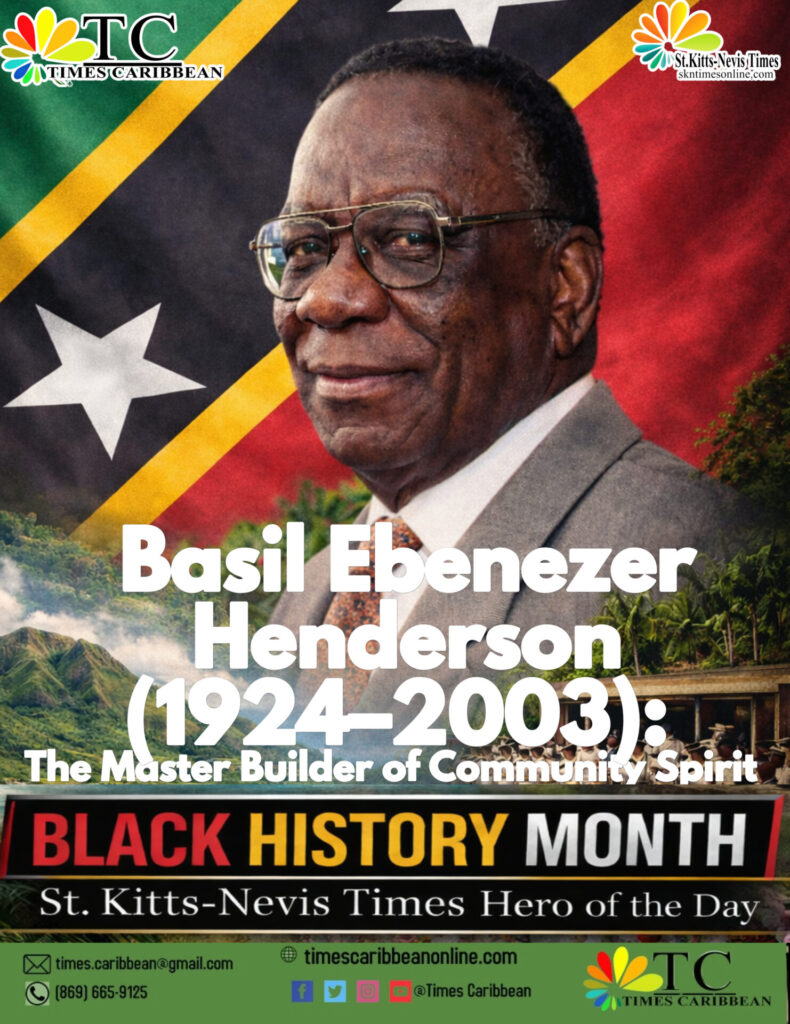
Basil Ebenezer Henderson (1924–2003): The Master Builder of Community Spirit
SKN TIMES | BLACK HISTORY MONTH HERO OF THE DAY 🇰🇳
In the grand narrative of St. Kitts and Nevis, some men hold office — and others build a nation’s spirit. During this Black History Month, SKN Times proudly salutes Basil Ebenezer Henderson, the indefatigable social architect whose fingerprints remain etched across the cultural, sporting, and civic landscape of St. Kitts.
Born on April 24, 1924, to Ethel Augusta Paul, Henderson’s roots were humble but his impact monumental. Raised in the Catholic Church, he carried throughout his life a devotion not merely to faith, but to service. It was this foundation that shaped him into what many would later call the social organizer par excellence.
The Athlete Who United a Nation
Before he organized parades and carnivals, Henderson organized people. Sports was his first instrument of unity. He spearheaded village sporting activities — football, netball, cricket, table tennis — transforming recreation into community development.
An outstanding footballer, he captained Rivals Football Club, the St. Kitts national team, and even represented the Leeward Islands. His leadership was not symbolic; it was strategic. He understood that disciplined sport could cultivate pride, structure, and identity in a young, evolving society.
His service in the Defense Force further instilled order and patriotism. In later years, he would recount his wartime experiences — not as personal glory, but as lessons in duty.
The Civil Servant Who Kept the System Moving
For most of his adult life, Henderson was a civil servant — a man of quiet authority in the machinery of governance. From the Supply Office to the Labour Department and the Office of the Administrator, he served with precision. As Head Messenger, he ensured that communications within the Civil Service flowed seamlessly — an unsung but critical responsibility in a pre-digital era.
Yet Henderson’s true genius lay in rural development. As Welfare Officer, he launched village councils in Conaree, Keys, and Mansion — planting the seeds of organized community leadership.
In 1950, drawing on his training, he established the 4-H Club in St. Kitts. This initiative empowered rural youth with agricultural, technical, and leadership skills. Many alumni would later ascend to positions of national leadership. Henderson did not merely assist youth — he built pipelines of empowerment.
The Cultural Visionary
If sport built bodies, culture built identity — and Henderson mastered both.
In 1951, he organized the island’s first Easter Parade and Aquatic Sports Meet at the Bay Front. These were not mere festivities; they were deliberate acts of social cohesion.
Then came 1957.
Henderson launched the first Carnival — an audacious vision to attract visitors and energize local pride. In doing so, he contributed directly to what would become the Federation’s tourism product. Before tourism was branded, Basil Henderson was conceptualizing it.
Recognizing the rising force of steel pan, he organized local bands into a Steel Pan Association, coordinating regional exchanges and elevating Kittitian steel music beyond the island’s shores. He was thinking Caribbean before integration was fashionable.
He introduced Best Village competitions to beautify communities and stimulate friendly rivalry. He began the Christmas Tree lighting in Independence Square, ensuring children — especially the underprivileged — experienced the joy of the season. Year after year, Father Christmas came because Basil Henderson made it happen.
A Life of Principle
Henderson had opportunities to pursue personal advancement in England and the United States. He accepted only those that enabled him to give more to St. Kitts. It was never about résumé building; it was about nation building.
When U.S. President John F. Kennedy declared, “Ask not what your country can do for you — ask what you can do for your country,” Basil Henderson had already been living that creed.
On March 7, 2003, Henderson passed away. But the Carnival rhythms still echo. The steel pans still resonate. The Christmas lights still glow. The village councils still function. The 4-H alumni still lead.
These are not coincidences. They are consequences — of one man’s relentless commitment to community.
The Verdict of History
Basil Ebenezer Henderson did not simply organize events; he engineered belonging.
He did not simply serve in government; he humanized it.
He did not chase titles; he cultivated legacy.
In celebrating him this Black History Month, we are reminded that nationhood is not forged solely in parliaments or courtrooms — it is forged in villages, playing fields, church halls, waterfronts, and community squares.
And in those spaces, Basil Ebenezer Henderson was — and remains — a giant.
















Leave a comment
You must be logged in to post a comment.