GUYANA IN U.S. DEPORTATION TALKS: CONSIDERS U.S. DEAL TO ABSORB THIRD-COUNTRY DEPORTEES
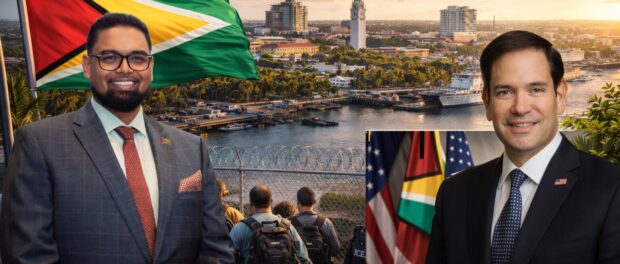
GUYANA ON THE FRONT LINE: U.S. DEPORTATION TALKS SIGNAL A NEW CARIBBEAN MIGRATION FLASHPOINT
Senior government officials in have confirmed that the country is in advanced, high-level negotiations with the on a controversial agreement that could see Guyana accepting third-country deportees and refugees—individuals removed from the U.S. but sent to a nation that is not their country of origin.
According to well-placed sources, the discussions have been unfolding quietly for months, pausing only in August ahead of Guyana’s national elections, before resuming with renewed urgency. Negotiators on both sides are now reportedly hammering out final details, with an agreement potentially ready for signature within weeks.
Under the emerging framework, Guyana would retain the sovereign right to refuse any individual or group proposed for relocation. Crucially, officials say Georgetown has drawn a firm line: its preference is for skilled migrants with no criminal background, signaling an attempt to balance humanitarian cooperation with national security and economic priorities.
The financial burden, sources emphasize, would fall squarely on Washington. The United States is expected to cover all relocation, housing, and integration costs for deportees and rejected asylum seekers unwilling to return to their home countries—an arrangement that underscores how far the Biden-era migration playbook has evolved into transactional diplomacy.
The talks echo reports from February 2025, when News Source revealed that Guyana was among countries in quiet discussions with Washington, following a CBS News disclosure. At the time, President acknowledged migration discussions with the U.S. Secretary of State but denied any agreement on third-country deportees.
The regional context has now shifted dramatically. Two fellow members— and —confirmed last week that they have already finalized similar agreements with Washington.
As Guyana edges closer to a decision, the stakes are clear: this is no longer just about migration management, but about power, leverage, and the Caribbean’s role in reshaping U.S. border policy—one bilateral deal at a time.
















Leave a comment
You must be logged in to post a comment.