NEW TWICE-YEARLY HIV INJECTION COULD TRANSFORM GLOBAL PREVENTION EFFORTS
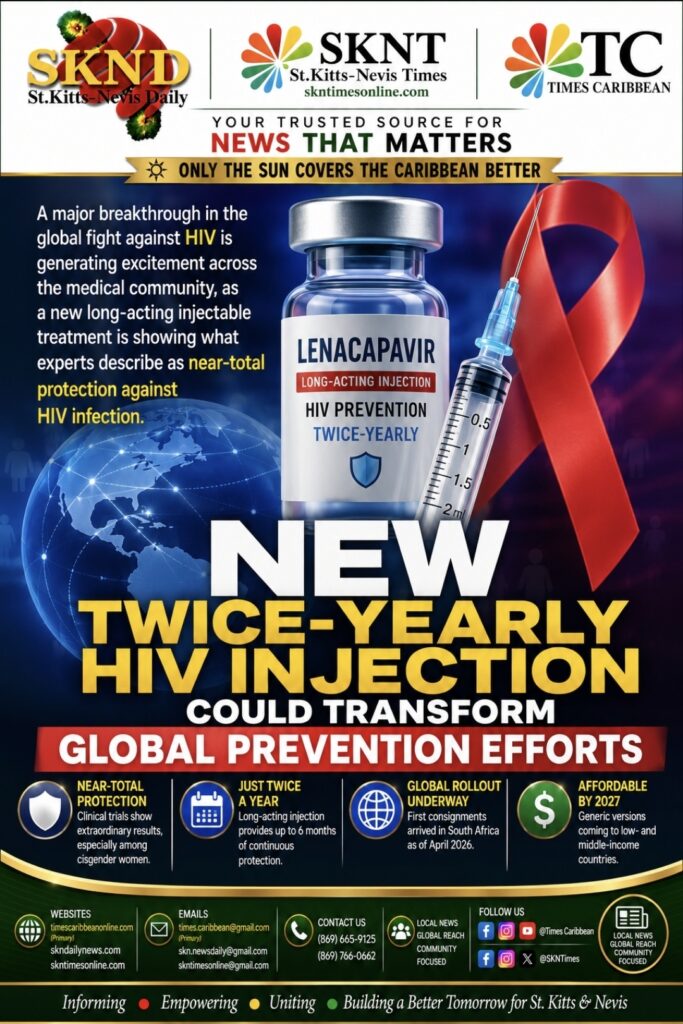
A major breakthrough in the global fight against HIV is generating excitement across the medical community, as a new long-acting injectable treatment is showing what experts describe as near-total protection against HIV infection.
The drug, known as Lenacapavir, is being hailed as one of the most significant developments in HIV prevention in decades. Unlike traditional daily HIV prevention pills that require strict adherence, Lenacapavir is administered through a simple injection just twice a year.
Medical experts say the treatment works by targeting and disrupting the virus’s protective protein shell, stopping HIV from effectively replicating inside the body’s immune cells.
Recent international clinical trials reportedly produced extraordinary results, particularly among cisgender women, where the injection demonstrated almost 100 percent effectiveness in preventing HIV transmission.
The development is being viewed as a potential game-changer, especially for vulnerable populations and individuals who face challenges maintaining daily medication schedules.
A SHIFT AWAY FROM DAILY HIV PILLS
For years, HIV prevention strategies have relied heavily on daily oral pre-exposure prophylaxis, commonly known as PrEP. While highly effective when taken consistently, health advocates have long warned that daily medication routines can be difficult for some individuals to maintain due to stigma, access challenges, forgetfulness, or lifestyle factors.
Lenacapavir’s twice-yearly dosing model could dramatically improve adherence rates while also offering a more discreet prevention option.
Health analysts say this could be especially impactful in regions where HIV infection rates remain high and healthcare access remains inconsistent.
Although often compared to a vaccine, experts note that Lenacapavir is not technically a vaccine because it does not train the immune system to recognize and fight the virus. Instead, it functions as a long-acting antiretroviral drug, meaning patients would still need injections every six months to maintain protection.
GLOBAL ROLLOUT ALREADY UNDERWAY
According to international reports, the first consignments of the injection have already arrived in South Africa as of April 2026, signaling the beginning of what many hope will become a global expansion effort.
Cost had initially emerged as one of the biggest concerns surrounding the drug’s availability, with fears that lower-income countries could struggle to access the treatment. However, international licensing agreements are reportedly paving the way for lower-cost generic versions to become available across low- and middle-income countries by 2027.
Global health advocates say the move could significantly improve health equity and help close longstanding gaps in HIV prevention access.
IMPLICATIONS FOR THE CARIBBEAN
The breakthrough could carry major implications for the Caribbean, a region that has long battled HIV-related public health challenges while simultaneously working to reduce stigma and improve testing and treatment access.
Public health officials across the Caribbean have repeatedly stressed the importance of prevention-focused strategies, particularly among younger populations and vulnerable communities.
If affordable access becomes available regionally, experts believe the injection could become a powerful new tool in helping Caribbean nations reduce new HIV infections while strengthening long-term public health outcomes.
While additional studies and regulatory processes are expected to continue, many in the global medical community are already describing Lenacapavir as one of the most promising HIV prevention advancements of the modern era.
Source: BBC News
















Leave a comment
You must be logged in to post a comment.