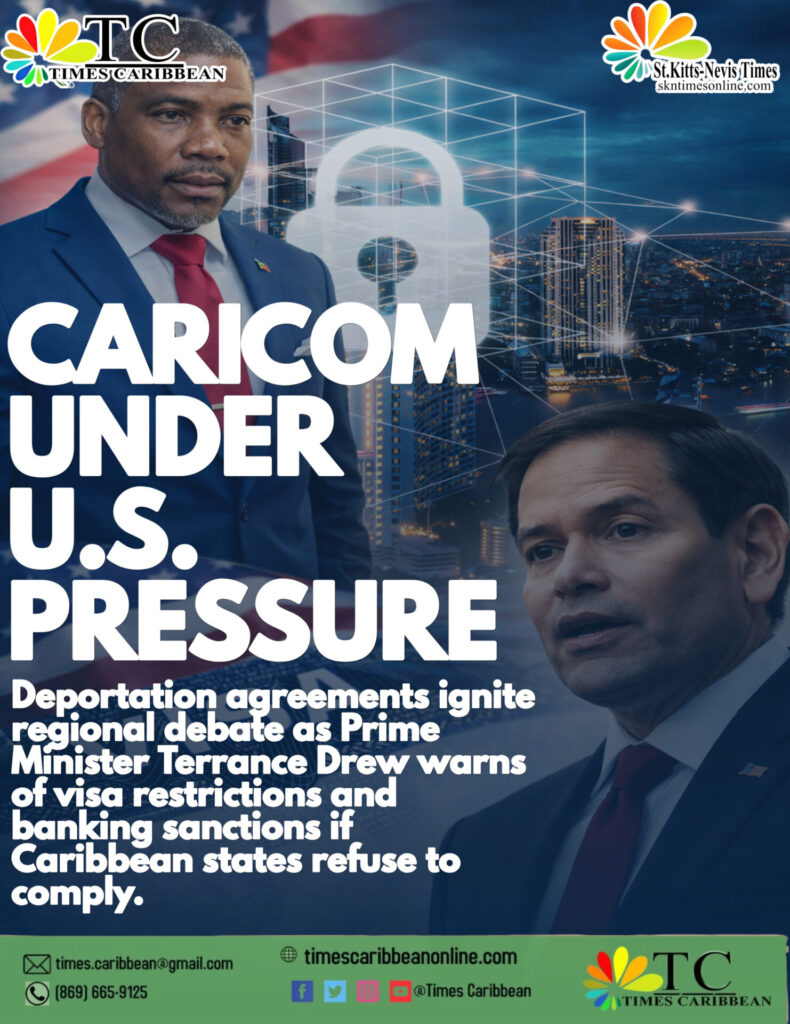
U.S.–CARICOM DEPORTATION DEALS SPARK REGIONAL DEBATE AS PM DREW WARNS OF SANCTIONS PRESSURE

By Times Caribbean News Desk
The United States has concluded intense pressure-laden negotiations with seven CARICOM member states—Guyana, Dominica, Saint Lucia, Antigua and Barbuda, Belize, St. Kitts and Nevis, and Barbados—securing agreements that would see these countries receive asylum seekers deported from the U.S. who are unable to return to their countries of origin.
The arrangements, which have triggered growing regional unease, are being framed by Washington as part of its broader migration and border control strategy. However, Caribbean leaders and civil society voices warn that the deals raise serious questions about sovereignty, capacity, human rights, and long-term socio-economic impact on small island and developing states.
Prime Minister of St. Kitts and Nevis, Dr. Terrance Drew, has offered one of the most candid assessments of the negotiations to date, acknowledging the intense pressure applied by the United States. Drew revealed that countries refusing to cooperate face indirect but powerful consequences, including visa restrictions and disruptions to correspondent banking relationships—a lifeline for Caribbean economies.
“Countries refusing to cooperate are exposed to indirect sanctions from the United States,” Drew said, pointing specifically to the risks of visa limitations and challenges in international banking exchanges.
Analysts note that for small CARICOM states already grappling with crime, housing shortages, strained social services, and fragile financial systems, the threat of banking isolation is particularly coercive. Correspondent banking losses have previously crippled regional economies, making the pressure difficult to resist.
Supporters of engagement argue that maintaining diplomatic and economic stability with the U.S. is essential, while critics insist the region is being forced into solutions for problems it did not create. As details of the agreements remain opaque, calls are growing for transparency, regional consultation, and safeguards to ensure Caribbean nations are not left bearing disproportionate burdens in the global migration crisis.
The debate is far from over—and its implications could reshape U.S.–Caribbean relations for years to come.
















Leave a comment
You must be logged in to post a comment.