THE GREATEST EVER HAS LEFT THE CREASE: SIR GARFIELD SOBERS—CRICKET’S UNRIVALLED GOAT—DIES AT 89

The world has lost more than its greatest all-rounder. It has lost the most complete cricketer ever produced—a batting master, three-in-one bowler, magnificent fielder, inspirational captain and enduring symbol of Caribbean excellence.
By Times Caribbean Online
BRIDGETOWN, Barbados, July 17, 2026
The bat has finally been lowered. The final delivery has been bowled. The greatest cricketer who ever lived has left the field.
The Right Excellent Sir Garfield St Aubrun “Garry” Sobers, Barbados National Hero, West Indies captain and the incomparable genius widely regarded as cricket’s greatest all-rounder, has died at the age of 89—just 11 days before his 90th birthday.
The International Cricket Council confirmed his passing on Friday, describing him as one of the greatest players ever to grace the game. No cause of death was immediately announced.
But describing Sobers merely as the greatest all-rounder is almost too restrictive.
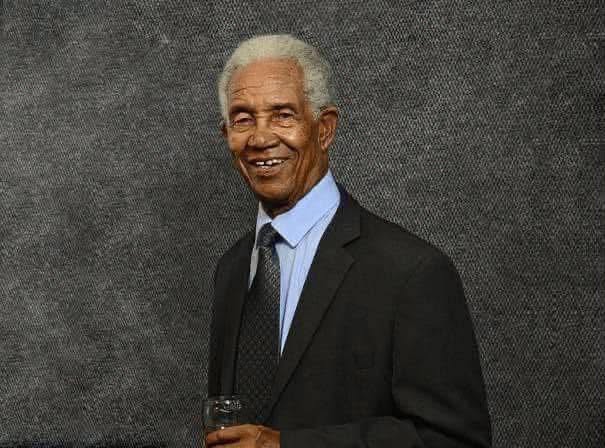
An all-rounder normally contributes with bat and ball. Sobers dominated with the bat, could bowl fast-medium, orthodox finger-spin and wrist-spin, fielded with extraordinary athleticism, captained with imagination and carried the expectations of an entire Caribbean civilisation.
He was not simply versatile. He was world-class in virtually every cricketing discipline.
That is why Times Caribbean frames Sir Garfield Sobers not only as the finest all-rounder, but as the greatest cricketer of all time.
The most complete player cricket has ever seen
Cricket’s eternal debates usually divide greatness into categories.
Sir Donald Bradman remains the statistical standard for specialist batting. Sachin Tendulkar represents extraordinary longevity and accumulated achievement. Brian Lara embodied batting artistry. Sir Vivian Richards brought intimidation and imperial authority. Shane Warne and Muttiah Muralitharan transformed the possibilities of spin bowling.
Sobers, however, was not confined to one department.
He could bat among the greatest specialist batsmen in history, then take the new ball, switch to orthodox spin, change again to wrist-spin and complete the day by producing a spectacular catch. He effectively gave his captain several international-standard players within one body.
That is the fundamental argument for Sobers as cricket’s GOAT: no other player offered such an extraordinary range of match-winning possibilities at such an elite level.
The ICC’s Hall of Fame records that Sobers amassed 8,032 Test runs and 235 wickets across a 20-year international career. He also held 109 Test catches. His batting average of 57.78 remains exceptional even when measured against specialist batsmen who did not carry his enormous bowling workload.
Those figures become even more extraordinary when placed in context. Sobers played only 93 Tests in an era of far fewer international fixtures, limited protective equipment, uncovered or inconsistently prepared pitches and demanding travel arrangements.
He scored 26 Test centuries and 30 half-centuries. In first-class cricket, he accumulated more than 28,000 runs and captured more than 1,000 wickets—numbers that demonstrate sustained supremacy rather than a handful of spectacular moments.
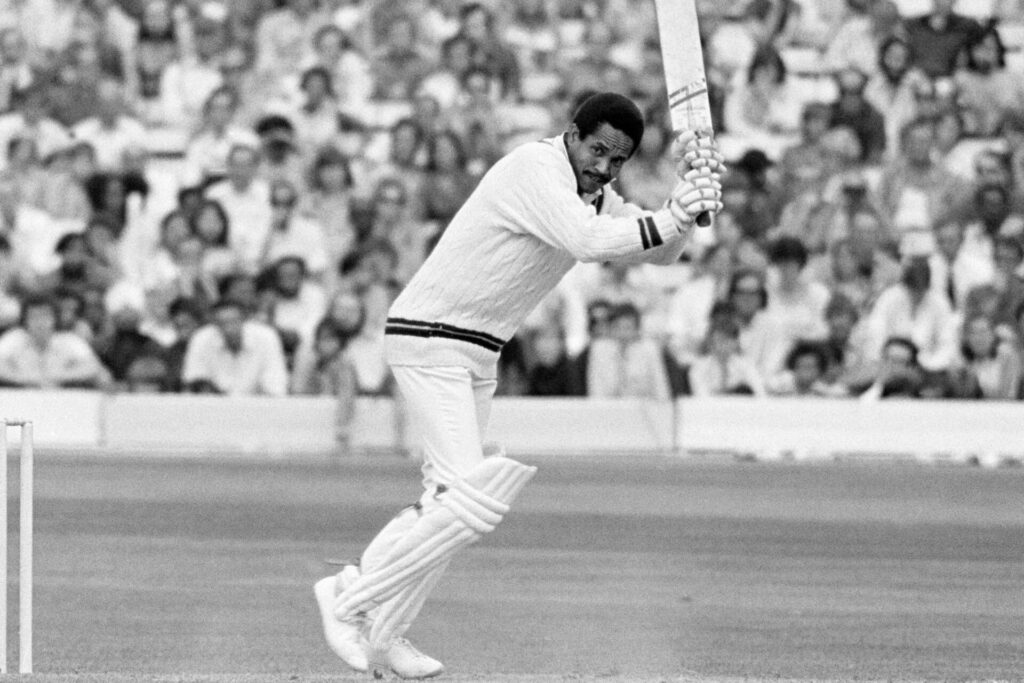
A batting genius who could have been selected for batting alone
Sobers entered Test cricket in 1954 primarily as a teenage left-arm bowler. Yet he developed into one of the most destructive, elegant and adaptable batsmen the sport has known.
His batting combined Caribbean freedom with technical command. He could defend when circumstances demanded patience, accelerate without warning, dominate fast bowling and dismantle spin. His high backlift and sweeping follow-through created an image of effortless power, but behind the beauty was exceptional judgment, balance and hand-eye coordination.
At just 21, Sobers converted his maiden Test century into an unbeaten 365 against Pakistan in Kingston in 1958. It was then the highest individual score in Test history and remained the world record for 36 years, until fellow Caribbean master Brian Lara scored 375 in 1994. Sobers remains the youngest player to make a Test triple-century.
The significance of that innings extends beyond the number.
Young players often require several centuries before learning how to construct monumental scores. Sobers’ first Test hundred became a triple-century and a world record. It was an early declaration that ordinary developmental rules did not apply to him.
His 254 for a World XI against Australia in Melbourne in 1972 offered another demonstration of his supremacy. Bradman reportedly considered it the finest innings he had witnessed on Australian soil—a remarkable assessment from the man commonly treated as batting’s ultimate authority.
Sobers was therefore not a bowler who could bat, nor a batting all-rounder whose secondary skill occasionally produced wickets. He was a genuinely great batsman who simultaneously performed the workload of a frontline bowler.
Three bowlers inside one extraordinary athlete
Sobers’ bowling is perhaps the strongest evidence separating him from every rival in the GOAT debate.
Most accomplished all-rounders possess one recognisable bowling method. Sobers possessed three.
He could operate as a left-arm fast-medium bowler, swinging the new ball and challenging accomplished opening batsmen. He could switch to orthodox slow left-arm spin when conditions demanded control. He could then employ left-arm wrist-spin, producing greater variation and attacking possibilities.
These were not novelty deliveries used for entertainment. They were distinct, tactically useful bowling disciplines performed at international level.
Richie Benaud, himself one of cricket’s most respected all-rounders, captains and analysts, described Sobers as the greatest all-round cricketer the world had seen—highlighting his brilliance as a batsman, fielder and bowler of pace, orthodox spin and wrist-spin.
This capacity gave every team containing Sobers extraordinary balance. He could be selected among the top six batsmen while also serving as a legitimate frontline bowling option. His presence allowed another specialist batsman, bowler or wicketkeeper to be included without weakening either department.
In modern analytical language, Sobers created unmatched roster value. He did not merely produce runs and wickets; he transformed how an entire eleven could be constructed.
Six deliveries that entered sporting immortality
On August 31, 1968, while captaining Nottinghamshire against Glamorgan at Swansea, Sobers became the first cricketer to strike six sixes from six consecutive balls in a first-class over.
Malcolm Nash was the bowler. Five strokes cleared the boundary outright; another was caught near the rope, but the fielder’s momentum carried him across the boundary. The over immediately became one of cricket’s most celebrated passages.
Yet Sobers’ reaction revealed something essential about his cricketing philosophy.
He later emphasised that the purpose was not to pursue a personal record but to score quickly for Nottinghamshire. The team situation came first. The immortality of the achievement was almost incidental.
That episode captured the Sobers contradiction: a player capable of seemingly impossible individual brilliance who remained instinctively committed to the collective contest.
Why greater aggregate numbers do not automatically produce a greater cricketer
Later all-rounders, most notably South Africa’s Jacques Kallis, finished with larger career aggregates. Kallis scored 13,289 Test runs, claimed 292 wickets and held 200 catches during a significantly longer 166-Test career. His greatness is unquestionable.
But GOAT analysis cannot be reduced to career totals.
Different eras produce vastly different schedules, playing conditions, medical support systems and opportunities. A modern player appearing in almost twice as many Tests will naturally have more opportunities to accumulate runs, wickets and centuries.
Sobers’ claim rests on the level and breadth of his abilities.
Kallis was a monumental batsman, excellent slip fielder and highly effective fast-medium bowler. Sobers was an elite batsman, athletic all-position fielder and a bowling unit capable of pace, swing, finger-spin and wrist-spin.
Bradman’s batting peak may remain statistically unsurpassed, but he did not contribute across every discipline. Tendulkar’s longevity was extraordinary, but bowling was secondary to his central role. Other all-rounders may have rivalled Sobers in two departments, but none combined so many functions with comparable elegance, spontaneity and game-changing force.
The question is therefore not simply: Who accumulated the most?
The deeper question is: Who could do the most things at the highest level and influence a cricket match through the greatest number of channels?
The answer remains Garfield Sobers.
The judgment of cricket’s greatest authorities
Sobers’ supremacy is not merely a product of Caribbean affection.
In 1988, Bradman declared him the “greatest all-round cricketer” he had ever seen. When Wisden convened 100 experts in 2000 to select the five greatest cricketers of the 20th century, Bradman received all 100 votes. Sobers placed second with 90—while the third-ranked player received only 30.
That voting result is revealing.
Sobers was overwhelmingly recognised across countries, generations and cricketing cultures. He was not simply a West Indian champion promoted by regional sentiment. His standing was global, durable and supported by those who had played, watched and studied the sport at its highest level.
He was inducted into the ICC Cricket Hall of Fame in 2009. Cricket’s leading annual individual honour, the Sir Garfield Sobers Trophy for the ICC Men’s Cricketer of the Year, permanently associates his name with the highest standard of contemporary excellence.
From humble Barbados beginnings to global immortality
Sobers was born in St Michael, Barbados, on July 28, 1936. His father, a merchant seaman, died during the Second World War when Sobers was five, leaving his mother to raise the family under difficult circumstances.
The young Sobers developed his skills through street and beach cricket, sometimes using improvised bats and balls. He made his first-class debut for Barbados at 16 and entered Test cricket at 17.
His development represented the purest form of Caribbean sporting creativity: limited resources transformed into unlimited possibility.
There were no advanced performance laboratories, personalised analytics departments or extensive coaching teams. Sobers learned through observation, experimentation and endless play. His technique was not manufactured by a system. It emerged from instinct, repetition, competition and imagination.
He became West Indies captain in 1965, succeeding Sir Frank Worrell and inheriting a position carrying significance far beyond cricket. West Indies teams represented multiple territories, cultures and political identities. Their captain had to lead not merely a squad, but a regional idea.
CARICOM later described Sobers as an embodiment of excellence and West Indian pride whose achievements helped unite the Caribbean and establish the region’s standing among nations. He received the Order of the Caribbean Community in 1998 and was proclaimed a National Hero of Barbados.
More than cricket: a symbol of Caribbean possibility
Sobers rose during an era when Caribbean societies were moving out of colonial rule and asserting their political and cultural identity.
His greatness therefore carried additional meaning.
Every commanding innings challenged assumptions about where excellence could originate. Every international achievement showed that a small Caribbean island could produce a figure capable of dominating one of the former empire’s most cherished institutions.
Sobers did not ask the cricketing establishment for symbolic inclusion. He compelled it to recognise mastery.
For Caribbean people, he represented what was possible when natural ability met discipline and self-belief. Barbados produced him, but the entire region claimed him. His success belonged to Bridgetown, Georgetown, Kingston, Port of Spain, Basseterre, Castries, Kingstown, St John’s and every community where children improvised cricket equipment and imagined wearing the maroon cap.
His greatness helped transform West Indies cricket into a vehicle of regional pride and psychological independence.
A human champion, not a manufactured saint
A comprehensive assessment must also acknowledge that Sobers was human.
His 1970 decision to play in Rhodesia during the period of white-minority rule generated serious criticism, particularly across the Caribbean. Sobers later said he had not understood the depth of regional feeling and would not have travelled had he fully appreciated the political implications. He subsequently rejected invitations to play in apartheid South Africa and later spoke about racial discrimination experienced by Black cricketers.
That episode remains part of his story. It does not erase his achievements, nor should admiration require the removal of every difficult chapter.
True historical greatness can withstand honest examination.
Sobers was adventurous in cricket and in life. His captaincy could be bold to the point of risk. He preferred creating a contest to protecting a draw. He believed spectators deserved ambition, movement and possibility.
At times, that philosophy cost him. More often, it made cricket unforgettable.
The standard by which complete greatness will always be measured
Sobers was knighted in 1975, became a Barbados National Hero in 1998 and received the Order of the Caribbean Community that same year. Stadiums, sporting complexes, awards and tournaments bear his name.
But buildings and trophies are only physical memorials.
His true monument exists in cricket’s vocabulary.
Whenever a young player bats in the top order and bowls effectively, commentators search for comparisons with Sobers. Whenever an all-rounder changes a match in multiple departments, his name returns. Whenever the game debates completeness rather than specialisation, Sobers remains the reference point.
That is the defining characteristic of the GOAT: the player does not merely own records. He becomes the measurement.
Sir Garfield Sobers was cricket’s fullest expression of freedom, versatility and genius. He possessed the concentration to bat for historic scores, the aggression to strike six consecutive sixes, the skill to bowl in radically different styles, the athleticism to command the field and the imagination to change the emotional direction of a match.
Others may have scored more runs.
Others may have taken more wickets.
Others may have played more matches.
But no one has ever represented so many dimensions of cricket at such an extraordinary level.
The Caribbean has lost a National Hero. Barbados has lost its most celebrated sporting son. The West Indies have lost the towering figure who helped make regional cricket an instrument of unity, confidence and global respect.
And cricket has lost its greatest player.
The incomparable Sir Garfield Sobers has left the crease—but the standard he established remains undefeated.
















Leave a comment
You must be logged in to post a comment.