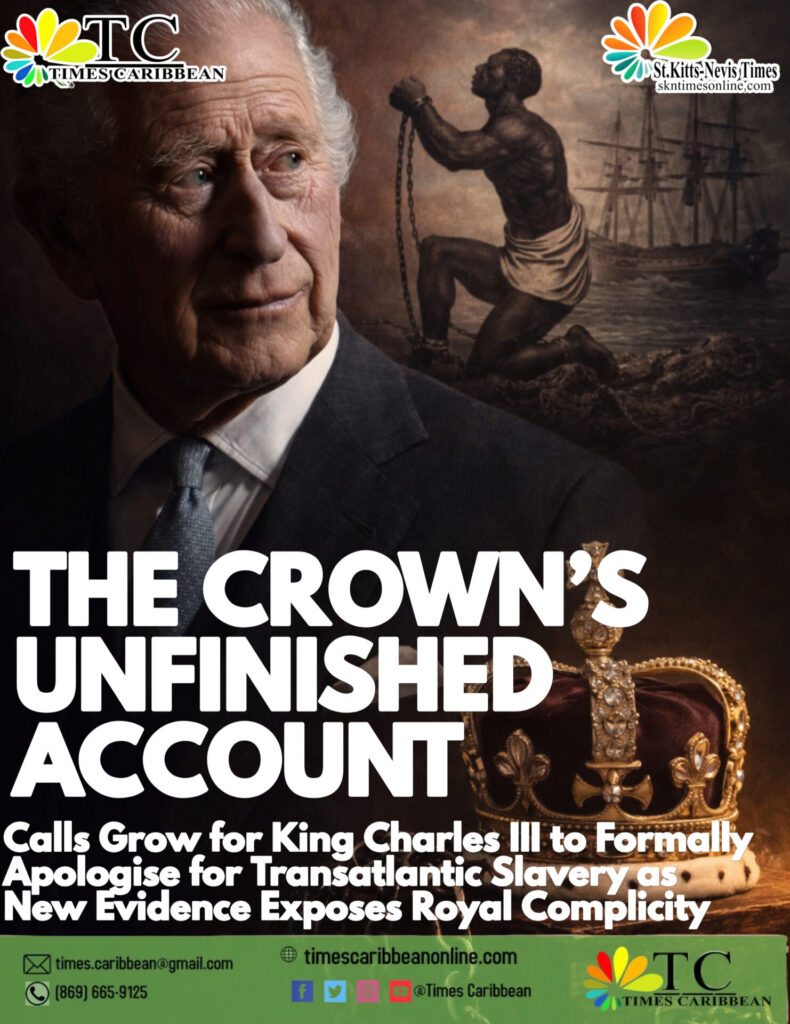
THE CROWN’S UNFINISHED ACCOUNT: Calls Grow for King Charles III to Formally Apologise for Transatlantic Slavery as New Evidence Exposes Royal Complicity
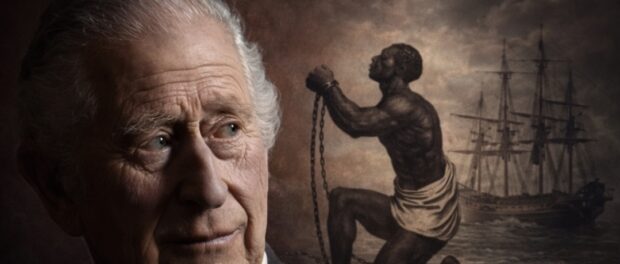
A long-suppressed reckoning with Britain’s imperial past has surged back into global focus, as MPs, scholars and reparations campaigners intensify calls for King Charles III to issue a formal apology for the transatlantic slave trade—following the release of damning new research detailing the British Crown’s deep, systemic involvement in one of history’s greatest crimes against humanity.The renewed pressure comes on the heels of The Crown’s Silence, a newly published book that lays bare how successive British monarchs—from Queen Elizabeth I through George IV—not only sanctioned but financially benefited from and militarily protected the trade in enslaved African people for centuries. The book documents how royal charters, crown revenues and the Royal Navy worked in tandem to expand, secure and defend Britain’s dominance in the slave economy across Africa, the Caribbean and the Americas.According to the research, by 1807, the year Britain formally abolished the slave trade, the British Crown had become the single largest buyer of enslaved Africans, a revelation that directly challenges long-standing narratives portraying abolition as a moral triumph untainted by royal profiteering.Personal Sorrow vs Institutional ResponsibilityKing Charles has previously expressed what he described as “personal sorrow” for the suffering caused by slavery and has spoken of his desire to find “creative ways to right inequalities that endure.” While these remarks were welcomed in some quarters as symbolic progress, critics now argue they fall dangerously short of what the moment demands.“The language of regret is not the language of accountability,” one Caribbean historian told Times Caribbean. “When an institution helped build global wealth through human bondage, personal sorrow is not justice—it is evasion.”This view was echoed forcefully by Bell Ribeiro-Addy, the Labour MP for Clapham and Brixton Hill and chair of the All-Party Parliamentary Group for Afrikan Reparations. She described the Crown’s carefully calibrated expressions of sympathy as profoundly inadequate.“‘Personal sorrow’ does not befit one of the single greatest crimes against humanity,” Ribeiro-Addy stated. “This is not about individuals. This is about the monarchy as an institution—an institution that extracted wealth, power and prestige from the brutal exploitation of African people.”The Monarchy, the Navy, and the Machinery of EnslavementOne of the most explosive elements of The Crown’s Silence is its detailed account of the Royal Navy’s role—not merely as a later enforcer of abolition, but as an earlier armed guardian of slave ships, ports and routes during the height of the trade. Far from being a passive observer, the Crown used state power to secure profits and suppress resistance, while enslaved Africans bore the cost in blood, lives and generational trauma.For the Caribbean, where entire societies were built on plantation slavery, this history is not academic. It lives on in persistent inequalities, underdevelopment, racial hierarchies and economic vulnerability—realities that many argue are the direct legacy of Crown-backed enslavement.Why an Apology MattersCampaigners insist that a formal apology is not about symbolic guilt or rewriting history, but about truth, acknowledgment and repair. They argue that without a clear, unequivocal apology from the British Crown, any talk of reconciliation or reparative justice remains hollow.“An apology could be the basis for the honest conversation and transformation we need to have as a country,” Ribeiro-Addy said, “especially in a swiftly changing world where former colonies are no longer willing to accept silence, half-measures or historical amnesia.”In the Caribbean, where governments and civil society have long advanced claims for reparations, the Crown’s continued refusal to apologise is increasingly seen as a deliberate political stance—one that protects imperial prestige while avoiding the implications of responsibility.A Global Moment of ReckoningAs debates over reparations, restitution and historical justice intensify across the Global South, Britain’s monarchy now finds itself at a crossroads. The question is no longer whether the Crown was complicit—research has answered that with brutal clarity—but whether it is prepared to confront its past with the honesty required for meaningful change.For many across the Caribbean and Africa, the message is clear: there can be no closure without acknowledgment, and no healing without accountability. Until a formal apology is issued, the Crown’s silence will continue to echo as loudly as its historical deeds.
















Leave a comment
You must be logged in to post a comment.