ST. KITTS & NEVIS HOLDS BACK AS REGIONAL UNITY SURGES FORWARD: FEDERATION REFUSES TO SIGN OECS–CARICOM FREE MOVEMENT PACT
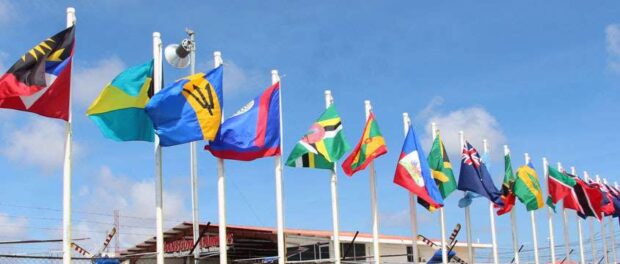
— Drew’s “Cautionary Pause” Sparks Fierce Debate Over Missed Opportunities, Sovereignty, and Regional Progress
BASSETERRE, ST. KITTS — October 11, 2025 (SKN Times) — While the winds of Caribbean integration sweep across the region, St. Kitts and Nevis has chosen to stand still. In a move that has already stirred unease among regional observers and economic analysts, the Federation has refused to sign the historic OECS–CARICOM Free Movement Pact, even as Barbados, Belize, St. Vincent and the Grenadines, and Dominica forged ahead with a groundbreaking agreement that many have hailed as the future of regional cooperation.
The pact, which came into effect on October 1, 2025, grants citizens of the four signatory states the unprecedented right to live, work, and access healthcare and education freely across their territories — no work permits, no residency hurdles, no bureaucratic red tape. It represents a bold step toward realizing the original dream of CARICOM — a single economic space united by people, culture, and opportunity.
Yet, while the ink dried on this landmark accord, St. Kitts and Nevis remained a conspicuous absentee.
“CAUTION OR COMPLACENCY?” — DREW’S DIPLOMATIC DODGE
At his October 6 “Roundtable” media briefing, Prime Minister Dr. Terrance Drew confirmed that St. Kitts and Nevis has “held back” from the agreement. His explanation, laced with diplomatic restraint, revealed a government hesitant to take the plunge:
“So, on the free movement matter, let me say that it has been an issue with CARICOM. We are studying it, as I’ve said before. There are some conditions to be met in terms of the smaller countries, so that we can still have some protection within the free movement… A conversation also needs to be had with our people here in St. Kitts and Nevis… Until then, we have held back on that. So that does not include St. Kitts and Nevis.”
But critics argue that Drew’s carefully worded justification is code for indecision, fear, and bureaucratic inertia. They note that while the Prime Minister emphasizes “consultation” and “protection,” the rest of the Caribbean is boldly leaping forward — embracing the idea that shared growth demands shared movement.
SMALL STATE FEARS, BIG CONSEQUENCES
It is no secret that smaller island states like St. Kitts and Nevis have long harbored concerns over free movement. The fear? That their fragile job markets, limited infrastructure, and strained social services would buckle under increased migration from larger or less economically stable territories.
But analysts note that the economic anxieties masking this hesitation are as much political as they are practical. “This is about control and comfort,” one regional economist told SKN Times. “Free movement challenges insular leadership. It demands transparency, data-driven policy, and efficiency — things not always in abundant supply in small island governments.”
In essence, St. Kitts and Nevis risks self-isolation at a pivotal regional moment. The new pact’s signatories are already discussing joint labour accreditation, cross-border healthcare access, and harmonized education frameworks — policies that could attract investment and boost tourism flows.
By refusing to sign, the Federation may inadvertently brand itself as out of step with modern Caribbean integration — a nation caught between rhetoric and reality.
REGIONAL UNITY OR REGIONAL FRAGMENTATION?
In Bridgetown, Prime Minister Mia Mottley and her fellow leaders celebrated the agreement as a triumph of vision over fear. “This is not just about economics,” one signatory leader remarked, “it’s about human dignity, opportunity, and trust in our Caribbean people.”
That sentiment stands in stark contrast to Basseterre’s caution. St. Kitts and Nevis — once a champion of OECS solidarity — now finds itself on the defensive, explaining why it cannot yet do what others have already done.
Even some local voices are questioning the optics: “If Dominica can manage free movement, what exactly is St. Kitts afraid of?” one political commentator asked on national radio. “We keep saying we’re ready for a Sustainable Island State, but we’re afraid of regional workers and students?”
THE DILEMMA OF LEADERSHIP
Dr. Drew’s government insists that the decision is not a rejection of integration but a “measured step” toward readiness. However, many view this as a missed opportunity to position St. Kitts and Nevis as a forward-thinking hub for regional talent and innovation.
“Caution has its place,” said one business leader, “but in a region this small, hesitation can quickly become irrelevance.”
While the rest of the Caribbean breaks down borders, St. Kitts and Nevis appears trapped behind its own red tape — consulting, reviewing, and studying while the regional train pulls away from the station.
A NATION AT THE CROSSROADS
The refusal to sign the Free Movement Pact may not just be a policy decision — it could become a symbol of national posture. Is St. Kitts and Nevis protecting itself from instability, or simply shielding itself from progress?
As the Federation “studies” the implications, its regional peers are living them, crafting a future where a nurse from Dominica can work in Barbados, or a teacher from St. Vincent can educate students in Belize — seamlessly, proudly, regionally.
For now, St. Kitts and Nevis watches from the sidelines — cautious, calculating, and perhaps, dangerously comfortable in its isolation.
#SKNTimesAnalysis | #FreeMovementPact | #CARICOM | #OECS | #StKittsAndNevis | #RegionalIntegration | #CARICOMUnity | #MissedOpportunity | #SknPolitics

















Leave a comment
You must be logged in to post a comment.