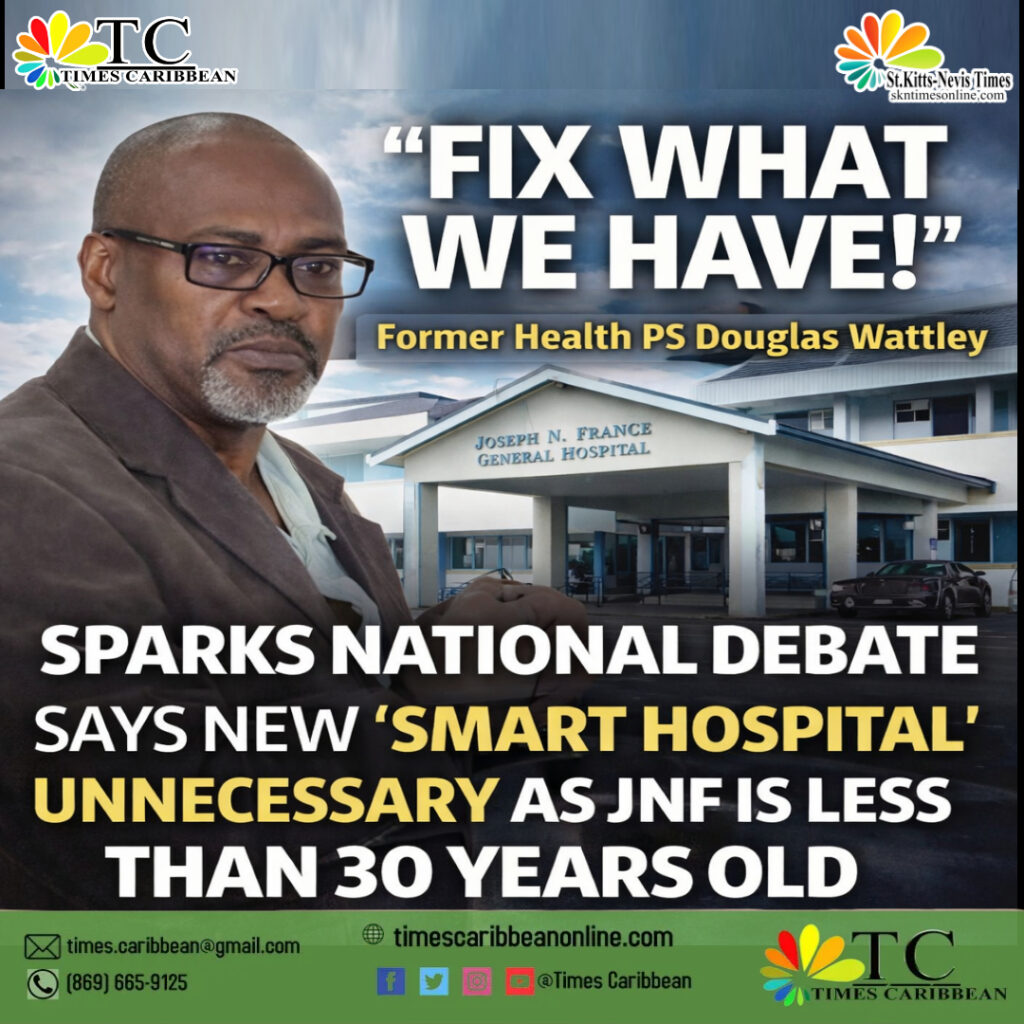
“Fix What We Have!” — Former Health PS Douglas Wattley Sparks National Debate, Says New ‘Smart Hospital’ Unnecessary as JNF Is Less Than 30 Years Old

Basseterre, St. Kitts — A bold intervention by former Permanent Secretary in the Ministry of Health and respected health sector advisor Douglas Wattley has ignited a fresh national debate over the Government’s ambitious plan to construct a new “smart hospital” in St. Kitts and Nevis.
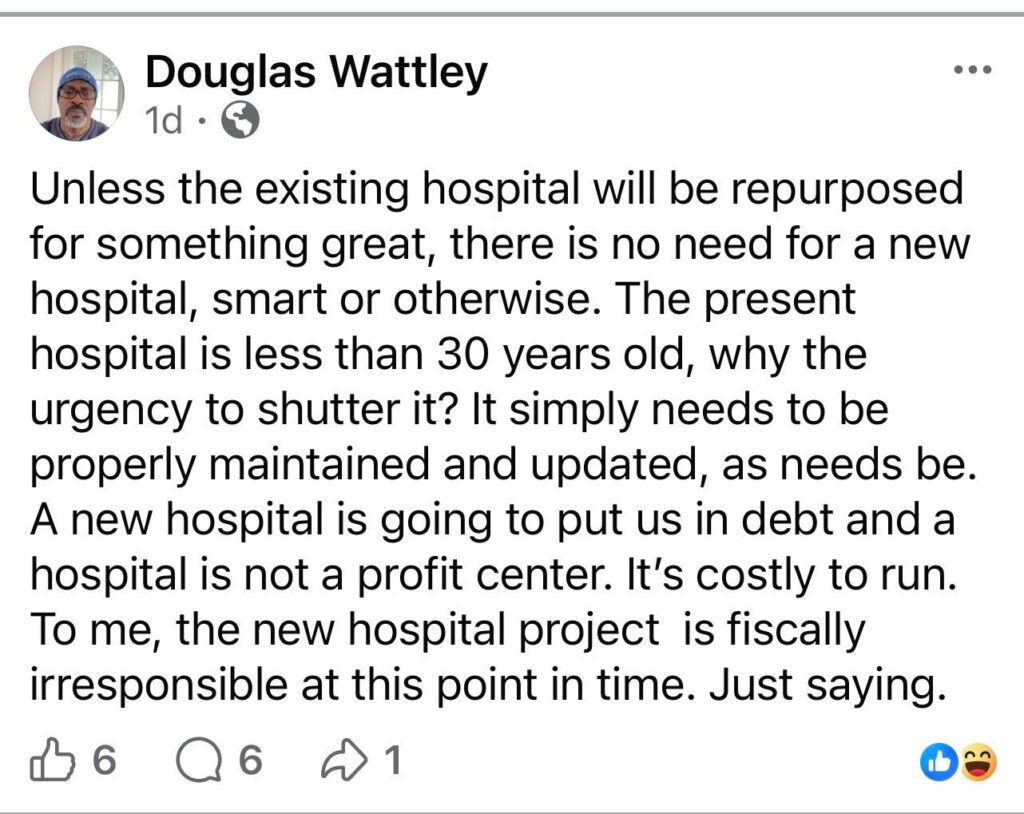
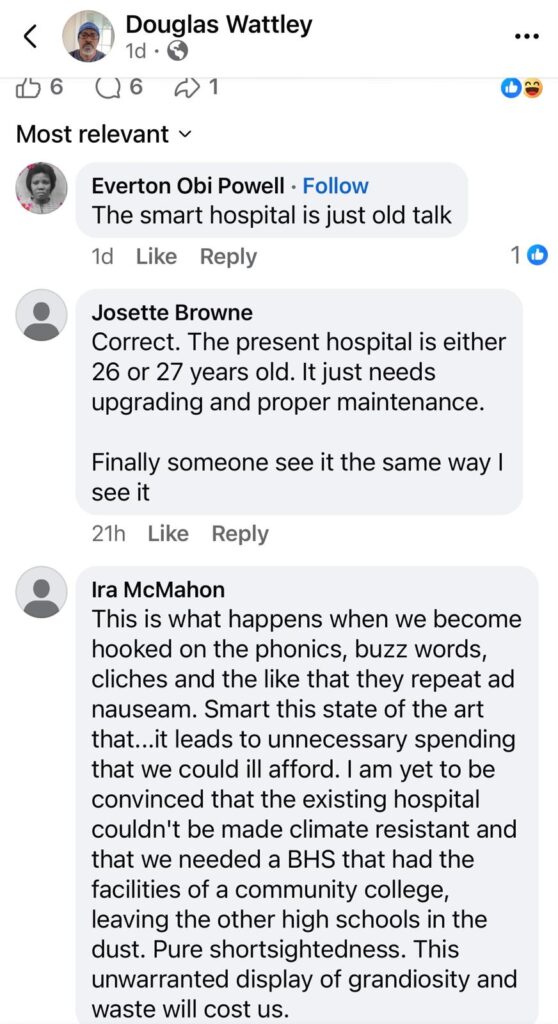
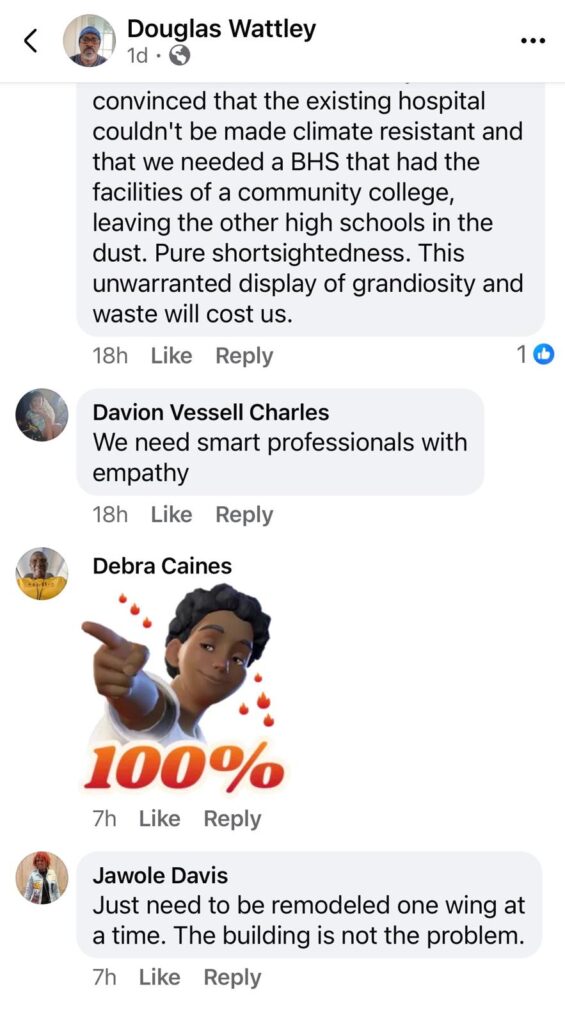
In a candid and widely circulated social media post, Wattley questioned the urgency and fiscal wisdom of replacing the Joseph N. France (JNF) General Hospital, arguing that the existing facility—still under three decades old—could be modernized through proper maintenance and targeted upgrades rather than replaced entirely.
“Unless the existing hospital will be repurposed for something great, there is no need for a new hospital, smart or otherwise,” Wattley wrote.
“The present hospital is less than 30 years old. Why the urgency to shutter it? It simply needs to be properly maintained and updated, as needs be.”
Fiscal Concerns at the Center of Debate
Wattley’s remarks go beyond infrastructure considerations. His primary concern appears to be fiscal sustainability, warning that the construction of a new hospital could saddle the country with significant debt while providing little economic return.
“A new hospital is going to put us in debt and a hospital is not a profit center. It’s costly to run,” Wattley cautioned.
“To me, the new hospital project is fiscally irresponsible at this point in time.”
His comments have resonated strongly online, with several citizens echoing his concerns about government spending priorities and questioning whether a full replacement facility is necessary.
Citizens Weigh In
Public reaction has been swift and polarized.
One commenter described the proposed smart hospital concept as “just old talk,” suggesting the idea has been repeated over time without meaningful implementation.
Another citizen pointed out that the current hospital is approximately 26–27 years old, arguing that strategic upgrades and consistent maintenance could extend its life significantly.
Others expressed broader concerns about what they see as a growing reliance on political buzzwords such as “smart” and “state-of-the-art.”
“This is what happens when we become hooked on the phonics, buzz words, clichés and the like that they repeat ad nauseam,” wrote one contributor.
“Smart this, state-of-the-art that—it leads to unnecessary spending that we could ill afford.”
Some observers even suggested a phased renovation approach, proposing that individual wings of the hospital could be modernized over time, allowing services to continue uninterrupted while improving facilities.
Infrastructure vs. Vision
The debate highlights a broader policy dilemma facing small island states: whether to invest in large, transformative infrastructure projects or prioritize modernization of existing facilities.
The Joseph N. France General Hospital, opened in the late 1990s, represented a major leap forward for the country’s healthcare infrastructure at the time. However, like many Caribbean public facilities, it now faces challenges related to maintenance, equipment modernization, and growing demand for specialized medical services.
Supporters of a new hospital argue that the current facility was never designed to accommodate modern healthcare technology, expanded patient volumes, or emerging climate resilience standards.
But Wattley’s intervention raises a different question: Is building a brand-new hospital the only solution?
The Real Cost of Healthcare Infrastructure
Healthcare experts often note that hospitals are among the most expensive public facilities to build and maintain, requiring constant upgrades in technology, equipment, staffing, and compliance standards.
Unlike airports or tourism infrastructure, hospitals typically do not generate direct revenue, meaning governments must sustain them through public financing.
For small economies such as St. Kitts and Nevis, large infrastructure loans can therefore have long-term fiscal implications.
Wattley’s comments suggest that a renovation-first strategy could achieve many of the same outcomes at a fraction of the cost.
A National Conversation Emerging
The issue of a new hospital has already been a politically sensitive topic, often framed as a symbol of modernization and progress.
But Wattley’s remarks introduce a different dimension to the conversation—one rooted in practical governance, fiscal caution, and infrastructure management.
Whether the Government proceeds with its vision of a new “smart hospital” or considers alternatives such as phased upgrades, one thing is clear: the national conversation about healthcare infrastructure is far from over.
And as Wattley’s intervention demonstrates, even a single voice with deep institutional experience can reshape the terms of that debate.
For many citizens now asking hard questions, the central issue may not simply be whether the country needs a new hospital—but whether the one it already has has truly been given the care and investment it deserves.
















Leave a comment
You must be logged in to post a comment.