Grenada Emerging as OECS Youth Gambling Hotspot as New Figures Raise Alarm Over Exposure, Betting Growth and Social Risk
TIMES CARIBBEAN | NEWS FEATURE
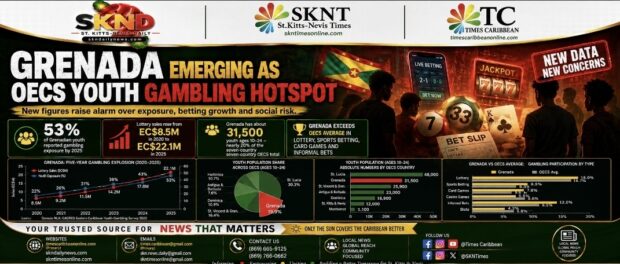
Grenada is facing growing concern over what researchers and social observers are describing as a rapidly expanding youth gambling problem, with new figures suggesting the Spice Isle may now be emerging as the OECS hotspot for gambling exposure among young people.
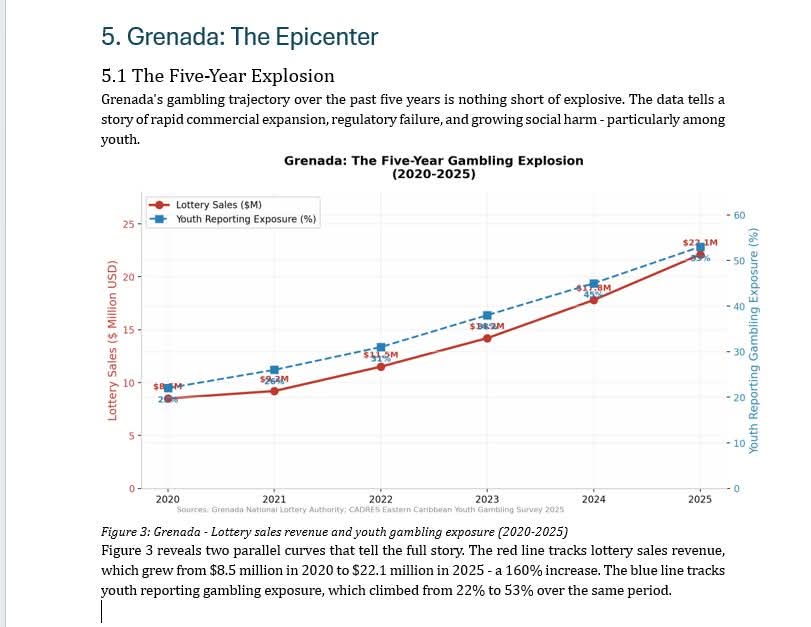
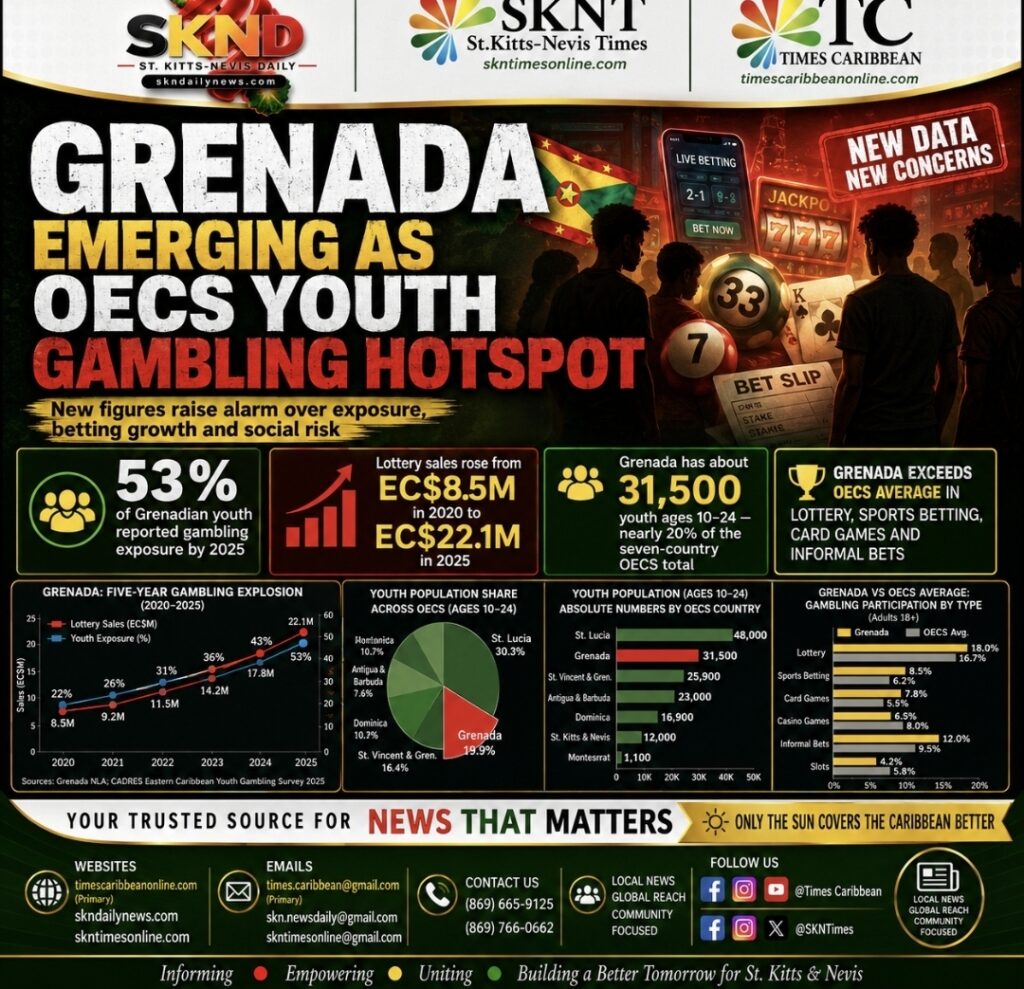
The report paints a troubling picture of a sector expanding sharply over a five-year period. Grenada’s lottery sales reportedly increased from approximately EC$8.5 million in 2020 to EC$22.1 million in 2025, representing an estimated 160 percent increase. Analysts say the parallel rise in both gambling revenue and youth exposure should be treated as a major warning sign for policymakers, schools, families, churches, and youth-development agencies.
What was once widely viewed as a harmless pastime or a modest source of public revenue is now being framed by critics as a serious youth-development and social protection challenge. Concerns have been raised that gambling culture is increasingly being normalised through sports, mobile phones, community spaces, social media, peer groups, and informal networks.
The report also suggests that gambling participation is not being driven only by entertainment. Economic hardship was identified by 93 percent of respondents as the leading reason young people turn to gambling, with digital access and online betting also cited as major drivers. This points to a deeper social issue: many young people may be viewing betting as a possible way out of financial stress, unemployment, rising living costs, and limited opportunity.
That concern is especially serious in small island societies, where behaviours can spread quickly through families, schools, communities, shops, churches, sporting circles, and online spaces. When young people grow up seeing gambling as ordinary, exciting, or financially useful, experts warn they may underestimate the risks of debt, dependency, emotional strain, school disengagement, family conflict, and other long-term social consequences.
The report also raises concern about gambling-related disputes and altercations. According to the data provided, 37 percent of respondents said they had seen or heard of gambling-related altercations within the previous six months, compared with 27 percent one year earlier. While these figures require careful policy review, they suggest that gambling may no longer be only a private financial matter, but a growing community concern.
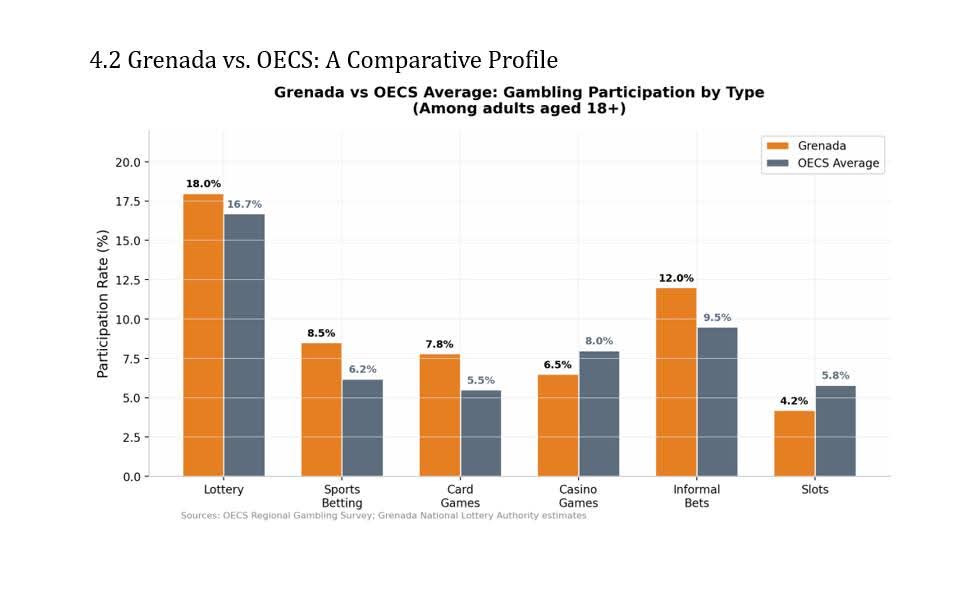
Comparative OECS data further highlights Grenada’s position. In several gambling categories, including lottery participation, sports betting, card games, and informal betting, Grenada appears above the OECS average. Lottery participation was listed at 18 percent in Grenada, compared with an OECS average of 16.7 percent. Sports betting was listed at 8.5 percent, compared with 6.2 percent regionally, while informal betting stood at 12 percent, compared with an OECS average of 9.5 percent.
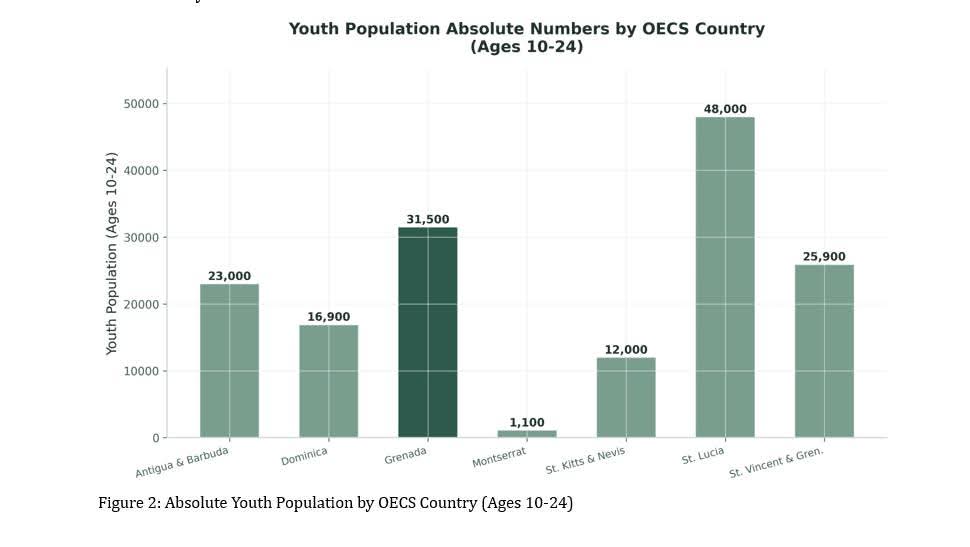
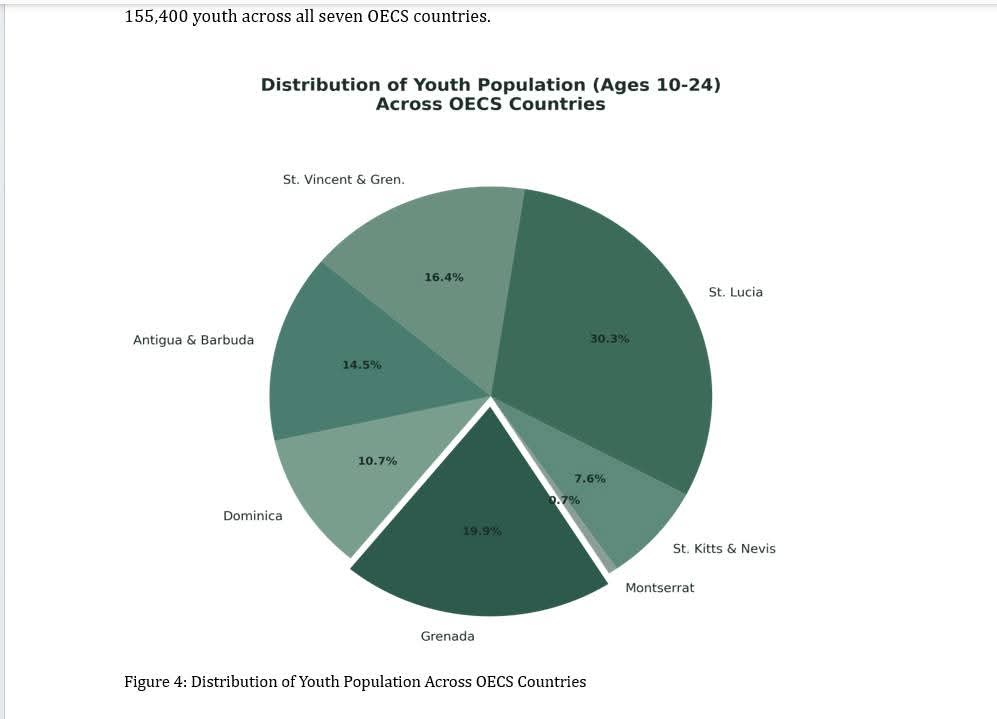
Youth population figures also show why the issue cannot be ignored. Grenada has an estimated 31,500 young people between ages 10 and 24, representing nearly 20 percent of the youth population across the seven OECS countries included in the analysis. That gives the country one of the largest youth populations in the grouping, behind St. Lucia, and increases the urgency of targeted youth-protection measures.
Public health advocates say the response must go beyond moral concern. They argue that Grenada and the wider OECS need stronger age-verification systems, tighter controls on gambling advertising, modern digital betting regulation, school-based education, public awareness campaigns, and accessible support services for gambling-related harm.
The central question now facing Grenada is whether the gambling industry’s revenue growth is being matched by proper social safeguards. Without decisive action, observers warn that the region could see rising youth debt, school disengagement, emotional stress, family tension, and long-term loss of human capital.
For Grenada and the OECS, the figures represent more than a statistical warning. They point to a growing social challenge that may require urgent regional attention.
Persons seeking a copy of the full report may contact: justinecpierre@gmail.com.
















Leave a comment
You must be logged in to post a comment.