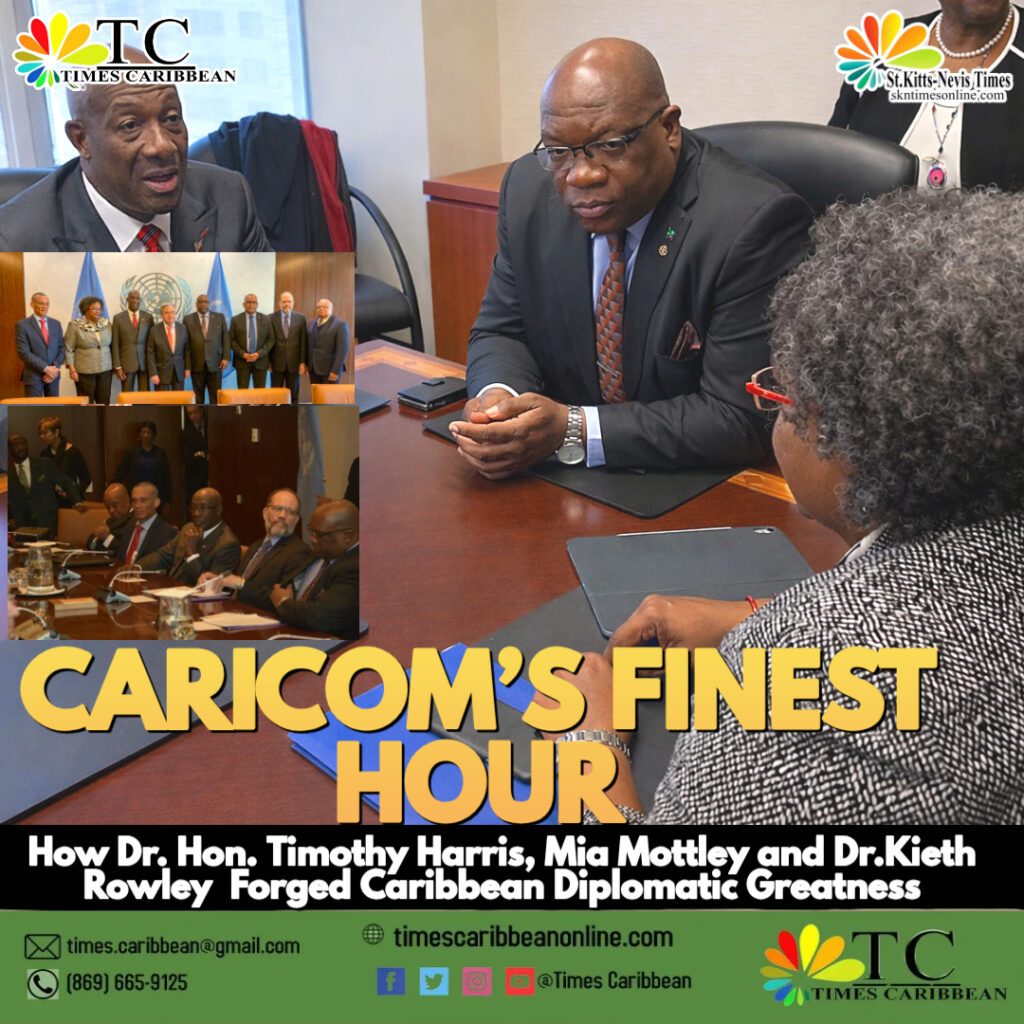
CARICOM’S FINEST HOUR: How Dr. Hon. Timothy Harris, Mia Mottley and Dr.Kieth Rowley Forged Caribbean Diplomatic Greatness
In the annals of Caribbean diplomacy, there are moments that define eras — seismic shifts in global geopolitics where the region’s voice either whispers into the winds of larger powers… or roars with principled conviction for the sake of peace, sovereignty and regional integrity.
January–February 2019 was such a moment.
At a time when the political and constitutional crisis in Venezuela threatened to spill over into a wider regional conflagration — with the United States and other Western powers quickly moving to recognize a self-declared president — the Caribbean Community (CARICOM) was faced with a choice: sit on the sidelines and watch global giants reshape our hemisphere, or step into the spotlight and assert a distinctly Caribbean path rooted in peace, law and moral authority.
Under the chairmanship of Dr. the Honourable Timothy Harris, Prime Minister of St. Kitts and Nevis, CARICOM chose the latter — and rose to meet the moment with strategic diplomacy of the highest order.
A Caribbean Bloc Defining Its Own Destiny
On January 24, 2019, just days after Venezuelan opposition leader Juan Guaidó declared himself interim president and Washington quickly backed him, CARICOM Heads of Government convened an emergency meeting. With laser-like clarity they declared that:
- The Caribbean must remain a “Zone of Peace”;
- Non-intervention and respect for sovereignty are paramount;
- Diplomacy — not military force — must be the method of resolution.
This wasn’t rhetorical diplomacy. It was a collective declaration of geopolitical self-respect — a small region refusing to be pushed into the orbit of superpower brinkmanship.
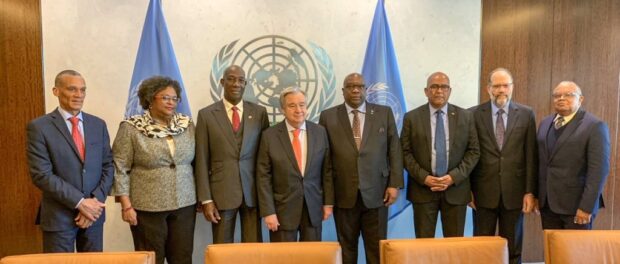
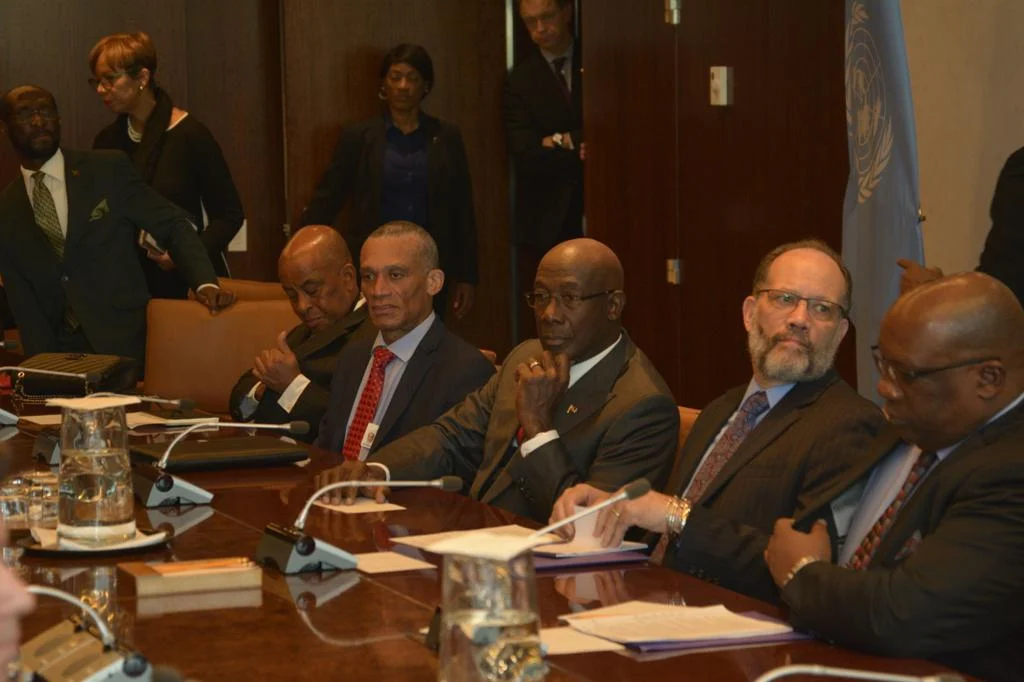
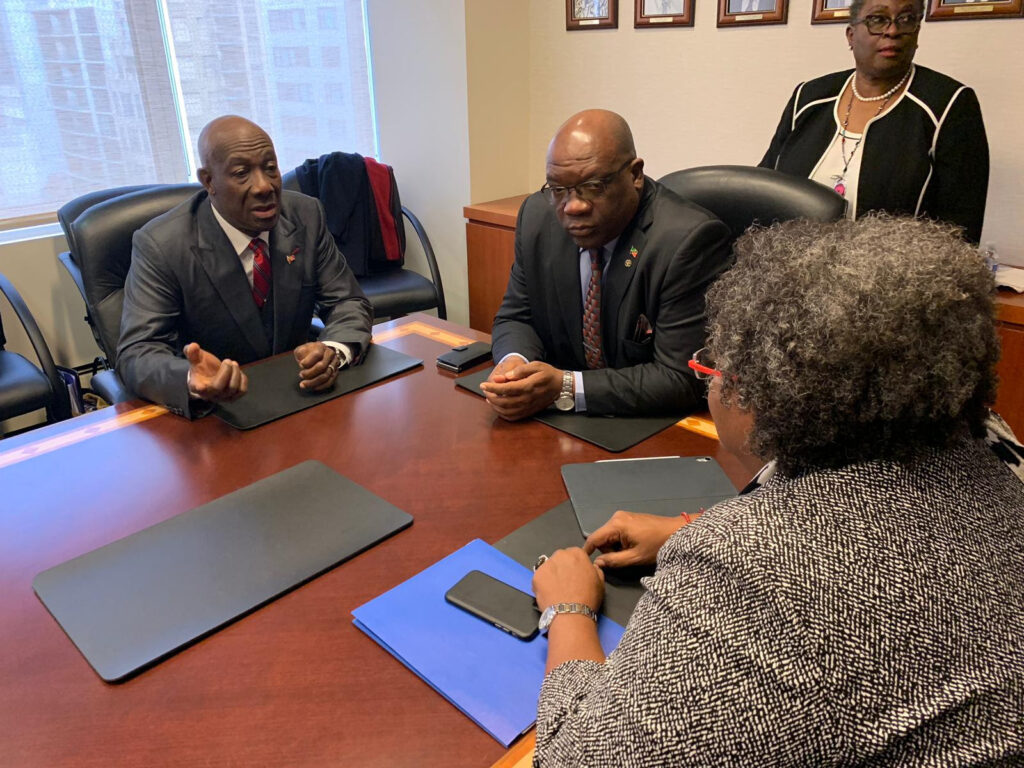
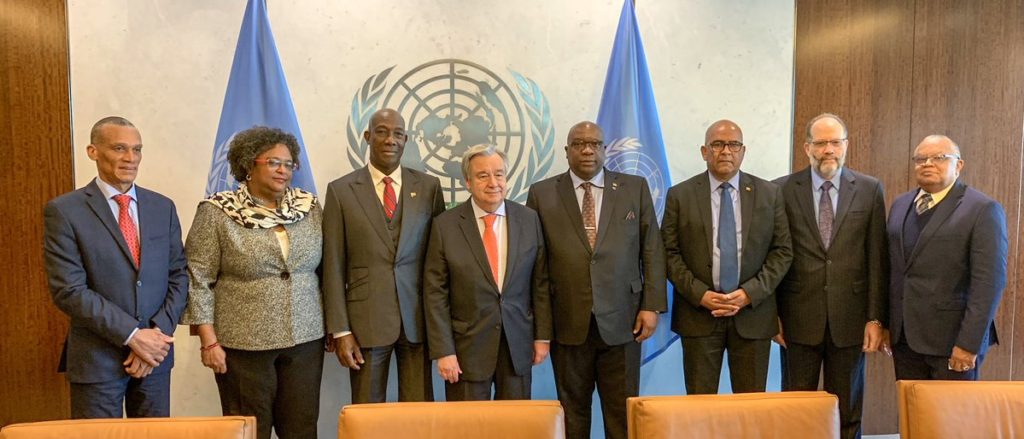
Within days, the Caribbean’s prime ministers launched an unprecedented diplomatic offensive — culminating in a powerful high-level CARICOM delegation to the United Nations in New York. Led by Dr. Harris, joined by Prime Ministers Keith Rowley of Trinidad & Tobago and Mia Mottley of Barbados, and supported by CARICOM Secretary-General Irwin LaRocque, this team carried a firm message: “Hands off Venezuela. Respect our zone of peace. We are here to forge a path toward dialogue and resolution.”
From New York to Montevideo: The Birth of the Montevideo Mechanism
Their diplomacy was not symbolic — it yielded tangible strategic success. At the behest of the United Nations Secretary-General, CARICOM harnessed the legitimacy of multilateralism and, alongside Mexico and Uruguay, designed a novel process for dialogue and negotiation — the Montevideo Mechanism, a four-phase framework to coax all Venezuelan actors back to meaningful dialogue.
This mechanism was more than a peace plan. It was:
- A rejection of force;
- An affirmation of Caribbean states as legitimate and independent actors in global diplomacy;
- A moral assertion that tiny nations — when united — can reshape the narrative.
It was also rooted in deep strategic thinking: if violence was averted in Venezuela, Caribbean tourism, security, trade and regional stability would be protected. CARICOM’s geopolitical interests were inseparable from global peace.
Why This Was CARICOM’s Finest Hour
The term “finest hour” is not hyperbole. In less than three weeks the community:
- Mobilised swiftly against a rapidly escalating crisis;
- Asserted a principled position rooted in international law;
- Completed a diplomatic tour de force from New York to Montevideo;
- Crafted and launched an internationally recognised negotiation framework;
- Averted the spectre of unbridled foreign intervention directly tied to Caribbean hemispheric security.
Unlike many regions whose responses fracture under pressure, CARICOM stood coherently and united. It was an intellectual and moral counterweight to the tide of unilateral power politics. The Caribbean wasn’t a passive spectator. It became a architect of peace — guided by law, not coercion.
Legacy and Lessons for today’s Caribbean
Seven years on, when geopolitical tremors still reverberate across Latin America and the Caribbean, the 2019 CARICOM intervention under Dr. Harris stands as a blueprint for strategic independence:
A region small in size, but enormous in resolve, can shape global outcomes.
This was no accidental moment. It was a carving of history, sovereign diplomacy at its best, a demonstration that principles can be translated into global influence.
CARICOM’s finest hour was not in rhetoric — it was in strategy, unity, and the courage to stand for peace over power politics.
And the Caribbean still needs that spirit today more than ever.
















Leave a comment
You must be logged in to post a comment.