GUNFIRE, CHAOS & A PRESIDENT ARRESTED — GUINEA-BISSAU ERUPTS AS DISPUTED ELECTION IGNITES NATIONAL CRISIS”
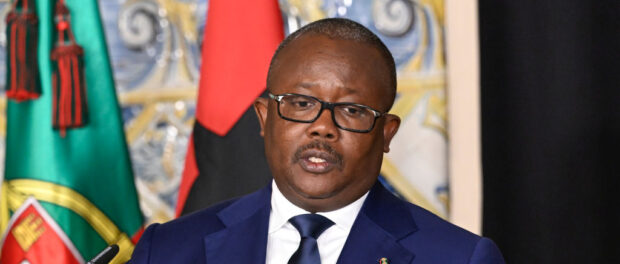 LISBON, PORTUGAL - OCTOBER 24: The President of Guinea-Bissau Umaro Sissoco Embaló delivers remarks during a joint press conference with Portuguese President Marcelo Rebelo de Sousa (not seen) at the end of their one-on-one meeting in Belem Presidential Palace at the beginning of Umaro Sissoco Embaló three-day State Visit to the country on October 24, 2023, in Lisbon, Portugal. The President of Guinea-Bissau Umaro Sissoco Embaló will also be meeting with the Portuguese Prime Minister Antonio Costa, Lisbo
Bissau, Guinea-Bissau — Guinea-Bissau plunged into turmoil on Wednesday after President Umaro Sissoco Embaló was arrested by armed men, sparking fears of another violent rupture in one of West Africa’s most politically fragile states. The dramatic seizure of the head of state unfolded just days after a bitterly contested election in which the main opposition party was disqualified, throwing the country into a combustible mix of outrage, suspicion, and rivalry.
Gunfire crackled across parts of the capital as residents barricaded themselves indoors. The identity, motives, and affiliations of Embaló’s captors remain unknown, fueling speculation about whether this was a rogue military operation, an internal palace betrayal, or an orchestrated attempt to overturn the post-election trajectory.
A POWER STRUGGLE EXPLODES INTO THE OPEN
The political atmosphere had been toxic long before Wednesday’s arrest. With the opposition barred from the ballot and accusations of state interference swirling, the nation braced for confrontation even before polls closed.
Now, the crisis has escalated into a full-blown legitimacy war. Both Embaló and his challenger, Fernando Dias, have openly declared victory, turning the election into a dangerous two-man tug-of-war. Dias is already contesting the preliminary results, alleging manipulation and irregularities.
Meanwhile, the electoral commission continues to insist that final official results will be announced by Thursday, though analysts warn that the nation may be too destabilized for any result to be widely accepted.
TURNOUT HIGH, TRUST LOW
Despite the tensions, turnout exceeded 65%, a remarkable figure in a country where political crises often suppress voter engagement. Yet the high participation stands in stark contrast to the deep mistrust that now engulfs the electoral process.
Observers say the disqualification of the main opposition—a move widely criticized as politically motivated—laid the foundation for today’s chaos. With one faction blocked and another internally fractured, the election was always likely to end in confrontation.
A COUNTRY TRAPPED IN A COUP LOOP
Guinea-Bissau’s history casts a long, dark shadow over the present crisis. Since independence, the nation has endured:
- Frequent coups and coup attempts
- Assassinations of political leaders
- Chronic military interference
- Fragile and short-lived civilian governments
The arrest of a sitting president—under mysterious circumstances, amid contested election results—has revived fears that Guinea-Bissau is once again sliding into its familiar cycle of military arbitrage over civilian politics.
REGIONAL & INTERNATIONAL ALARMS SOUNDING
ECOWAS, already stretched by democratic breakdowns in Mali, Guinea, Burkina Faso, and Niger, is scrambling to assess the situation. Early diplomatic signals indicate that the bloc may treat this incident as a de facto coup attempt, regardless of who orchestrated it.
Western governments are reportedly monitoring the situation closely, particularly due to Guinea-Bissau’s strategic vulnerability to transnational trafficking networks and its importance in regional maritime security.
A NATION ON EDGE
As armed men roam parts of the capital and the president’s location remains uncertain, civilians have retreated into fear and confusion. Businesses are shuttered, roads partially blocked, and rumors spreading faster than verified information.
Tonight, Guinea-Bissau stands at a crossroads:
Will this crisis harden into another military takeover?
Will rival presidential claims explode into factional violence?
Or will regional pressure force a negotiated return to constitutional order?
For now, one thing is clear: the country is once again in dangerous, uncharted waters.
Times Global will continue to provide updates as this story evolves.
















Leave a comment
You must be logged in to post a comment.