U.S. GREEN CARD CRISIS: NEARLY 1 MILLION INDIANS CAUGHT IN BACKLOG AS EB-2 WAIT COULD REACH 179 YEARS
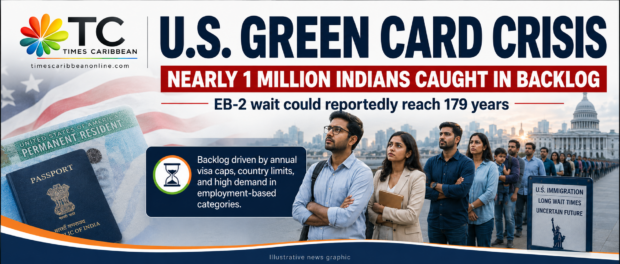
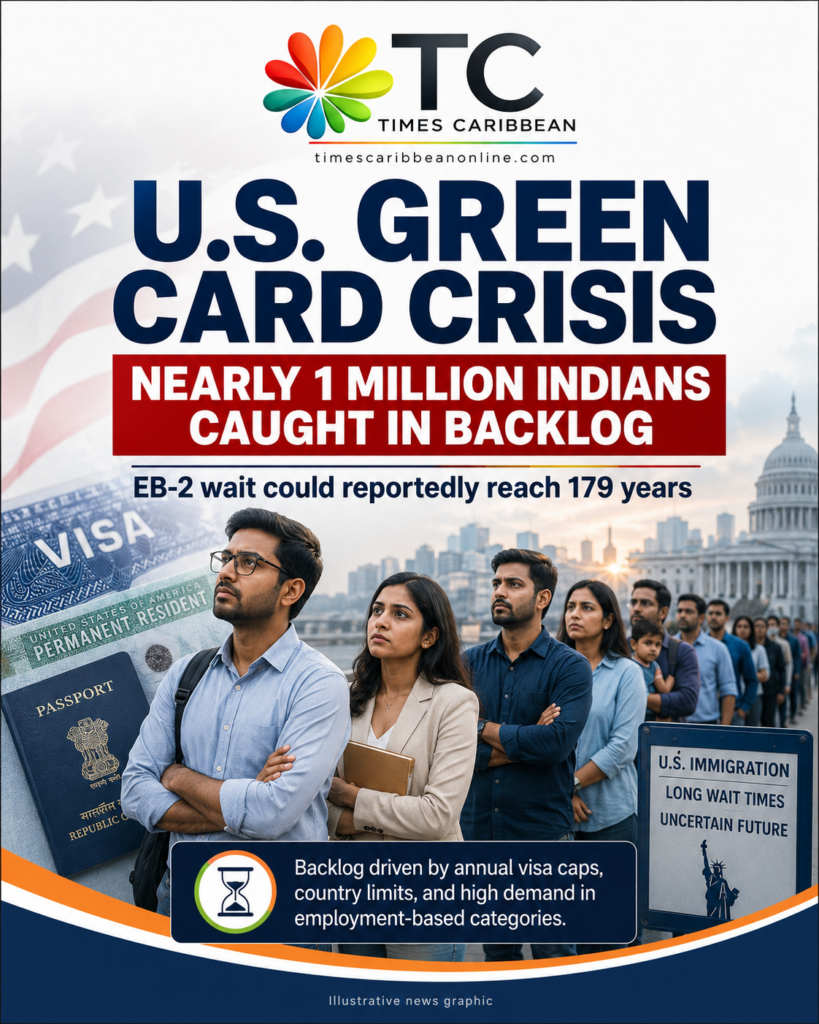
WASHINGTON, D.C. — Nearly one million Indian nationals are caught in America’s employment-based green card backlog, with a newly filed EB-2 applicant potentially facing an extraordinary 179-year wait for permanent residency, according to a new analysis by the National Foundation for American Policy (NFAP).
The figures have renewed debate over a U.S. immigration system that highly skilled professionals and their families can remain tied to for decades.
NFAP estimates that 996,599 Indians were waiting across the EB-1, EB-2 and EB-3 employment-based preference categories as of December 2025. That represents roughly 79% of the estimated 1.26 million people in those three queues.
The most severe pressure is in EB-2, generally used by professionals with advanced degrees or exceptional ability.
NFAP estimates approximately 731,566 Indian nationals were in the EB-2 backlog, while another 213,414 were waiting in EB-3 and 51,619 in EB-1.
And the projected waiting periods are striking.
For an Indian national whose employment-based petition or labour certification was filed in January 2026 or later, NFAP estimates a potential wait of approximately:
- EB-2: 179 years
- EB-3: 38 years
- EB-1: 4 to 5 years
The 179-year figure is a projection based on the present backlog and visa availability, not a guaranteed waiting period for every applicant. Actual timelines could change because of immigration reform, future visa allocations or applicants leaving the queue.
At the centre of the problem is a decades-old numerical system.
U.S. law generally provides about 140,000 employment-based immigrant visas annually, with spouses and dependent children also counted against the numerical limits. Country-based restrictions further constrain how quickly applicants from heavily subscribed nations such as India can move through the system.
The result is what many professionals describe as years—or potentially decades—of immigration uncertainty while building careers, raising families and contributing to the U.S. economy.
The latest numbers are likely to intensify calls in Washington for changes to employment-based visa limits and the way green cards are distributed by nationality.
For hundreds of thousands of Indian professionals, however, the issue is already deeply personal.
A pathway intended to lead from temporary employment to permanent residency has, for many, become a queue that could potentially extend beyond an entire working lifetime.
















Leave a comment
You must be logged in to post a comment.