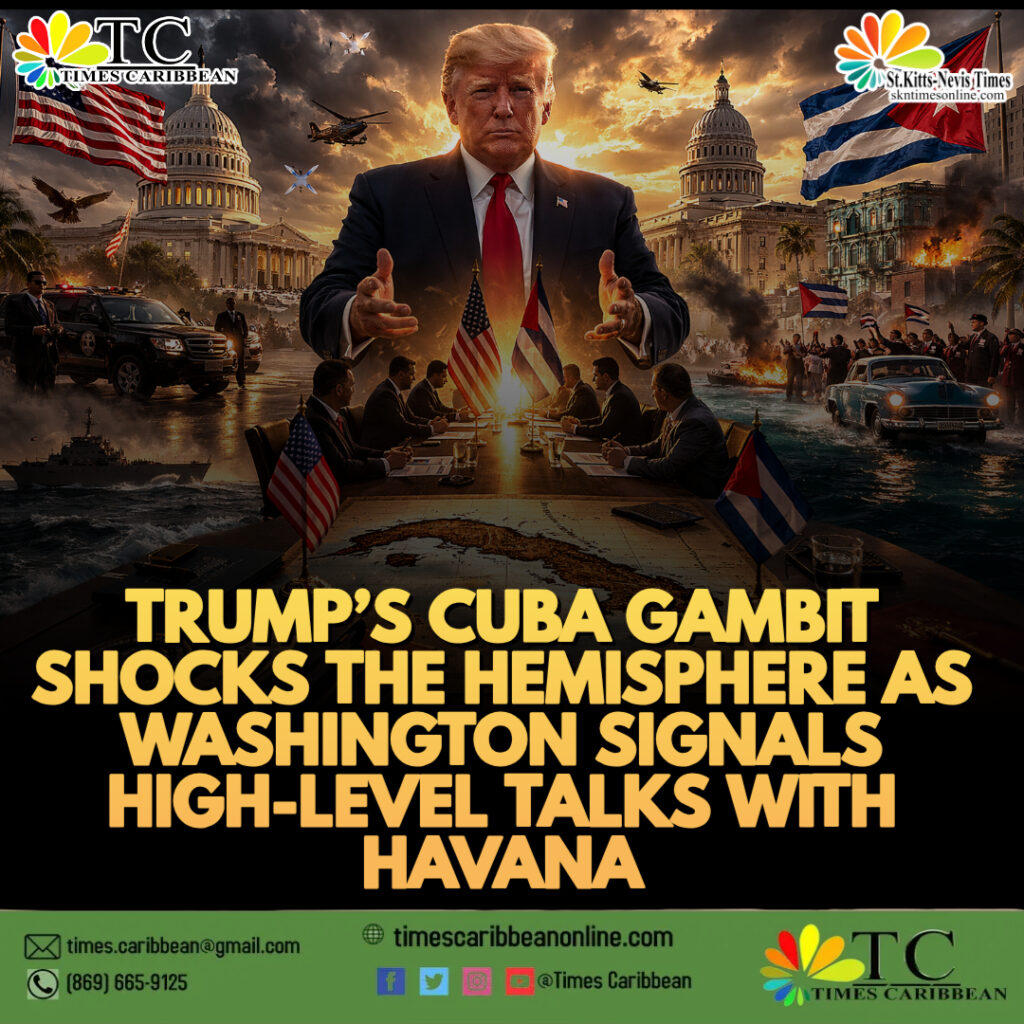
TRUMP’S CUBA GAMBIT SHOCKS THE HEMISPHERE AS WASHINGTON SIGNALS HIGH-LEVEL TALKS WITH HAVANA
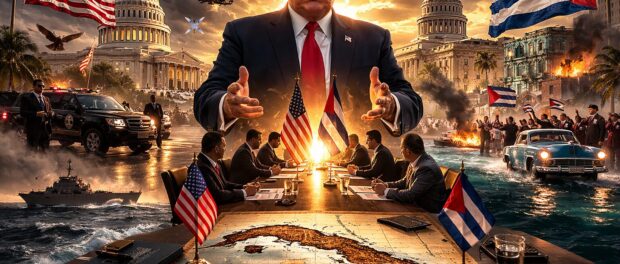
In a statement that ricocheted across capitals from Miami to Havana to Brasília, U.S. President declared that Washington is engaged in high-level talks with Cuba — and then floated a phrase that has stunned diplomats and ignited geopolitical speculation: a possible “friendly takeover of Cuba.”
Speaking outside the White House before departing for Texas, Trump said Secretary of State was engaged with Cuban leaders “at a very high level,” adding that Cuba “has no money… no anything right now,” and “maybe we’ll have a friendly takeover.”
No clarification followed. The White House declined to elaborate.
But in the charged atmosphere of 2026 — amid sanctions, oil embargoes, maritime violence, and regime pressure campaigns — those two words have landed like a diplomatic thunderclap.
A Phrase Loaded With History
The United States has not used language even remotely resembling “takeover” in official discourse on Cuba in decades. The historical shadow is long and unmistakable.
Since 1962, following the failed , Washington has maintained a sweeping trade embargo against Havana — a relic of Cold War confrontation with the regime established under . For more than sixty years, regime change in Cuba has oscillated between overt hostility, covert maneuvering, diplomatic thaw, and renewed sanctions.
Trump’s first administration reversed Obama-era normalization, re-tightened sanctions, and labeled Cuba a state sponsor of terrorism. Now, in his second term, the rhetoric has escalated beyond sanctions into something more ambiguous — and potentially more provocative.
What does a “friendly takeover” mean in diplomatic language? Is it:
- A negotiated transition of power?
- Economic trusteeship?
- Political restructuring backed by U.S. leverage?
- Or simply rhetorical brinkmanship?
The ambiguity itself is destabilizing.
Cuba’s Economic Collapse: Pressure or Opportunity?
Trump described Cuba as “a failed nation” seeking American help. There is no doubt that Cuba is enduring one of its worst economic crises since the 1990s “Special Period.”
Fuel shortages, blackouts, food insecurity, and mass migration have battered the island. The collapse of subsidized Venezuelan oil flows — following the removal of in a U.S.-backed operation earlier this year — has tightened the noose around Havana’s energy sector.
In late January, Trump signed an executive order threatening tariffs on countries supplying oil to Cuba, intensifying what critics describe as economic siege warfare.
Cuba’s Deputy Foreign Minister, , fired back on social media, stating that the U.S. “maintains its fuel embargo against Cuba in full force,” calling it a form of collective punishment.
Meanwhile, over 40 U.S. civil society organizations — including the , , and the — sent a letter to Congress warning that tightening oil restrictions could spark humanitarian collapse.
The geopolitical chessboard is now layered with moral, legal, and strategic tensions.
The Speedboat Incident: Spark or Signal?
Just two days before Trump’s remarks, Cuba reported that its Coast Guard intercepted a Florida-registered speedboat carrying 10 armed individuals off Villa Clara province. Four were killed; six were wounded. One Cuban official was injured.
The incident — involving U.S.-registered equipment, Cuban waters, and armed confrontation — adds combustible volatility to already fragile U.S.–Cuba relations.
Rubio has confirmed that the Department of Homeland Security and the Coast Guard are investigating.
Was the speedboat incident isolated? Or symptomatic of broader destabilization efforts?
The timing, juxtaposed with “friendly takeover” rhetoric, will not go unnoticed in Havana — or in Moscow and Beijing.
Regime Change by Economics?
Trump previously suggested that military intervention in Cuba might be unnecessary because economic collapse alone could bring political change.
This signals a strategic doctrine: maximum economic constriction leading to negotiated surrender — or systemic implosion.
Yet international humanitarian law scholars warn that policies deliberately inducing mass deprivation may constitute collective punishment. The letter to Congress explicitly framed oil restrictions as potentially violating international norms.
If Washington’s strategy is to force negotiation through energy strangulation, the phrase “friendly takeover” may mask a harsher calculus.
Regional Shockwaves: What CARICOM and Latin America Are Watching
The Caribbean Community (CARICOM) and Latin American governments are watching closely.
For decades, Caribbean leaders have maintained diplomatic solidarity with Cuba, particularly in healthcare cooperation, disaster relief, and education exchanges. Any U.S. move perceived as coercive regime restructuring would place regional governments in an impossible diplomatic position.
Brazil, Mexico, and other Latin American powers have historically resisted overt U.S. interventionism in the hemisphere.
Even within the United States, the Cuban-American exile community is split. Some welcome decisive change; others fear chaos or humanitarian catastrophe.
Trump hinted that something “very positive” may be coming for exiles. But without specifics, speculation ranges from property restitution frameworks to migration policy shifts.
The Legal Question: Can a Takeover Be “Friendly”?
Under international law, sovereignty is inviolable absent consent.
If Havana formally invited U.S. economic assistance tied to structural reforms, that would be one scenario. But a takeover — friendly or otherwise — implies transfer of control.
Would Cuba:
- Allow U.S.-managed economic restructuring?
- Permit political reform under American supervision?
- Or is this simply leverage language ahead of closed-door negotiations?
The lack of clarity fuels risk.
A Critical Inflection Point
Cuba stands weakened. The United States stands emboldened after its operation against Venezuela’s leadership. Russia remains distracted. China is recalibrating.
Trump’s language suggests Washington believes the moment is ripe.
But history warns that Cuba is no ordinary file in American foreign policy. It is emotional, ideological, and deeply embedded in hemispheric identity.
A “friendly takeover” may be shorthand for negotiated transformation.
Or it may be rhetorical improvisation.
Either way, it has altered the diplomatic temperature overnight.
As talks reportedly continue at “a very high level,” the hemisphere waits — uncertain whether it is witnessing a breakthrough in U.S.–Cuba relations or the prelude to a new era of confrontation.
One phrase has reopened a chapter many thought was permanently archived.
And the world is watching.
















Leave a comment
You must be logged in to post a comment.