PM DREW UNVEILS SOVEREIGN WEALTH FUND—BUT QUESTIONS LOOM OVER TRUST, TIMING AND TRANSPARENCY
“SAVE TODAY OR SQUANDER TOMORROW?”
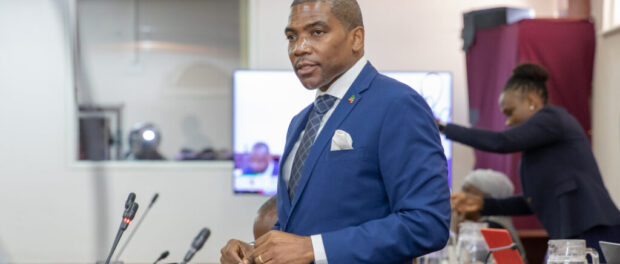
BASSETERRE, ST. KITTS — In what he boldly described as a “transformative step toward securing the nation’s future,” Prime Minister Terrance Drew has tabled the Sovereign Wealth and Resilience Fund Bill, 2026—a sweeping proposal that promises long-term prosperity, but is already stirring intense debate over credibility, control, and timing.
Presented in the National Assembly on March 31, the Bill aims to capture and invest the country’s most lucrative revenue streams—including Citizenship by Investment (CBI) inflows and anticipated geothermal earnings—into a national fund designed to safeguard wealth for generations.
But beneath the polished language of “stewardship” and “resilience,” critics are asking a far more pointed question:
Can a government struggling with present-day economic pressures be trusted to manage tomorrow’s billions?
A BILLION-DOLLAR PROMISE—OR A POLITICAL PIPE DREAM?
Prime Minister Drew framed the legislation as a historic pivot away from short-term spending toward disciplined savings.
“This bill is about whether unusual revenues are consumed and forgotten or invested and preserved.”
He invoked biblical imagery—comparing the initiative to Joseph storing grain in Egypt—as a moral and strategic blueprint for national planning.
But while the rhetoric is lofty, the reality is more complex.
The proposed fund would be fueled by:
- CBI revenues
- Geothermal sector earnings (still largely unrealized)
- Sustainable Island State contributions
- Other qualifying inflows
The ambition is clear:
Turn volatile income into permanent national wealth.
The uncertainty?
Whether those revenues will materialize at the scale being projected.
FROM SPENDING TO SAVING—OR JUST REPACKAGING?
For years, successive administrations have leaned heavily on CBI revenues to fund government operations, infrastructure, and social programs.
Now, the Drew administration is signaling a philosophical shift:
Less consumption
More preservation
But skeptics argue this raises uncomfortable contradictions:
- If revenues are now to be saved, how will current spending obligations be met?
- Will the Fund become a genuine savings mechanism—or simply a rebranding of existing financial flows?
- And most critically—what safeguards truly prevent political interference?
THE PROMISE OF PROTECTION—AND THE FEAR OF CONTROL
The Prime Minister insists the Fund will be governed by strict oversight mechanisms:
- Independent board with fiduciary responsibility
- Mandatory public reporting
- Independent audits
- Limited, rule-based withdrawals
Withdrawals, he said, will only be allowed under specific conditions:
Natural disasters
Economic shocks
Carefully vetted national development priorities
On paper, it mirrors global best practices, with alignment to standards from the International Monetary Fund.
But in practice, critics warn:
Laws can be written strong—and weakened later.
THE GEO-THERMAL GAMBLE
A major pillar of the Fund’s future value rests on anticipated geothermal revenues—a sector still in development.
That raises a critical risk:
Is the government building a fund on money it does not yet have?
If geothermal projections fall short, or if global economic conditions shift, the Fund’s growth could be significantly constrained—turning a bold vision into a slow-moving financial experiment.
TIMING IS EVERYTHING—AND THIS TIMING IS QUESTIONED
The introduction of the Bill comes at a time when citizens are grappling with:
- Cost of living pressures
- Utility challenges
- Ongoing infrastructure concerns
For many, the optics are striking:
A government asking citizens to tighten belts today—while promising wealth tomorrow.
The question echoing across communities:
Why talk about saving billions when everyday affordability remains a struggle?
A DEFINING MOMENT—OR A DEFINING TEST?
There is no doubt the concept of a sovereign wealth fund carries powerful potential.
If executed properly, it could:
- Stabilize the economy
- Shield against global shocks
- Secure generational wealth
- Reduce reliance on volatile revenue streams
But if mismanaged, it risks becoming:
- A political tool
- A transparency battleground
- A missed opportunity wrapped in grand promises
THE BOTTOM LINE: VISION MEETS VIGILANCE
Prime Minister Drew calls it “stewardship.”
Supporters call it visionary.
Critics call it premature—and potentially risky.
What is certain is this:
The Sovereign Wealth and Resilience Fund Bill, 2026 is not just another piece of legislation.
It is a test of governance, discipline, and trust.
And in a nation where expectations are high and patience is thinning,
the real question is not what the Fund promises—
but whether it will deliver.
















Leave a comment
You must be logged in to post a comment.