LATIN AMERICA AND THE CARIBBEAN’S MOMENT: UN LEADERSHIP RACE COULD MAKE HISTORY
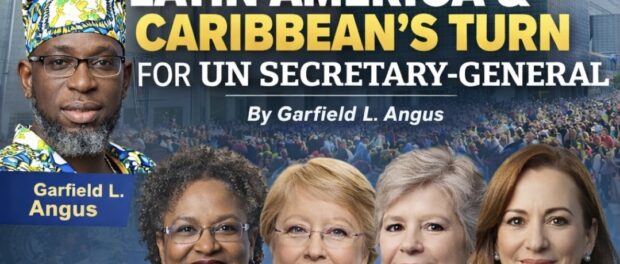
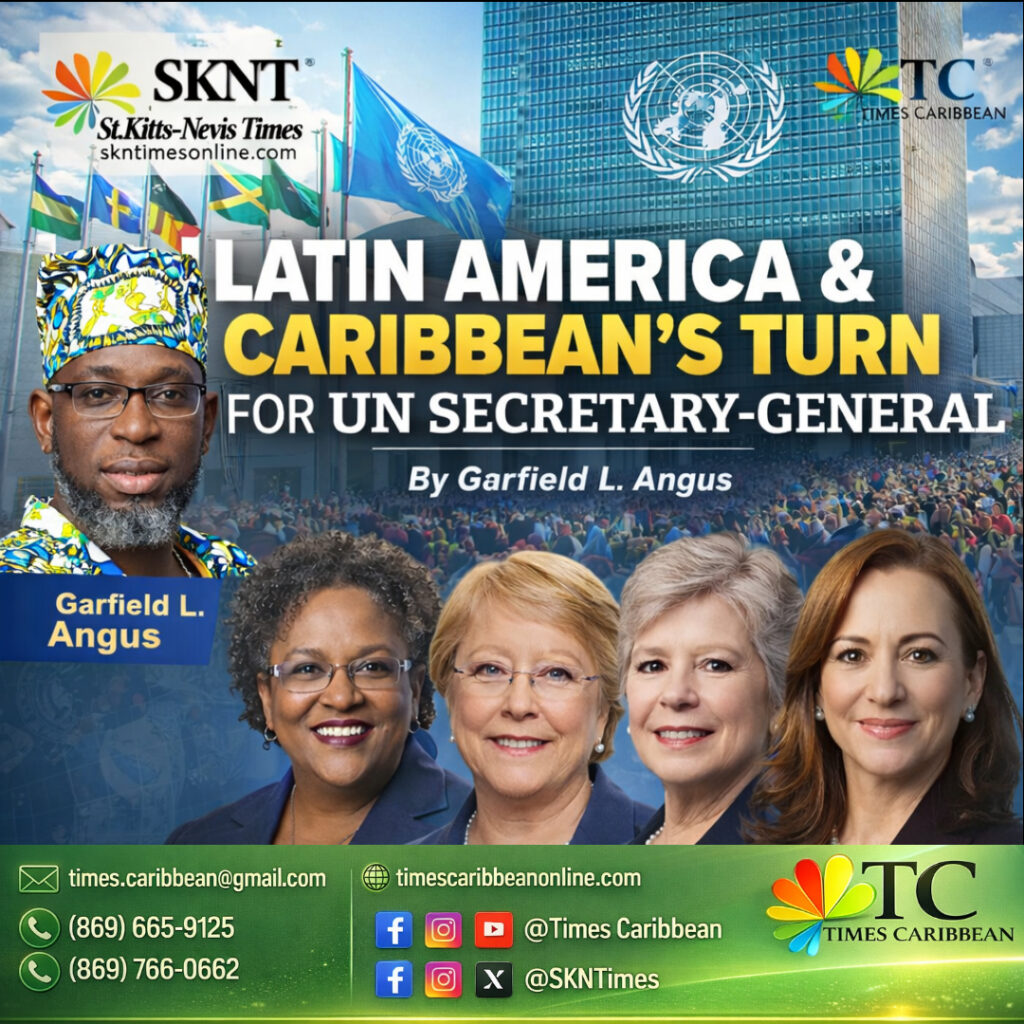
UN LEADERSHIP RACE COULD MAKE HISTORY
By Garfield L. Angus
The question of who will succeed António Guterres as Secretary-General of the United Nations in January 2027 has evolved far beyond a routine leadership transition. It is now a defining test of the organisation’s commitment to its founding ideals—gender equality and equitable global representation.
For the first time in its nearly 80-year history, there is a credible and coordinated global push for a woman to assume the UN’s highest office. At the center of this historic moment stands Latin America and the Caribbean, widely seen as the region most likely to produce that breakthrough leader.
Since its establishment in 1945, the UN has been led exclusively by men—from Trygve Lie to the present day. This legacy stands in stark contrast to the UN Charter’s explicit affirmation of equal rights for men and women. The continued absence of a female Secretary-General is no longer just symbolic—it reflects deeper structural imbalances in global governance.
A Moment for Gender Justice
Momentum for change is no longer abstract; it is active and growing.
Countries including Chile, Mexico, Denmark, and Slovenia have openly called for a transparent, inclusive, and gender-responsive selection process. Civil society groups have echoed these demands, arguing that appointing a woman would strengthen the UN’s legitimacy in a world where fewer than 15 percent of countries are led by women.
The push aligns directly with global frameworks such as Sustainable Development Goal 5 on gender equality and the mission of UN Women.
Representation at the highest level is no longer optional. It is essential.
Why Latin America and the Caribbean?
An equally compelling argument lies in regional rotation. While not formally codified, the practice has become a respected norm within UN diplomacy.
Latin America and the Caribbean last held the post under Javier Pérez de Cuéllar of Peru, who served from 1982 to 1991. By this logic, the region is now due its turn.
But beyond tradition, the region offers strategic advantages. It has a strong legacy of multilateral diplomacy, a reputation for peaceful conflict resolution, and a unique position bridging the Global North and the Global South.
In today’s fractured geopolitical climate, that bridge-building role could prove invaluable.
The Women Who Could Make History
The region’s talent pool is not merely symbolic. It is formidable.
Among the strongest possible contenders are Alicia Bárcena of Mexico, currently serving as Environment Minister and previously a senior UN regional leader; María Fernanda Espinosa of Ecuador, former President of the UN General Assembly; Mia Mottley of Barbados, an internationally respected voice on climate finance and small island vulnerability; Michelle Bachelet of Chile, former UN High Commissioner for Human Rights and twice President of Chile; and Rebeca Grynspan of Costa Rica, current Secretary-General of UNCTAD and a former Vice President.
Each brings diplomatic credibility, international experience, and policy depth—qualities essential for navigating the increasingly complex crises facing the world.
The Political Reality
Despite the momentum, the road to leadership remains steep.
The UN Secretary-General is appointed through a highly political process requiring approval from the Security Council, including its five permanent members: the United States, China, Russia, the United Kingdom, and France.
Any one of those powers can veto a candidate.
This reality often narrows the field to individuals seen as neutral, diplomatic, and broadly acceptable across geopolitical divides.
A More Open Process—But Not Yet a Fair One
Reforms introduced in 2016 have improved transparency. Candidates now present public vision statements, engage in open dialogues with member states, and interact more visibly with civil society.
These changes have made the process more inclusive, but not immune to power politics.
A Defining Opportunity
The possibility of a woman from Latin America and the Caribbean leading the United Nations is more than historic. It is transformative.
At a time of intensifying geopolitical rivalries, escalating climate crises, and deepening global inequality, the need for inclusive and representative leadership has never been greater.
If realised, this moment would not simply mark the appointment of the first female Secretary-General. It would signal a fundamental shift in how global leadership is defined.
The Final Question
After 80 years, the question is no longer whether a woman can lead the United Nations.
The question is whether the world is finally ready to let her.
















Leave a comment
You must be logged in to post a comment.