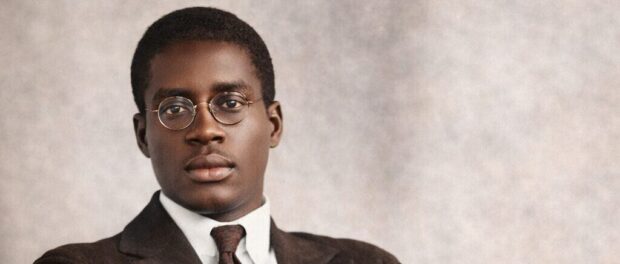
Dr. Samuel Benjamin Jones, OBE (1874–1949): Physician, Patriot, Scholar and Guardian of the People
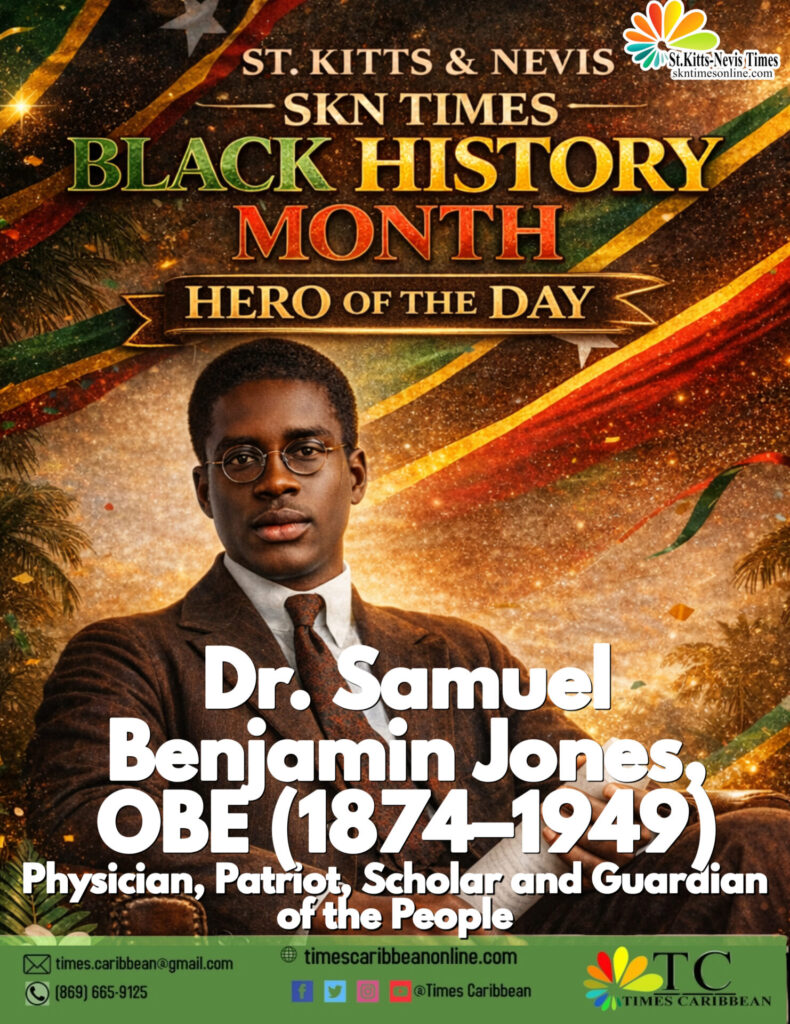
SKN TIMES BLACK HISTORY MONTH HERO OF THE DAY
In the annals of St. Kitts and Nevis and the wider Leeward Islands, few figures stand as tall in moral courage, intellectual depth, and humanitarian service as Dr. Samuel Benjamin Jones, OBE. Born on April 25, 1874, in Antigua, of humble beginnings, Jones rose—through discipline, scholarship, and unshakeable conviction—to become one of the most respected medical minds and social advocates in the early twentieth-century Caribbean.
His life was not merely a career in medicine. It was a mission.
From the Legacy of Slavery to the Halls of Scholarship
Raised by his widowed mother and a grandfather who had himself been born into slavery, young Samuel Jones was taught an enduring lesson: education is liberation.
At just nine years old, he earned a scholarship to the prestigious Antigua Grammar School, later becoming one of the Antigua Diocesan students at Codrington College. His intellectual promise carried him across the Atlantic to the United States, where he taught in North Carolina before entering the medical profession—a field then dominated by exclusionary racial barriers.
Undeterred, Jones pursued further studies in Scotland, earning:
- Licentiate of the Royal College of Physicians (LRFP) – University of Glasgow
- Licentiate of the Royal College of Surgeons (LRCS) – University of Edinburgh
In an era when Black physicians faced systemic discrimination across the British Empire and the United States, Jones’ achievements were not just academic milestones—they were acts of quiet defiance.
A Doctor in the Eye of Crisis: Anguilla’s Years of Trial
In 1918, Dr. Jones began his service in St. Kitts before being transferred to Anguilla, where he would serve as both Doctor and Magistrate from 1918 to 1923.
Those five years tested every ounce of his resolve.
Anguilla endured:
- Four consecutive years of drought
- Food shortages
- A devastating hurricane
- A smallpox outbreak introduced by vessel
When vaccines ran out, Dr. Jones and a colleague risked diplomatic tension to procure more from St. Martin. Denied permission to land, the vaccine was passed to them on a long pole over the water—an image symbolic of both colonial bureaucracy and the desperation of public health crises.
A makeshift 15×20-foot hospital was erected. Together, doctor and islanders weathered disease, fear, and scarcity.
In his official reports, Jones documented not only disease statistics but human suffering—urging the urgent need for sanitation, trained district nurses, and midwives. He was not merely treating illness; he was confronting structural neglect.
A Voice for Black Pride and Historical Memory
In 1936, he published Annals of Anguilla, a landmark historical work chronicling the resilience of the Anguillan people. But beyond history, it was philosophy:
“I am firmly convinced that very little substantial progress can be made by any race which has not learned to reverence its forebears…”
In an age of colonial condescension, Dr. Jones declared that Black dignity was inseparable from Black memory.
He understood what modern scholars now affirm: historical consciousness is the foundation of self-determination.
Guardian of Public Health in St. Kitts
Returning to St. Kitts in 1924, Dr. Jones resumed leadership in District 2, serving until retirement in 1939. His medical focus included:
- The prevalence of syphilis
- Intestinal parasites, particularly Bilharzia
- Smallpox outbreaks
- Nutritional deficiencies
He conducted laboratory studies, field research, and published findings in medical journals—rare for Caribbean-based physicians of his era.
For his distinguished service during epidemic crises, he was awarded the Order of the British Empire (OBE) in 1933.
Yet his true honour lay in the affection of the people.
Koromantyn Lodge: A House of Ideas
Dr. Jones’ home, Koromantyn Lodge on Wigley Avenue (now housing the National Telecommunications Regulatory Commission), was more than a residence. It was a salon of Black intellectual life.
His library was filled with works on Black achievement. Local artists such as Eva Wilkin, Cynric Griffin, and Aimee Dinzey adorned the walls. He and his wife raised and educated children, supported Mariam Pickard and the Girls’ High School, and insisted that discussions of global affairs be commonplace at the dinner table.
He championed the Grow More Food Campaign during WWII, criticizing dependency on imports and demonstrating sustainable agriculture on his own grounds.
He believed that dignity was built not just in hospitals—but in homes, farms, schools, and minds.
The People’s Doctor
Dr. Jones provided free medical services to those in financial hardship. He participated in baby shows to encourage better maternal care. He lectured widely. He empathized with workers.
When Buckley’s labour unrest stirred fears of racial injustice in 1935, colonial administrators worried how decisions regarding his district assignment would be perceived. That alone speaks volumes about his stature among the masses.
He was trusted.
He was respected.
He was revered.
A Nation Mourns
On Friday, November 11, 1949, Dr. Samuel Benjamin Jones passed away at the age of seventy-five.
His funeral at St. George’s Anglican Church overflowed into the churchyard. More than one hundred cars followed the procession. In an era long before social media and mass broadcasting, that turnout was the people’s referendum on his life.
The street that runs East to West now bears his name: Jones Street.
A permanent reminder that this nation was shaped not only by politicians—but by healers.
Legacy in the Modern Caribbean
In celebrating Dr. Samuel Benjamin Jones during Black History Month, we do more than recount biography.
We confront urgent questions:
- Are we investing enough in public health?
- Do we honor our intellectual pioneers?
- Are we preserving Black historical memory?
- Do we still revere our forebears?
Dr. Jones believed progress demanded reverence for those who came before.
Today, as St. Kitts and Nevis navigates modern health challenges, economic transitions, and social reform, his life reminds us:
True leadership is service.
True scholarship uplifts community.
True patriotism demands action.
SKN Times salutes Dr. Samuel Benjamin Jones, OBE — physician of precision, scholar of pride, and guardian of a people’s dignity.
Black History Month is not just remembrance.
It is responsibility.
















Leave a comment
You must be logged in to post a comment.