DOMINICA ON THE BRINK: Hector John Warns of a Nation in Crisis as U.S. Visa Restrictions, Deportee Deal and Ultimatums Rock the Commonwealth
ROSEAU, DOMINICA — January 2026
A political and social storm is sweeping across Dominica as veteran activist issues a stark warning: “2026 has started very bad for the people of Dominica, at home and abroad.” His declaration has ignited renewed regional scrutiny over the governance of Prime Minister , and the rapidly deteriorating diplomatic and social position of the island state.
At the heart of the controversy are sweeping U.S. visa restrictions, reports of an impending US$15,000 visa bond, and explosive claims that Dominica has been drawn into a deportee acceptance agreement with the United States—all allegedly without public consultation or parliamentary transparency.
Visa Restrictions: A Direct Blow to Dominicans at Home and Abroad
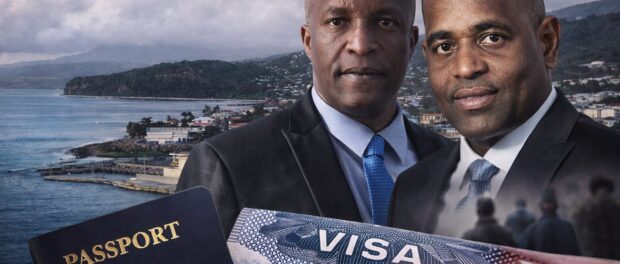
According to Hector John, the crisis became painfully real on January 1, 2026, when new U.S. visa restrictions were imposed on Dominicans traveling to the . The impact, he says, is immediate and personal.
John revealed that his own U.S. visa had expired and, under the new restrictions, cannot be renewed until the policy is lifted. His experience mirrors the growing anxiety among thousands of Dominicans in the diaspora—students, businesspeople, medical patients, and families—who now find their mobility abruptly curtailed.
For a nation whose economy and social fabric are deeply intertwined with migration and remittances, the restrictions signal more than inconvenience; they represent a systemic rupture in Dominica’s external relations.
The Visa Bond Shock: Freedom at a Price Tag?
Even more alarming are reports that, beginning January 21, 2026, Dominicans may be subjected to a visa bond of up to US$15,000 to enter the United States—roughly EC$42,000.
If confirmed, such a bond would effectively price ordinary Dominicans out of travel, reserving mobility for the wealthy while excluding students, working-class families, and the elderly. Analysts across the Caribbean warn that visa bonds are not merely administrative tools; they are signals of diplomatic distrust, often imposed on countries perceived as high-risk or non-compliant in international agreements.
Deportee Deal Allegations: Sovereignty Without Consent
Perhaps the most politically explosive claim is that Prime Minister Skerritt has signed an agreement to accept U.S. deportees—without the knowledge or approval of the Dominican people.
Hector John describes this as a profound breach of democratic norms. Accepting third-country deportees carries serious implications for national security, social services, employment, and public safety, particularly for a small island state already grappling with economic strain and institutional capacity limits.
To date, there has been no full public disclosure of the terms of any such agreement.
Three U.S. Ultimatums—and One Still Hidden
John further alleges that the U.S. government has issued three ultimatums to Dominica’s leadership:
- Discontinue cooperation with the Cuban government,
- Accept U.S. deportees, and
- A third ultimatum, the details of which remain undisclosed.
In a direct challenge to Prime Minister Skerritt, John stated that he would “give the Prime Minister the privilege” of informing the nation what that third ultimatum entails. The implication is chilling: that Dominica’s sovereignty may be subject to negotiations conducted behind closed doors, with citizens learning of the consequences only after policies are imposed.
“This Is Not Business as Usual”
In one of his most powerful appeals, Hector John warned against public complacency:
“We cannot continue to hide behind our curtains, speak in clusters, and not come together to deal with the present situation we have with Roosevelt Skerritt.”
He framed the moment as historic and unprecedented, urging Dominicans to recognize that freedoms and rights are never granted passively.
“A reminder: freedom was never given—it was fought for.”
A Nation at a Crossroads
Dominica now finds itself at a dangerous intersection of foreign pressure, domestic silence, and executive dominance. Whether the allegations prove fully accurate or not, the absence of transparency has already inflicted damage—fueling fear, eroding trust, and deepening political polarization.
As 2026 unfolds, the question facing Dominicans is no longer merely about visas or deportees. It is about who decides the nation’s future, and whether the people will demand answers before decisions made in their name become irreversible.
Times Caribbean will continue to monitor developments and seek official clarification on all claims raised.
















Leave a comment
You must be logged in to post a comment.