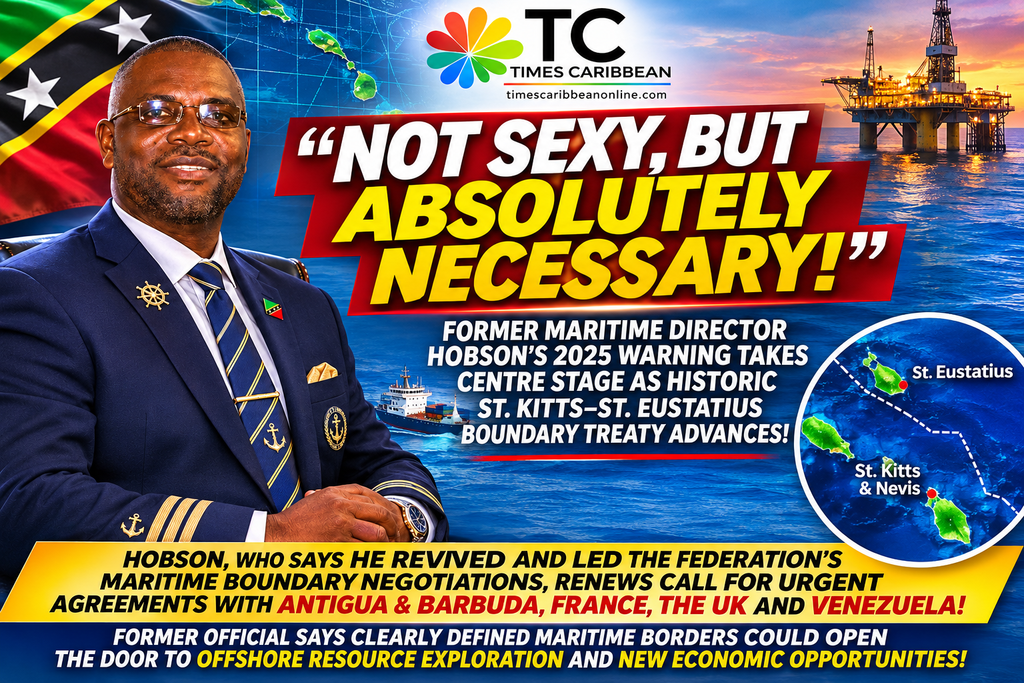
“NOT SEXY, BUT ABSOLUTELY NECESSARY!” — FORMER MARITIME DIRECTOR HOBSON’S 2025 WARNING TAKES CENTRE STAGE AS HISTORIC ST. KITTS–ST. EUSTATIUS BOUNDARY TREATY ADVANCES!
HOBSON, WHO SAYS HE REVIVED AND LED THE FEDERATION’S MARITIME BOUNDARY NEGOTIATIONS, RENEWS CALL FOR URGENT AGREEMENTS WITH ANTIGUA & BARBUDA, FRANCE, THE UK AND VENEZUELA! FORMER OFFICIAL SAYS CLEARLY DEFINED MARITIME BORDERS COULD OPEN THE DOOR TO OFFSHORE RESOURCE EXPLORATION AND NEW ECONOMIC OPPORTUNITIES!
TIMES CARIBBEAN | NOVEMBER 13, 2026 | BASSETERRE, ST. KITTS
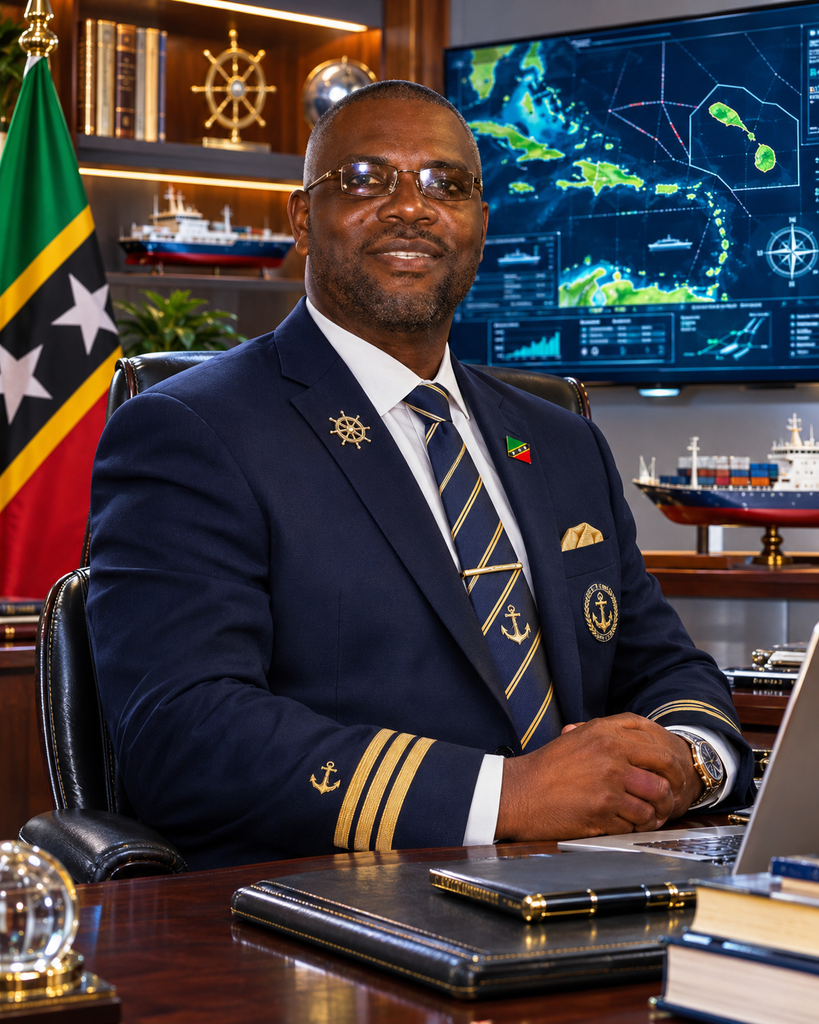
BASSETERRE, ST. KITTS, November 13, 2026 (Times Caribbean) — A major diplomatic achievement for St. Kitts and Nevis is attracting renewed attention, along with a powerful warning issued more than a year ago by former Director of Maritime Affairs Hobson, who argued that the Federation must treat maritime boundary negotiations as an urgent national development priority.
His message was simple. And memorable.
“NOT SEXY BUT ABSOLUTELY NECESSARY.”
Those were the words Hobson used in a 2025 public statement urging the Government of St. Kitts and Nevis to accelerate negotiations to establish the Federation’s remaining maritime boundaries, arguing that clearly defined borders could help unlock opportunities for natural resource exploration and economic diversification.
Now, with the landmark maritime boundary treaty between St. Kitts and Nevis and the Kingdom of the Netherlands advancing through the Dutch parliamentary approval process, his earlier appeal has taken on renewed significance.
The development also brings attention to Hobson’s claimed contribution to reviving the Federation’s Maritime Boundary Programme and leading the negotiations that produced the agreement involving neighbouring St. Eustatius.
“I AM EXTREMELY DELIGHTED TO HAVE LED THE NEGOTIATIONS!”
Reacting to the latest developments, the former maritime official expressed satisfaction with the progress made on an agreement whose technical negotiations date back more than a decade.
Hobson stated:
“Having revived the St.Kitts and Nevis Maritime Boundary Program, I am extremely delighted to have led the negotiations resulting in the delimitation of the maritime boundary between St.Kitts and St.Eustatius.”
But his comments were not simply a celebration of past achievements.
He also issued a direct appeal to those now responsible for managing the Federation’s maritime affairs.
“Successors must now move to initiate maritime boundary delimitation negotiations with France in the case of the maritime boundary with St. Barthelemy, the UK in the case of the boundary with Montserrat, Venezuela in the case of Aves Island and Antigua and Barbuda.”
His statement highlights what he considers unfinished national business and raises important questions about the Federation’s long-term strategy for managing its maritime territory.
THE 2025 WARNING: “NOT SEXY BUT ABSOLUTELY NECESSARY”
Significantly, Hobson’s latest appeal is consistent with a detailed public statement he made in 2025, when he called attention to the potential economic value of clearly established maritime boundaries.
Under the headline “NOT SEXY BUT ABSOLUTELY NECESSARY,” Hobson wrote:
“As the need for natural resources increase to drive economic development in small developing states such as St.Kitts and Nevis, I want to use this platform to strongly appeal to the government of St.Kitts and Nevis to treat maritime boundary delimitation with greater urgency. This process has the potential to uncover hydrocarbons and other resources in our maritime space.”
He went further, explaining why he considered the issue essential to the Federation’s future development.
“As a Maritime Specialist and the one who initiated and led the last round of maritime boundary negotiations, I always see maritime boundary delimitation as a means to an end. It is not sexy but absolutely necessary.”
Hobson then outlined the practical economic reasoning behind his position:
“In other words, once all the boundaries are delimited explorers can be invited and granted the necessary licenses to explore our waters for natural resources. To facilitate this, our maritime boundaries must be clearly defined.”
His remarks placed maritime boundary negotiations squarely within the wider conversation about economic diversification, energy security and the potential development of new national revenue opportunities.
Importantly, the presence of commercially recoverable hydrocarbons or other valuable offshore deposits in St. Kitts and Nevis’ waters has not been established by the information presented. Any future exploration would require scientific assessment, appropriate licensing and environmental safeguards.
Nevertheless, Hobson’s central argument was that establishing legal certainty over maritime jurisdiction could help create a stronger foundation for future investment and exploration.
HOBSON IDENTIFIED THE REMAINING NEGOTIATIONS AS EARLY AS 2025
The former Director of Maritime Affairs also made clear in his 2025 statement that the agreement involving St. Eustatius should be regarded as one stage in a broader national maritime strategy.
He declared:
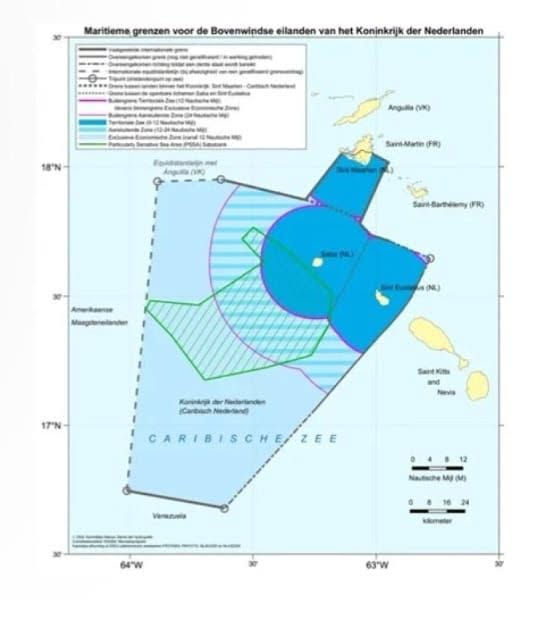
“The maritime boundary delimitation negotiations carried out in 2014 clearly defined the boundaries between St.Kitts and St.Eustatius (see the attached). With this behind us, the time is more than right to enter negotiations with Antigua and Barbuda, France in the case of St. Barthelemy, the UK in the case of Monserrat and Venezuela in the case of Aves Island to complete the process.”
The statement demonstrates that his current call for additional negotiations is not a newly developed position.
Rather, it reflects a policy priority he was publicly advocating in 2025, before the present stage of the Dutch parliamentary approval process.
HISTORIC 140-KILOMETRE MARITIME AGREEMENT GOES BEFORE DUTCH PARLIAMENTS
According to a November 9, 2026 report published by The Daily Herald in St. Maarten, the Parliament of Curaçao has received proposed legislation seeking Kingdom-level approval of the maritime boundary treaty between the Netherlands and St. Kitts and Nevis.
The treaty was signed in Basseterre on April 4, 2024.
On October 19, 2026, Dutch King Willem-Alexander submitted the legislative proposal as part of the approval process involving the parliaments of Curaçao, Aruba and St. Maarten, alongside the Dutch House of Representatives.
Governor of Curaçao Mauritsz de Kort forwarded the relevant documentation to the Curaçao Parliament on November 4. The Daily Herald+2
The agreement establishes an approximately 140-kilometre, or 75-nautical-mile, maritime boundary between the Federation and the Kingdom of the Netherlands, including waters near St. Eustatius.
The treaty is particularly significant because it seeks to provide legal clarity over adjoining maritime zones, including matters involving fisheries management, environmental protection and the exercise of jurisdiction at sea.
NEGOTIATIONS BEGAN IN 2013 — AGREEMENT REACHED IN 2014
The history of the agreement provides important context for Hobson’s reflections.
Technical discussions between St. Kitts and Nevis and the Netherlands commenced in 2013.
By September 2014, negotiators had reached agreement on the proposed treaty text, which was initialled by representatives of both sides.
Formal signing was originally anticipated in 2016 but was delayed because of internal decision-making procedures within St. Kitts and Nevis.
The Federation subsequently indicated in 2023 that it was ready to proceed, leading to the formal signing in Basseterre on April 4, 2024.
The agreement must still complete the required legal processes before entering into force. The Netherlands’ official treaty database does not yet record an entry-into-force date. Curaçao Chronicle+2
The extended timeline illustrates the complex nature of international maritime negotiations and the importance of sustained diplomatic and technical engagement across successive administrations.
COULD THE FEDERATION’S MARITIME SPACE HOLD NEW ECONOMIC OPPORTUNITIES?
Perhaps the most consequential aspect of Hobson’s 2025 statement was his emphasis on the relationship between maritime boundaries and potential natural resource development.
St. Kitts and Nevis, like many small island developing states, faces the long-term challenge of expanding its economic opportunities while protecting its environmental resources.
Maritime delimitation can support more effective management of the ocean economy by helping establish where national jurisdiction applies.
Clearly defined boundaries may also provide greater certainty for offshore investment proposals, fisheries management, scientific research and possible seabed resource exploration.
However, maritime delimitation does not automatically establish ownership of every resource, guarantee exploration rights or confirm commercially viable oil and gas deposits.
Those matters depend on international law, applicable domestic legislation, scientific evidence, environmental assessments and any necessary licensing procedures.
Hobson’s argument is that the Federation should complete the legal groundwork so that potential future opportunities can be properly evaluated.
His warning, “not sexy but absolutely necessary,” captures the difference between the limited public attention often given to maritime boundary negotiations and the potentially significant long-term consequences of those agreements.
FOUR NEGOTIATING PRIORITIES IDENTIFIED BY HOBSON
The former maritime official has consistently highlighted four areas requiring further diplomatic engagement:
1. Antigua and Barbuda: Negotiations to establish the applicable maritime boundary between the neighbouring independent states.
2. France — St. Barthélemy: Discussions concerning maritime jurisdiction involving the French overseas collectivity.
3. United Kingdom — Montserrat: Engagement regarding the relevant maritime boundary with the British Overseas Territory.
4. Venezuela — Aves Island: Negotiations concerning maritime claims in the vicinity of Aves Island.
These potential negotiations involve different geographical, legal and diplomatic considerations.
Their successful completion would depend on cooperation between the relevant governments and agreement on applicable principles of international maritime law.
A DIPLOMATIC ACHIEVEMENT WITH IMPLICATIONS BEYOND THE PRESENT
The progression of the St. Kitts and Nevis–Netherlands treaty also highlights the importance of recognising institutional continuity and the contributions of technical public servants.
International boundary agreements are seldom completed quickly.
They frequently involve years of research, legal assessments, hydrographic work, diplomatic correspondence and detailed negotiations.
Hobson’s public statements place his contribution to the 2013–2014 negotiating process on record, while the treaty’s subsequent signing in 2024 and movement through the approval process in 2026 demonstrate the extended timeline involved.
For the Federation, the agreement represents an opportunity to strengthen certainty over its maritime jurisdiction and improve cooperation with a close Caribbean neighbour.
For Hobson, it also reinforces an argument he has been making for years: the Federation should approach maritime boundary delimitation as a strategic national development matter rather than an obscure technical exercise.
THE BIG QUESTION: WHAT COMES NEXT?
With the treaty involving St. Eustatius moving through the final stages of legislative consideration, attention may increasingly turn to the maritime negotiations that remain outstanding.
Hobson’s 2025 statement provides a clear record of the priorities he believes should guide the next phase.
His comments also raise questions worthy of public discussion.
What progress has been made toward the remaining maritime boundaries? What technical or diplomatic preparations are under way? And how might a comprehensive national maritime strategy support the Federation’s wider ambitions for sustainable economic development?
Those questions remain relevant as St. Kitts and Nevis considers the future management of its marine resources.
The former Director of Maritime Affairs has made his position unmistakably clear.
Maritime boundary delimitation may not attract the publicity associated with major infrastructure projects or highly visible government initiatives. But in Hobson’s view, it is essential groundwork for the Federation’s future.
His words from 2025 now provide a compelling perspective on the significance of an agreement negotiated more than a decade ago and still progressing toward full implementation.
“NOT SEXY BUT ABSOLUTELY NECESSARY.”
A short statement. A serious national development issue. And a reminder that some of the most consequential work undertaken on behalf of a country happens far beyond the public spotlight.
Times Caribbean — Caribbean News, National Development, Maritime Affairs and Regional Diplomacy.
Sources: Former Director Hobson’s 2025 public statement and subsequent remarks provided to Times Caribbean; The Daily Herald, November 9, 2026; Netherlands Treaty Database; Dutch parliamentary legislative records.
















Leave a comment
You must be logged in to post a comment.