FROM “CBI SAVED” TO “CBI SHUTDOWN”! TWO YEARS AFTER CELEBRATING HIS REFORMS, PM DREW ANNOUNCES THE WIND-DOWN OF ST. KITTS AND NEVIS’ CITIZENSHIP BY INVESTMENT PROGRAMME!
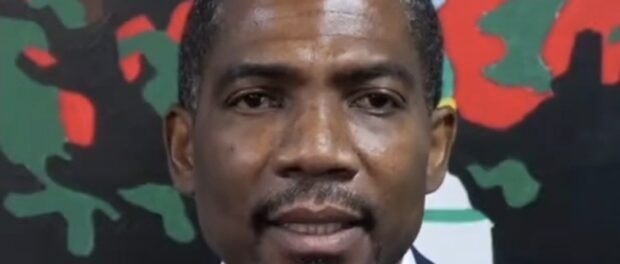
THE GREAT CBI REVERSAL! IN OCTOBER 2024, PRIME MINISTER DR. TERRANCE DREW TOLD THE NATION HIS ADMINISTRATION HAD SAVED THE PROGRAMME. NOW, IN NOVEMBER 2026, HE ANNOUNCES ITS NEGOTIATED CLOSURE AS EUROPEAN PRESSURE FORCES A HISTORIC ECONOMIC TRANSITION. WHAT WAS REALLY SAVED, AND WHAT HAPPENS TO THE BILLIONS IN ECONOMIC ACTIVITY THAT CBI HAS HELPED SUPPORT?
BASSETERRE, ST. KITTS — Friday, November 13, 2026 | Times Caribbean Special News Analysis
Two years. Two national addresses. Two dramatically different messages about the future of one of St. Kitts and Nevis’ most important economic programmes.
In October 2024, Prime Minister Dr. Terrance Drew stood before the nation and declared that his administration had SAVED the Citizenship by Investment (CBI) Programme.
On Friday evening, November 13, 2026, the same Prime Minister announced that St. Kitts and Nevis would wind down that very programme, with the final timeline to be negotiated with the European Union.
The contrast is extraordinary.
And the questions are unavoidable.
The announcement marks a historic turning point for the Federation, whose pioneering CBI Programme has helped finance national development for more than four decades.
But it also places the Prime Minister’s previous assurances under intense scrutiny.
THE 2024 DECLARATION: “THE PROGRAMME HAS BEEN SAVED!”
On October 17, 2024, Dr. Drew delivered a nationally broadcast address presenting his administration’s CBI reforms as a major achievement.
His words were unmistakable:
“The Saint Kitts and Nevis CBI programme has been saved.”
The Prime Minister credited his administration’s reforms with restoring confidence, strengthening standards and protecting the Federation’s international standing.
He also criticised the previous Team Unity administration’s management of the programme, arguing that inherited practices had endangered international travel privileges.
The political message was clear: his government had intervened, corrected serious problems and secured the programme’s future.
Indeed, the Prime Minister went beyond celebrating improved regulations. He presented his government’s policies as the measures necessary to preserve the programme over the long term.
Two years later, that long-term future has changed dramatically.
NOVEMBER 2026: THE PROGRAMME IS NOW HEADED FOR CLOSURE
During Friday’s national address, Prime Minister Drew announced:
“St Kitts and Nevis will wind down its citizenship by investment program responsibly on a timeline now being negotiated with the European Union.”
He confirmed that his government’s position had already been formally communicated to European authorities.
The announcement represents a decision to end the programme through an orderly transition, although its final closure date has not yet been agreed.
Dr. Drew said the decision was necessary to protect the country’s international reputation and the travel benefits enjoyed by its citizens.
He also maintained that permanent dependence on CBI revenue had never been sustainable.
But that explanation raises a politically significant question.
If the programme was successfully rescued in 2024, why is its closure now being presented as the only prudent course in 2026?
There is an important distinction between improving the administration of a citizenship programme and overcoming international opposition to the existence of such programmes.
The European Union’s revised visa suspension framework explicitly raises concerns about investor citizenship schemes where citizenship is granted without a genuine connection to the country.
That wider policy concern extends beyond St. Kitts and Nevis and beyond the record of any single Caribbean government.
This creates a legitimate question about the national debate of 2024: how much of the programme’s vulnerability arose from past management decisions, and how much reflected a broader international policy direction that domestic reforms alone could never reverse?
FROM POLITICAL CELEBRATION TO ECONOMIC RECKONING
The financial implications are considerable.
In his October 2024 address, Dr. Drew acknowledged that when his government assumed office in 2022, CBI had directly accounted for approximately 60 to 70 percent of federal revenue.
He also reported CBI revenue of EC$620 million in 2023 and EC$218 million during the first nine months of 2024.
These are not insignificant figures. They illustrate the historic scale of the Federation’s dependence on investment migration income.
And with an eventual end now announced, the public deserves detailed answers about how those revenues will be replaced.
Where will sustainable government income come from?
What will be the impact on public spending, national development projects, employment and future budgets?
How much additional investment has already been secured outside CBI?
And what measurable progress has been made towards the economic diversification promised in 2024?
The questions are especially relevant because Dr. Drew’s earlier national address projected significant expansion in construction, tourism, agriculture and sustainability-related development over the following two to three years.
That period is now well underway.
The public therefore has a reasonable expectation that the government will present measurable results, not simply renewed promises.
NO IMMEDIATE CLOSURE, NO DISCOUNTS, NO CHANGE TO CURRENT CITIZENSHIP RIGHTS
The Prime Minister sought to reassure citizens that the transition would be managed carefully.
According to his announcement, lawful citizenship remains unaffected, while existing citizens’ travel arrangements are not being changed by Friday’s decision.
He said CBI applications would continue until a final date is agreed with the European Union and publicly announced.
There would be no last-minute discounting, no accelerated sales campaign and no relaxation of standards.
He also promised that projects already underway would be advanced towards completion.
Staff of the Citizenship by Investment Unit, he said, would be redirected towards attracting conventional foreign direct investment, allowing their experience to support the government’s broader economic strategy.
These commitments will be important tests of the transition.
WAS CBI SAVED — OR WAS TIME BOUGHT?
The government’s position is that its reforms strengthened the Federation’s reputation and that economic diversification was already part of its long-term planning.
That argument deserves consideration.
Indeed, Dr. Drew warned in 2024 that CBI was vulnerable to international political pressure and that excessive dependence on its revenues was dangerous.
But those warnings do not erase the need to explain what the government meant when it publicly declared that the programme had been saved.
Was the programme rescued from an immediate threat? Was its international reputation restored temporarily? Or did the 2024 declaration create expectations of long-term survival that global developments have now overtaken?
Those are distinct possibilities. The public deserves a clear explanation of which one best describes what happened.
There is also a broader question of political accountability.
For years, responsibility for the programme’s difficulties has featured prominently in partisan exchanges over the previous administration’s record.
Now that a negotiated wind-down is government policy, the debate must confront the role of international regulatory pressure affecting the wider Caribbean, irrespective of which political party holds office.
THE NEXT CHAPTER MUST BE MEASURED IN RESULTS
St. Kitts and Nevis is approaching the eventual end of an economic model that has shaped public finances, infrastructure development and investment policy for generations.
The programme is not closed tonight.
But the government’s announced destination is clear.
And while the Prime Minister has described the transition as responsible and necessary, its success will depend on the actual timetable, the availability of alternative revenue, the completion of existing commitments and the ability to protect economic stability.
In 2024, the nation was told CBI had been saved. In 2026, the nation has been told CBI must be wound down.
Between those two declarations lies a major question of public accountability.
What exactly did the reforms of 2022–2024 achieve, what changed afterwards, and how prepared is St. Kitts and Nevis to live without the programme that once helped finance so much of its development?
The next phase of this national conversation cannot be settled by political slogans.
It will require published figures, credible economic projections, transparent negotiations and a detailed transition plan.
The 2024 promise was that CBI had been saved. The 2026 challenge is to demonstrate that the country’s economic future has been secured.
TIMES CARIBBEAN — Independent Caribbean News, Analysis and Perspectives.
















Leave a comment
You must be logged in to post a comment.