IS THAT ALL? THE CASTRIES REPORT CARD-CARICOM needs a spokesman other than Mia Mottley, although she is good at it.
CARICOM needs a spokesman other than Mia Mottley, although she is good at it.
IS THAT ALL? THE CASTRIES REPORT CARD
CARICOM needs a spokesman other than Mia Mottley, although she is good at it.
Jul 08, 2026
The haunting notes of Lord Kitchener’s The Carnival is Over have been echoing through my mind since the final gavel fell in Castries, St Lucia. It is an anomalous piece of kaiso, closer to a smoky jazz cut than the rhythmic, high-tempo iron that usually dominates a Sunday night at Dimanche Gras. It is atmospheric, definitive, and heavy with the realisation that the revelry has ended and the austere reality of Ash Wednesday has arrived.
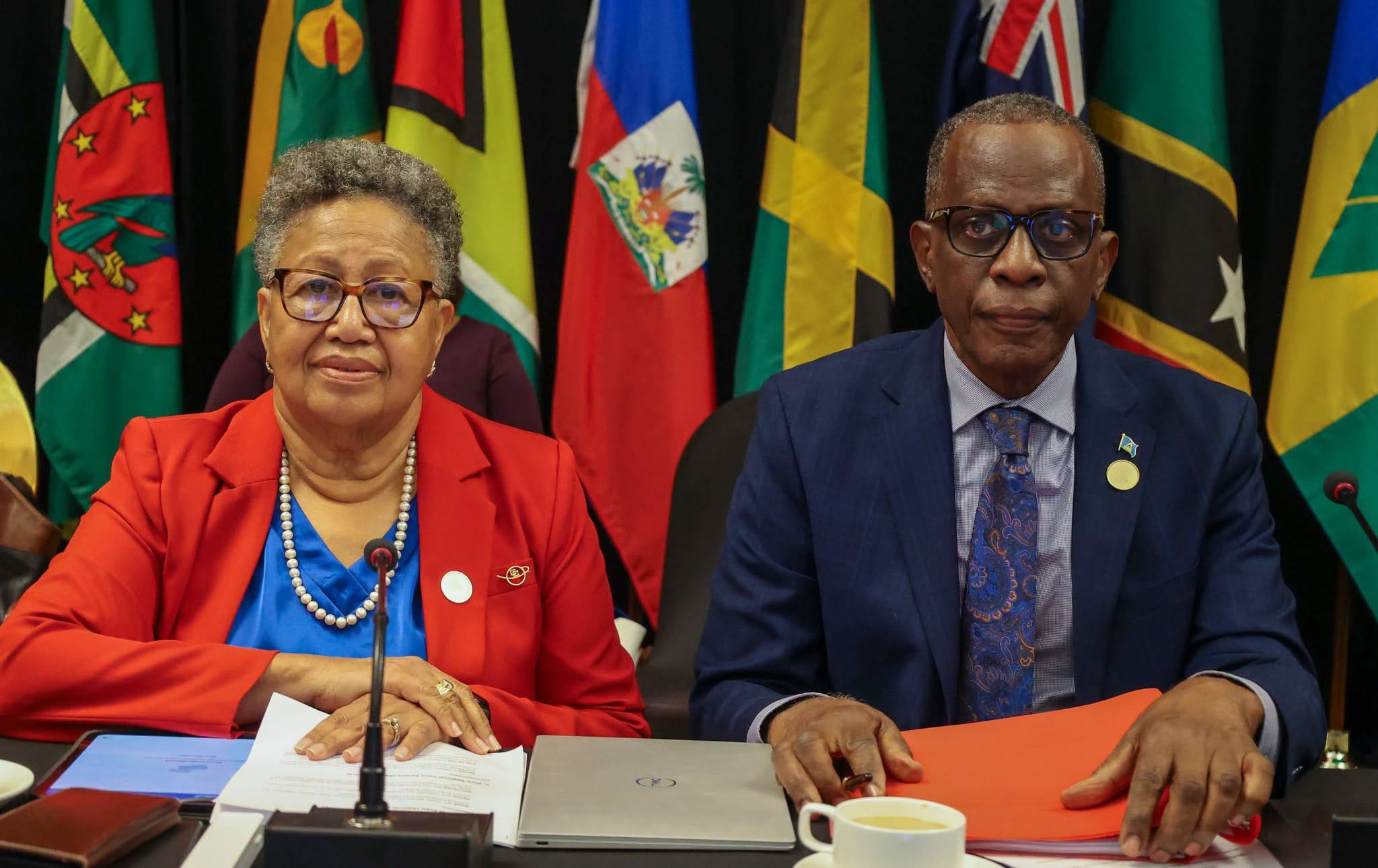
Watching the closing press conference of the 51st CARICOM Summit, the parallel became stark. The leaders sat at the head table, flanked by Secretary-General Dr Carla Barnett, whose own extended tenure has now been awkwardly kicked to the Caribbean Court of Justice for an opinion. Once the behind-closed-doors sanctuary of Sandals and the private retreat concluded, the public was left with a sanitized, dry communiqué read by Chairman Philip J. Pierre, and host Prime Minister.
As I wached the through the proceedings, watching journalists scramble for crumbs of detail, a single, persistent question kept forcing its way to the surface:
Is that all?
The Illusion of Inertia
To the casual observer, the average citizen, and the international press corps, the closing press conference felt like an admission of bureaucratic inertia. We were treated to a laundry list of recycled aspirations: further progress on free movement, a declaration on consumer protection, and the standard, boilerplate commitment to agricultural production.
If one were to judge CARICOM solely by the performance of its head table today, the verdict would be swift and damning: four days of prime ministerial retreats, private dinners, and closed-door sessions, and this is all we have to show for it?
But as anyone who understands the operational mechanics of regional integration knows, the tragedy of CARICOM is not that they do nothing for three days. The tragedy is that their communication architecture is so weak, they make a monumental sovereign effort look like a casual island gathering.
What They Actually Did
Behind the defensive communication front and the sterile text of the Chairman’s statement, several critical operational economic dossiers did manage to move forward. The real answers to “Is that all?” are buried deep within the technical machinery of the CSME:
- A Maritime Proof of Concept: PM Mia Mottley, leading the CSME file, quietly announced an extraordinary, interim state-backed measure. Negotiations are underway to utilise one of Trinidad and Tobago’s five domestic ferries as a temporary cargo bridge between the southern and eastern Caribbean islands whilst the private sector procures vessels over the next year. This requires compressing hundreds of hours of complex legal draftsmanship into mutual recognition treaties for licences and insurance so cargo vehicles can literally drive on and drive off.
- The Energy Harnessing Paradigm: PM Dr Terrence Drew of St Kitts-Nevis offered a masterclass in strategic foresight, re-framing the cost-of-living crisis. The Caribbean, he noted, does not have an energy deficit; it has an energy harnessing deficit. He detailed capital deployment into a 50-megawatt solar plant and geothermal exploration with Icelandic drillers, aiming to export power via undersea cables to neighbours like Antigua and Barbuda to permanently flatten our vulnerability to volatile oil prices.
- Medical Services as Sovereign Export: In a distinct shift toward commercialising regional human capital, PM Kamla Persad-Bissessar positioned Trinidad and Tobago as a healthcare exporter to generate foreign exchange whilst lowering regional costs. This includes opening their new national prosthetic centre to CARICOM citizens at affordable rates, exporting UWI-trained medical graduates to states facing human resource deficits, and commercialising the specialised Couva Children’s Hospital.
Geopolitical Friction: Sanctions, Ultimatums, and Deflection
Where the official “Report Card” glosses over conflict with neat icons, the actual press conference exposed the severe geopolitical limits of our regional sovereignty:
The Cuban Sanctions Minefield
The summit illuminated the absolute logistical nightmare of executing humanitarian aid within our own backyard. Leaders revealed that a regional fund specifically earmarked to purchase basic baby milk for the starving children of Cuba was repeatedly blocked and returned by international financial institutions.
PM Mottley and PM Drew noted that due to “enhanced due diligence” and third-party banking sanctions, the transactions were rejected multiple times. It took routing the funds through circuitous pathways for the payment to finally clear on the fourth attempt. When basic humanitarian milk for infants becomes a banking battlefield, the region deserves to hear the raw reality, not a sanitized note on “assistance”.
The CBI Omission and the EU Challenge
Even more telling was the total omission of the Citizenship by Investment (CBI) programmes from the formal CARICOM agenda, despite an existential ultimatum from the European Union. Confronted by journalists on why this crisis was ignored, PM Pierre deflected, framing it strictly as a domestic policy matter for the five islands that operate them. He offered a grim historical reminder that the region has previously conformed to external regulatory demands on bananas and sugar, only to lose preferential treatment anyway. It was a stark admission of powerlessness in the face of European threats to revoke visa-free access.
The Defensive Default and the Spokesman Vacuum
So why, if these complex, high-stakes dossiers are being advanced, does the public exit these summits asking Is that all? Because outside of the Chairman’s prepared text, the head table appeared largely unready for the adversarial nature of modern journalism. There was zero evidence of a cohesive “briefing book” designed to massage answers, manage regional narrative risks, and project unified strategic foresight. The slow assignment of who would answer what showed that they were not prepared.
Instead, the panel relied almost entirely on the formidable, elegant rhetorical agility of PM Mottley to expand on thin responses and carry the intellectual weight of the room, with intermittent support from Trinidad and Tobago and St Kitts-Nevis. When confronted with raw global realities, whether it was an aggressive, protocol-breaching interrogation from Al Jazeera regarding missing St Lucian nationals or the logistical nightmare of routing humanitarian aid to Cuba through third-party banking sanctions, the leadership cohort defaulted to a defensive, tight-lipped crouch.
CARICOM desperately requires a singular, high-calibre chief spokesman, someone possessing the precise communication skills to articulate complex integration mechanics directly to Caribbean citizens, deflect hostile foreign press, and confidently unpack what is being decided in our favour. Because we can’t expect PM Mottley to carry the load because she is good at it.
A Semantic Reminder for the Chairman
During the briefing, PM Pierre repeatedly referred to the regional impact on “every island”. It is a habit that regional leaders must break. CARICOM is a collective of countries, not merely islands. As mainland states like Belize and Guyana remind us, some of our continental territories contain internal islands and cays that are larger than the entire landmass of the micro-states hosting these proceedings. The rhetoric from the head table must match the grand geography of the Community we are trying to build.
The carnival in Castries is over. The music has stopped, the closed doors have opened, and the hard, unglamorous work of implementation continues. But until CARICOM learns to speak to its people with a unified, strategic, and professional voice, the citizens of the region will continue to look at the head table, read the thin communiqués, and ask with entirely justified skepticism:
Is that all?
Caribbean Bridges by Julian Rogers
julian@caribbeanbridges.com
















Leave a comment
You must be logged in to post a comment.