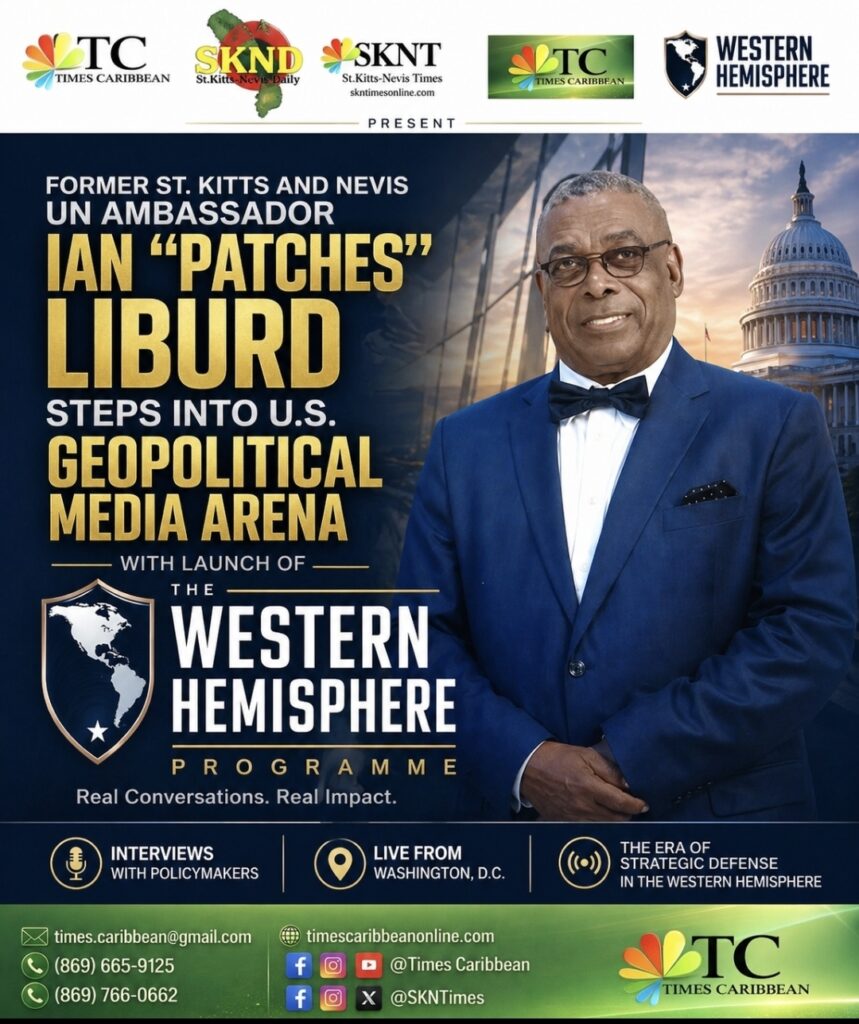
FORMER ST.KITTS AND NEVIS UN AMBASSADOR IAN PATCHES LIBURD STEPS INTO US GEOPOLITICAL MEDIA ARENA WITH LAUNCH OF WESTERN HEMISPHERE PROGRAMME

TIMES CARIBBEAN | INVESTIGATIVE FEATURE
FROM DIPLOMACY TO MEDIA POWER: FORMER SKN UN ENVOY IAN “PATCHES” LIBURD SET TO LAUNCH U.S.-BASED ‘WESTERN HEMISPHERE’ PROGRAMME
A former senior diplomat of St. Kitts and Nevis is now pivoting into geopolitical media influence—raising fresh questions about diaspora diplomacy, narrative control, and the evolving role of Caribbean voices in Washington.
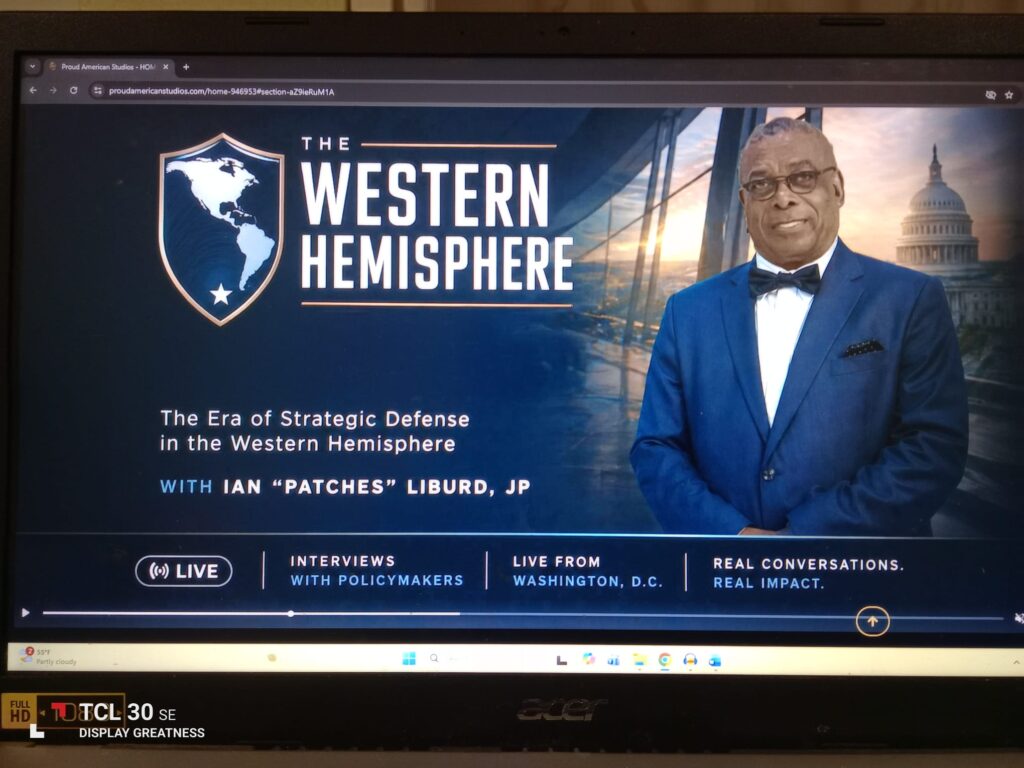
Ian “Patches” Liburd, a former government minister and past ambassador-level figure representing St. Kitts and Nevis at the United Nations, is preparing to launch a U.S.-based programme titled “The Western Hemisphere”, a policy-driven media initiative positioned at the intersection of diplomacy, security, and hemispheric affairs.
A STRATEGIC REBRAND: FROM CABINET TO CAMERA
Liburd is no stranger to public life. Known for his tenure as a government minister and his involvement in national and international engagements, he has long been embedded in the political architecture of St. Kitts and Nevis.
However, the transition from policymaker to media host signals something deeper than a career shift—it reflects a broader trend of former diplomats leveraging platforms to shape narratives beyond traditional state channels.
The promotional material for The Western Hemisphere positions the programme as:
- A policy-driven interview series
- Featuring decision-makers and strategic thinkers
- Broadcasting from Washington, D.C.
- Focused on defense, geopolitics, and hemispheric cooperation
The framing is deliberate. It suggests a move away from domestic politics into the global arena—specifically, the Western Hemisphere as a geopolitical space increasingly contested by major powers.
PROUD AMERICAN STUDIOS: THE PLATFORM AND ITS SIGNAL
The programme is being launched under the banner of Proud American Studios, a U.S.-based media entity. While publicly available information on the company remains limited, its branding and positioning suggest alignment with:
- Policy discourse rooted in U.S. strategic interests
- A focus on Western Hemisphere unity and security
- Media content that blends analysis with ideological framing
This raises a critical question:
Is this a neutral platform for dialogue—or a vehicle for influence?
The branding—featuring a shield with the Americas and a star—evokes security, defense, and hemispheric identity. Combined with messaging like “Real Conversations. Real Impact.”, the programme appears designed not just to inform, but to shape perspectives.
WHY THIS MATTERS: THE CARIBBEAN IN THE GEOPOLITICAL CROSSHAIRS
The timing of Liburd’s media entry is significant.
The Western Hemisphere is undergoing renewed strategic attention due to:
- Increased U.S.-China competition in Latin America and the Caribbean
- Growing concerns over energy security, migration, and organized crime
- The Caribbean’s role as a gateway region for trade, logistics, and diplomacy
For small island states like St. Kitts and Nevis, the stakes are high. Traditionally, Caribbean diplomacy has been conducted through multilateral bodies such as CARICOM and the United Nations.
But platforms like The Western Hemisphere represent a parallel channel of influence—one that operates outside formal diplomatic structures.
A NEW FORM OF “SOFT POWER”
Liburd’s move can be understood as part of a wider transformation in global diplomacy:
| Traditional Diplomacy | Emerging Media Diplomacy |
|---|---|
| State-to-state engagement | Individual-led platforms |
| Formal negotiations | Public discourse shaping |
| Government-controlled messaging | Private media narratives |
By hosting policymakers and analysts in Washington, Liburd positions himself as a bridge between Caribbean interests and U.S. policy circles.
This could have tangible implications:
- Elevating Caribbean perspectives in U.S. debates
- Influencing how regional issues are framed internationally
- Potentially aligning narratives with specific geopolitical agendas
QUESTIONS OF INDEPENDENCE AND ALIGNMENT
Despite its promise, the initiative raises legitimate concerns:
1. Editorial Independence
Who controls the narrative direction of the programme?
Is it an independent Caribbean voice—or influenced by U.S. institutional perspectives?
2. Representation
Will the programme reflect diverse Caribbean viewpoints, or a narrow ideological lens?
3. Political Implications Back Home
Given Liburd’s political background, the venture may have domestic ripple effects, especially if commentary intersects with regional governance or policy criticism.
THE WASHINGTON FACTOR
The decision to base the programme in Washington, D.C. is telling.
Washington is not just a political capital—it is:
- The nerve center of U.S. foreign policy
- Home to think tanks, defense institutions, and lobbying networks
- A hub for shaping narratives that influence global perception
By situating The Western Hemisphere there, Liburd is effectively embedding himself within the ecosystem that defines hemispheric strategy.
OPPORTUNITY OR RISK FOR ST. KITTS AND NEVIS?
For St. Kitts and Nevis, the development presents a dual-edged reality:
Opportunities
- Increased visibility of SKN voices on global platforms
- Potential influence in shaping regional policy discourse
- Diaspora-driven engagement with international stakeholders
Risks
- Perception of alignment with external political agendas
- Blurring of lines between private media and national representation
- Potential politicization of international discourse
THE BIGGER PICTURE: A SHIFT IN POWER DYNAMICS
Liburd’s move underscores a broader shift:
Influence is no longer confined to governments—it is increasingly exercised through media, personalities, and platforms.
For the Caribbean, this presents both empowerment and vulnerability.
The ability to tell its own story is expanding—but so too is the risk of those stories being shaped by external forces.
CONCLUSION: A PLATFORM TO WATCH
The Western Hemisphere is more than a talk show—it is a strategic entry point into the evolving battlefield of ideas.
Whether it becomes:
- A credible voice for Caribbean interests,
or - A vehicle for external influence framed through regional identity,
will depend on how it is executed—and who ultimately shapes its agenda.
One thing is certain:
**Ian “Patches” Liburd is no longer just participating in diplomacy—he is attempting to redefine how it is done.**
















Leave a comment
You must be logged in to post a comment.