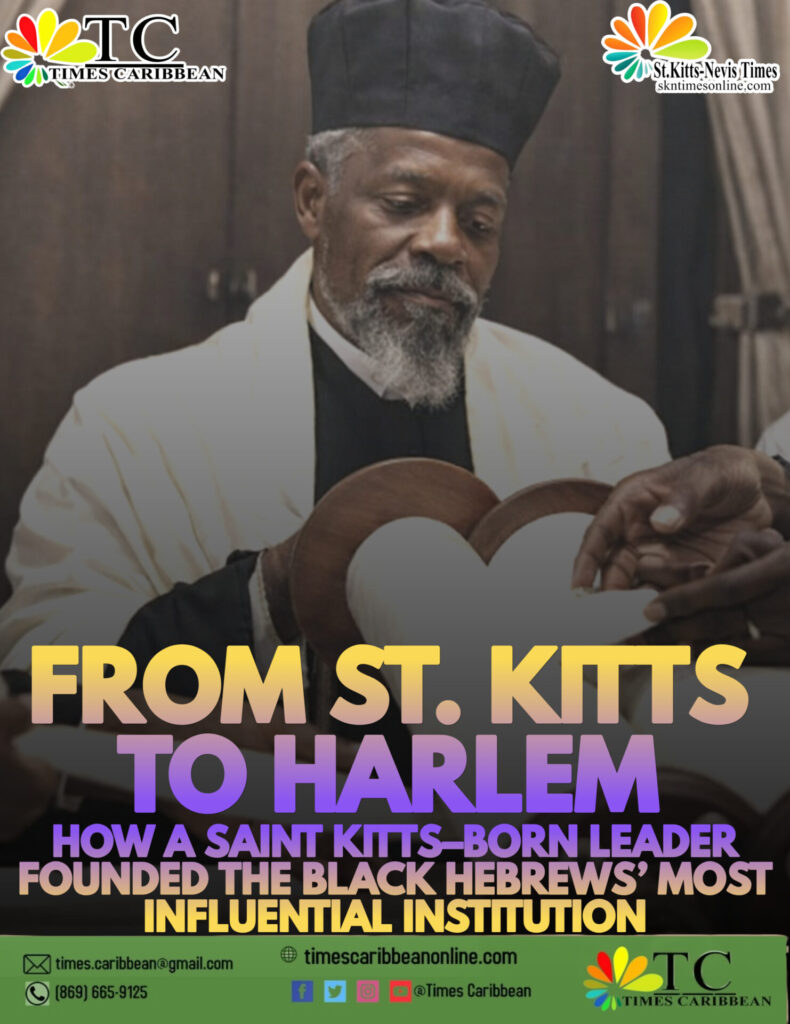
FROM ST. KITTS TO HARLEM: HOW A SAINT KITTS–BORN LEADER FOUNDED THE BLACK HEBREWS’ MOST INFLUENTIAL INSTITUTION
SKN TIMES FEATURED | HISTORY, FAITH & DIASPORA
The global history of the Black Hebrews—often referred to as the Black Hebrew Israelites—is most commonly framed through African American religious life in the United States. Yet a critical and indisputable chapter of that story is Caribbean at its core. One of the movement’s most influential institutional foundations was established by a native of Saint Kitts, placing the Federation firmly at the center of this historic religious and cultural development.
A SAINT KITTS NATIVE SHAPES HISTORY
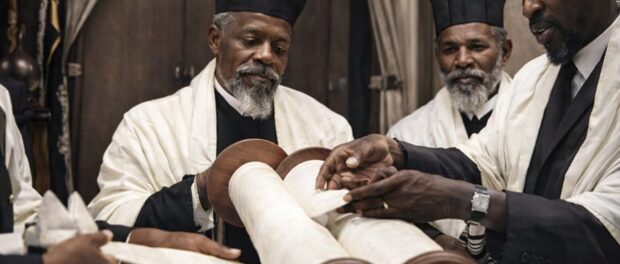
In 1919, Wentworth Arthur Matthew, an emigrant from Saint Kitts, founded a Black Hebrew Israelite congregation in Harlem known as the Commandment Keepers of the Living God. This marked a defining moment in the evolution of the Black Hebrews movement, transitioning it from loosely connected teachings into a structured, enduring religious institution.
Matthew’s leadership distinguished the Commandment Keepers from other emerging Black religious movements of the era by grounding the congregation in formal Jewish religious practice, rather than protest theology or political militancy.
BUILDING INSTITUTIONAL LEGITIMACY
In 1930, Matthew further cemented his legacy by establishing the Ethiopian Hebrew Rabbinical College in Brooklyn, later renamed the Israelite Rabbinical Academy. Through this institution, he ordained more than 20 rabbis, many of whom went on to lead congregations throughout the United States and the Caribbean.
This development was pivotal. It gave the movement clerical continuity, doctrinal training, and institutional legitimacy—ensuring its survival well beyond a single congregation or generation.
A HARLEM LANDMARK AND REGIONAL INFLUENCE
Matthew remained the leader of the Commandment Keepers for decades. In 1962, the congregation moved into a landmark synagogue building on 123rd Street in Harlem, symbolizing both permanence and prominence within New York’s religious landscape.
At its height, the Commandment Keepers represented one of the most orthodox expressions of Black Hebrew Israelite belief, setting it apart from later groups that would adopt more confrontational or political identities.
GARVEYISM, ETHIOPIA, AND BLACK IDENTITY
Matthew’s theology was deeply influenced by early 20th-century Pan-African thought, particularly the ideas of Marcus Garvey and the Universal Negro Improvement Association. Garvey famously used the biblical narrative of Jewish exile as a metaphor for the Black experience in the Americas, strengthening cultural and spiritual ties between Black communities and Africa.
Matthew later identified strongly with the Beta Israel (Ethiopian Jews), teaching that the Commandment Keepers were descendants of King Solomon and the Queen of Sheba. He asserted that “the Black man is a Jew” while also maintaining respectful and cooperative relationships with non-Black Jewish leaders, whom he credited with preserving Judaism through centuries of exile.
PRACTICING JUDAISM, NOT PROTEST
Unlike many groups later grouped under the “Black Hebrew” label, the Commandment Keepers adhered to traditional Jewish practices. Members observed kashrut, circumcised newborn boys, celebrated Bar and Bat Mitzvahs, and worshipped with a mechitza separating men and women. These practices continue among surviving congregations today.
DECLINE, DIVISION, AND ENDURING LEGACY
Matthew died in 1973, triggering an internal struggle over leadership. He had named his grandson, David Matthew Doré, as his spiritual successor, though Doré was only 16 at the time. In 1975, the synagogue board elected Rabbi Willie White, leading to factional conflict. Doré and others were eventually locked out of the building, and membership declined throughout the 1990s.
By 2007, the historic Harlem synagogue was sold amid legal disputes. Yet the movement itself endured. Today, multiple Commandment Keeper congregations exist across New York, North America, and Israel. Since 2000, seven rabbis have graduated from the Israelite Rabbinical Academy founded by Matthew, continuing a lineage that traces directly back to Saint Kitts.
ST. KITTS’ UNDERSTATED GLOBAL IMPACT
The role of Wentworth Arthur Matthew of Saint Kitts in shaping the Black Hebrews movement is one of the Federation’s most overlooked contributions to global Black religious and intellectual history.
From a small Caribbean island emerged a leader whose vision helped institutionalize a movement that reshaped identity, faith, and historical memory across the African diaspora. It is a reminder that Saint Kitts’ influence has long extended far beyond its shores—quietly but profoundly shaping global history.
— SKN TIMES
















Leave a comment
You must be logged in to post a comment.