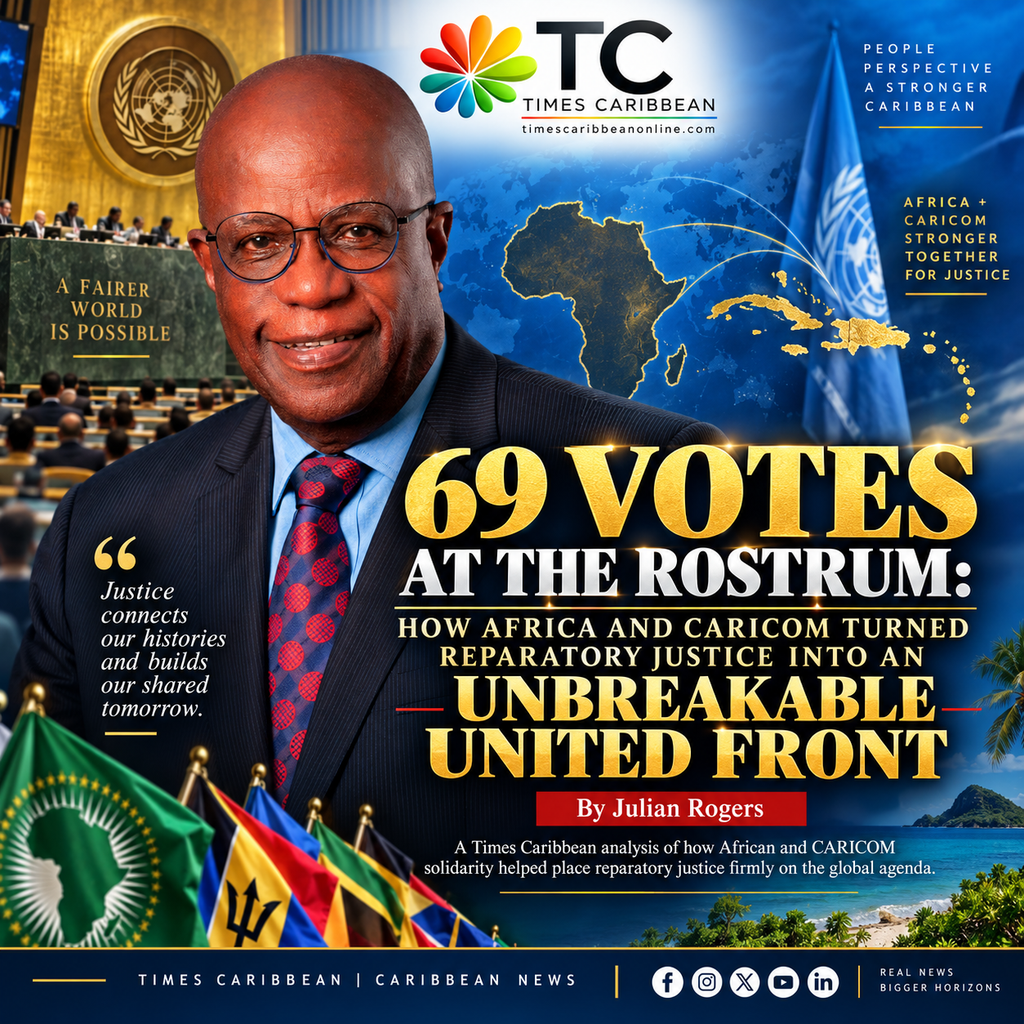
69 VOTES AT THE ROSTRUM: HOW AFRICA AND CARICOM TURNED REPARATORY JUSTICE INTO AN UNBREAKABLE UNITED FRONT
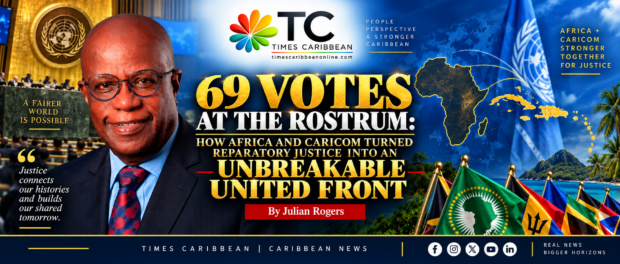
Tracking Day 1 of the 81st Session of the UN General Assembly in New York.
UNITED NATIONS, NEW YORK — When the history of the 81st United Nations General Debate is written, Day 1 will be remembered as the moment the Africa-CARICOM partnership moved from aspirational regional communiqués into an institutional diplomatic offensive on the world stage.
For generations, the campaign for reparatory justice was dismissed in northern capitals as a sentimental, academic petition confined to the Caribbean basin. Today at the United Nations, that narrative was dismantled. Through the strategic, high-level presentations of President Julius Maada Bio of Sierra Leone and Vice-President Deogratius Ndejembi of the United Republic of Tanzania, East and West Africa locked arms with CARICOM.
Together, the African Union’s 55 member states and CARICOM’s 14 sovereign nations command 69 votes on the floor of the General Assembly. In an increasingly fragmented, transactional world, that bloc demonstrated that the transatlantic call for historical repair, international financial architecture reform, and the dismantling of colonial governance is now an inescapable global negotiation.
For the Caribbean citizen tracking the soaring cost of living, regional food import bills, and national debt burdens, this transatlantic alliance is about far more than shared ancestry. It is about pooling sovereign power to fix our everyday pocketbooks.
Sierra Leone: President Julius Maada Bio Leads the Institutional Charge
Taking the rostrum during the opening morning block of Heads of State, President Julius Maada Bio of Sierra Leone brought unmatched institutional weight to the reparations agenda.
As the Coordinator of the African Union Committee of Ten (C-10) on UN Security Council Reform, President Bio is the continent’s lead strategist on dismantling the 1945 post-war governance order. His address linked the historical debt of the transatlantic slave trade directly to the broken machinery of the UN Security Council:
- Reparatory Justice as International Law: Reaffirming the mandates established across the Africa-CARICOM summits and the landmark Accra Reparations Conference, President Bio rejected the notion that developing nations are begging for development assistance. He insisted that reparatory justice for centuries of chattel enslavement and colonial extraction is a fundamental requirement of international law, human dignity, and economic restitution.
- Breaking the 1945 Oligopoly: Under the C-10 mandate, President Bio demanded permanent African representation on the Security Council with full veto rights, alongside dedicated, permanent rotation for Small Island Developing States (SIDS). He reminded the Assembly that an executive council that sidelines 1.4 billion Africans and 40 million Caribbean citizens possesses zero moral or democratic legitimacy in 2026.
- The Living Diaspora Connection: Rooted in Sierra Leone’s historic ties to the Caribbean diaspora, President Bio articulated a unified doctrine of transitional justice, ensuring that African and Caribbean claims are tabled as a single, coordinated operational brief.
Tanzania: Vice-President Deogratius Ndejembi Anchors the Economic Front
During the afternoon session, representing President Samia Suluhu Hassan, Vice-President Deogratius Ndejembi of Tanzania mounted the rostrum to deliver the economic foundation of the South-South coalition.
Rooted in Tanzania’s legacy of non-alignment and Pan-African self-reliance, Vice-President Ndejembi aligned Dodoma squarely with the Caribbean’s Bridgetown Initiative, outlining the severe fiscal penalties imposed on developing treasuries:
- Sovereign Capital over Debt Traps: Vice-President Ndejembi zeroed in on the predatory nature of the global financial architecture. Developing states across Africa and the Caribbean continue to pay four to eight times more in borrowing interest than wealthy industrialised nations for basic infrastructure, driving small nations into perpetual debt cycles.
- Structural Debt Relief & Climate Pauses: Aligning with CARICOM’s climate finance demands, Tanzania called for systemic debt cancellation, non-repayable capital grants, and automatic debt-service suspension clauses during climate catastrophes and global economic shocks. For taxpayers across our islands, lowering debt servicing costs is the only way to prevent severe austerity cuts to local healthcare, public schools, and utility subsidies.
- Direct South-South Trade Corridors: Moving beyond political rhetoric, Tanzania urged the establishment of direct maritime shipping routes, air connectivity, and financial correspondent rails between East Africa, South America, and the Caribbean. Sourcing grains, fertilisers, and mineral inputs directly between regional blocs bypasses expensive middlemen in Europe and North America, directly insulating supermarket shelf prices across the Caribbean.
The Sovereign Strategic Ledger: The Power of 69 Votes
The coordinated posture of Sierra Leone and Tanzania on Day 1 provided the essential geopolitical counterbalance to the speeches delivered by northern powers.
While British Prime Minister Andy Burnham offered nostalgic praise for 19th-century Manchester mill workers boycotting slave-grown cotton while ignoring Britain’s unresolved reparatory debt to the Caribbean, the Africa-CARICOM coalition refused to be distracted by historical sentimentality.
The joint message from Freetown, Dodoma, Paramaribo, Roseau, and Port of Spain was clear: moral declarations are no longer sufficient.
By unifying around CARICOM’s 10-Point Plan and the African Union’s reparations framework, these 69 sovereign nations are building an operational voting fortress. When the Caribbean Community stands with the African continent, the Global South ceases to be an observer at the United Nations. It becomes an agenda-setter that will not be vetoed, ignored, or divided.
Caribbean Bridges by Julian Rogers . julian@caribbeanbridges.com
Watch the official Day 1 proceedings on UN Web TV: https://webtv.un.org/en/asset/
#UNGA81 #Reparations #AfricaCARICOM #SierraLeone #Tanzania #JuliusMaadaBio #DeogratiusNdejembi #CARICOM #AfricanUnion #BridgetownInitiative #GlobalSouth #SovereignStrategy #CostOfLiving #CaribbeanBridges
Caribbean Bridges by Julian Rogers
Connecting Caribbean thought, public affairs and possibility.
Contact: julian@caribbeanbridges.com
















Leave a comment
You must be logged in to post a comment.