10 Key Takeaways from the M.V. Christena Commission of Inquiry
- The true number of passengers was never established.
There was no dependable passenger manifest or counting system. The report’s lists of survivors and missing persons also contained possible duplications and unconfirmed identities, making an exact final accounting difficult. - Overcrowding was a longstanding and serious problem.
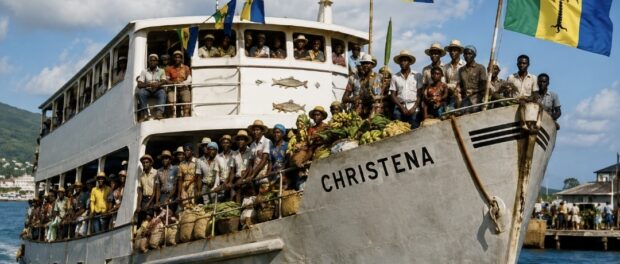
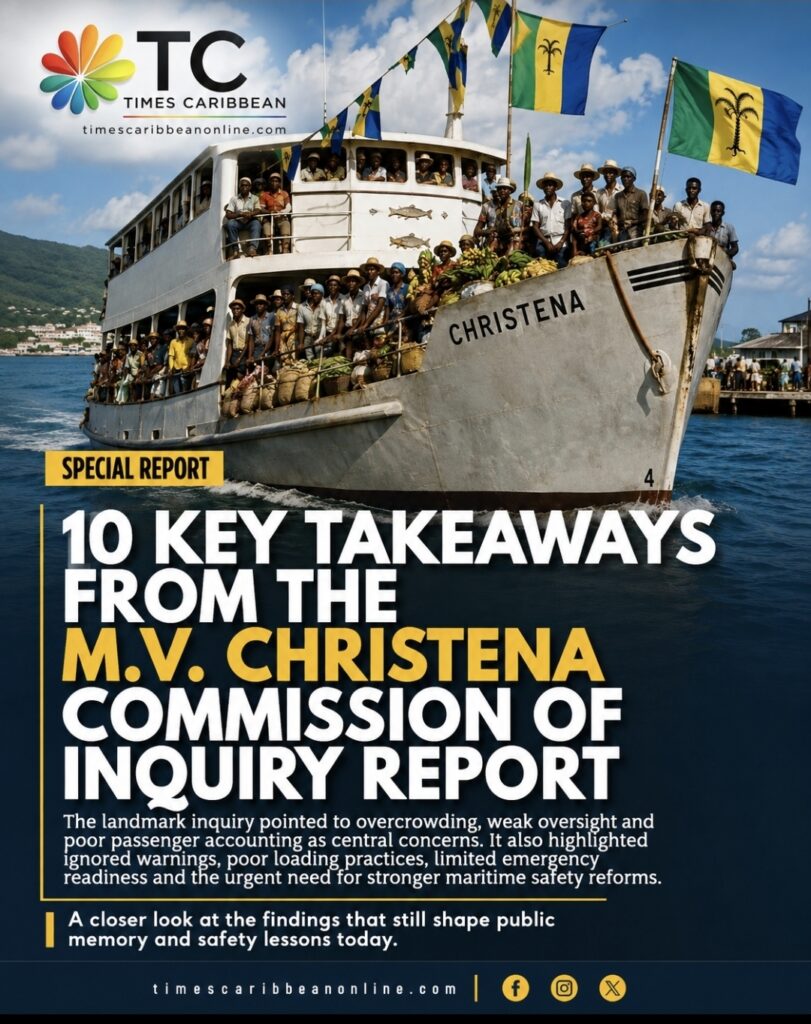
Witnesses described the Christena as routinely overcrowded, especially when it was the only passenger vessel operating between St. Kitts and Nevis. On the final voyage, passengers were packed into available spaces, including the stern and passageways. The commissioner concluded that the number carried greatly exceeded what the vessel should safely have transported. - Repeated official warnings were not acted upon.
The Ministry responsible for the vessel had written several letters about overcrowding, passenger counts and the need for better records. According to the inquiry, these warnings produced little or no effective action from the responsible administrative officers or the vessel’s command. - No legally determined passenger limit was displayed.
Although regulations allowed the Comptroller of Customs to determine how many passengers a vessel could safely carry, the report found no evidence that the required application had been made for the Christena. No approved maximum capacity was conspicuously painted or displayed aboard the vessel. - The ticketing system made proper accountability almost impossible.
Tickets were sometimes sold during the voyage, while cash receipts and deposit slips were used to estimate passenger numbers after the fact. The captain did not consistently receive reliable figures before departure, and passengers could board without an effective system confirming how many people were aboard. - Poor weight distribution contributed to instability.
The inquiry highlighted the concentration of passengers toward the stern, cargo and baggage stored in various areas, and passengers moving across the vessel. As the Christena rolled, the shifting human load and uneven distribution of weight made it increasingly difficult for the vessel to recover. - The vessel’s physical characteristics raised stability concerns.
The commissioner noted the Christena’s relatively shallow draught, high superstructure and construction features that could cause substantial rolling. He considered these characteristics, combined with overcrowding and poor loading, important factors in the capsize. - Severe weather was not identified as the main cause.
Evidence described the sea as generally calm, with good visibility and winds ranging from moderate to high. The sinking occurred close to Nevis at approximately 4:10 p.m., suggesting that loading, stability and operational failures—not an extraordinary storm—were central to the disaster. - Life-saving equipment was ineffective during the sudden capsize.
Life jackets and buoyant seating were reportedly aboard, but passengers had almost no time to reach or use them. The inquiry found that unbolted buoyant seats floated, blocked exits and may have trapped people inside the vessel rather than assisting their escape. - The report called for sweeping maritime reforms.
Recommendations included annual vessel inspections and licensing, formal stability testing, clearly displayed passenger limits, qualified captains and officers, working radio and safety equipment, numbered tickets, passenger checks before departure, better navigation training and stricter separation of dangerous cargo from passengers. The commissioner also recommended comprehensive legislation governing coastal passenger and cargo services.
The report’s central message is clear: the tragedy was not presented as one isolated mistake. It exposed a wider breakdown in regulation, enforcement, passenger accounting, vessel operation and maritime safety oversight.
















Leave a comment
You must be logged in to post a comment.