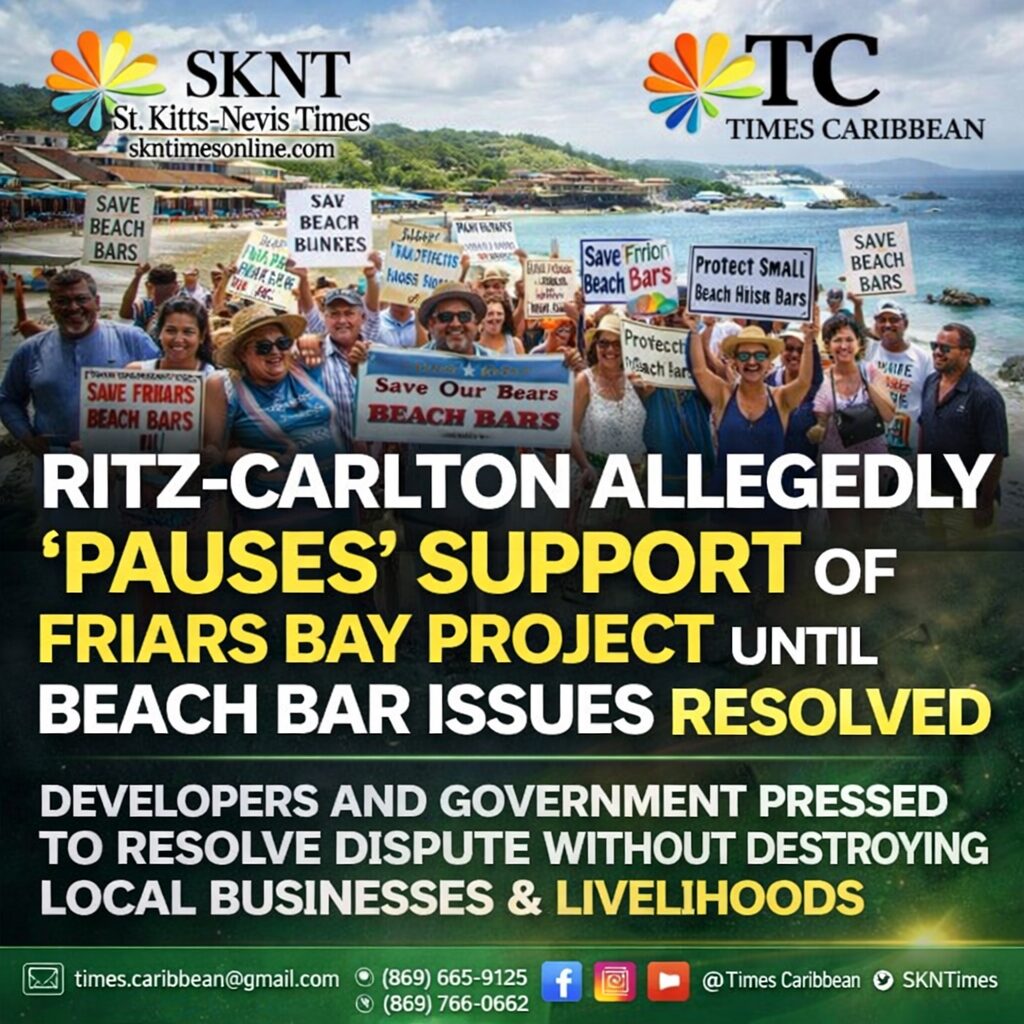
RITZ CARLTON ALLEGEDLY ‘PAUSES’ SUPPORT OF FRIARS BAY PROJECT UNTIL DEVELOPERS AND GOVT RESOLVES BEACH BAR ISSUES WITHOUT DESTRUCTION AND DISRUPTION OF LOCAL BUSINESSES AND LIVELIHOODS

RITZ-CARLTON EXIT RUMOURED FROM SOUTHEAST PENINSULA PROJECT — LUXURY BRAND DISTANCES ITSELF AMID FRIARS BAY BEACH BAR CONTROVERSY
Basseterre, St. Kitts — Unconfirmed but persistent reports are now swirling that global luxury hospitality giant has quietly withdrawn its name and support from the controversial Southeast Peninsula hotel development, as tensions intensify over the planned removal of longstanding beach bars at Friars Bay.
Multiple sources close to the project have indicated that the brand—operating under parent company —has grown increasingly uneasy with the optics and backlash surrounding the proposed displacement of locally owned businesses. While no official statement has been issued, insiders suggest the company is reluctant to be associated with any development perceived as undermining community livelihoods or cultural heritage.
At the heart of the controversy is the government-backed project on the Southeast Peninsula, which has triggered a wave of public outrage due to plans to demolish or relocate popular beach bars at —a beloved strip known for its vibrant local culture, tourism appeal, and small business ecosystem.
In recent days, dozens of citizens, business owners, and activists took to the streets of Basseterre, staging protests and voicing strong opposition to what they describe as a heavy-handed approach to development. Demonstrators argue that economic progress must not come at the cost of displacing generational entrepreneurs and erasing authentic Caribbean experiences that define the island’s tourism product.
Sources familiar with internal discussions suggest that has allegedly signaled a pause or withdrawal from the project until the dispute is resolved in a manner that satisfies stakeholders—particularly the beach bar owners whose businesses face disruption. The company is said to be wary of reputational risk, especially amid growing global scrutiny of developments that sideline local communities.
This development, if confirmed, would mark a significant setback for the project, which had heavily leaned on the prestige and global pull of the Ritz-Carlton brand to anchor its vision. Without that flagship name, questions now emerge about the project’s scale, investor confidence, and long-term viability.
Despite the mounting backlash, government officials and developers appear steadfast in their position, with notices reportedly issued for the clearing of the beach bar area as early as April 7. That stance has only fueled further criticism, with many calling for meaningful consultation, fair compensation, and preservation of cultural assets before any irreversible action is taken.
The silence from both the developers and has done little to quell speculation. In the absence of formal clarification, the situation remains fluid—but undeniably explosive.
As the controversy deepens, one thing is clear: the battle for Friars Bay is no longer just about land—it is about identity, ownership, and the future direction of development in St. Kitts and Nevis.
Whether the Ritz-Carlton’s alleged withdrawal becomes permanent—or serves as leverage for a more inclusive resolution—may ultimately determine not only the fate of the project, but the broader trust between citizens, investors, and the state.
















Leave a comment
You must be logged in to post a comment.