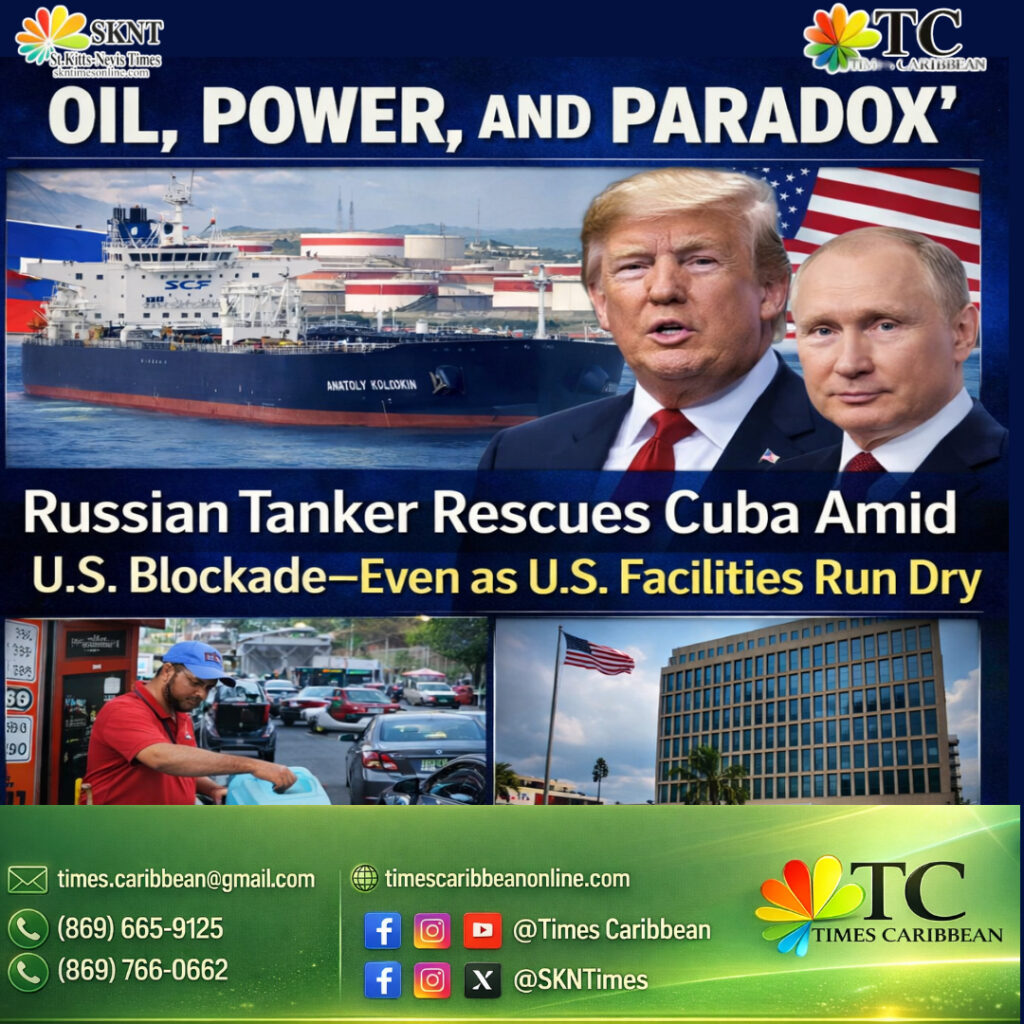
“Oil, Power, and Paradox”: Russian Tanker Rescues Cuba Amid U.S. Blockade—Even as U.S. Facilities Run Dry
TIMES CARIBBEAN NEWS


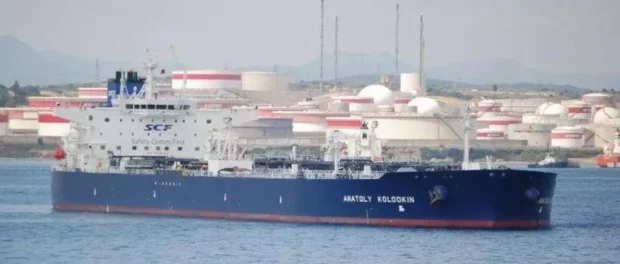
HAVANA, CUBA — In a dramatic geopolitical twist that underscores the shifting fault lines of global energy politics, the Russian oil tanker Anatoli Kolodkin has arrived in Cuba carrying approximately 750,000 barrels of oil, marking the island’s first major fuel delivery of the year.
The shipment—described as humanitarian in nature—comes at a critical moment for Cuba, which has been grappling with a crippling fuel crisis widely attributed to tightening U.S. restrictions and supply disruptions. Long lines at gas stations, power outages, and economic strain have pushed the island to the brink.
Trump’s Green Light Raises Eyebrows
In a surprising development, Donald Trump told reporters just a day prior to the tanker’s arrival that he had “no problem” with Russia delivering oil to Cuba.
The remark has sparked intense debate among analysts and policymakers, given Washington’s long-standing efforts to economically isolate Havana. Critics argue that the statement exposes contradictions in U.S. foreign policy—tightening sanctions with one hand while informally tolerating relief from a geopolitical rival with the other.
Blockade Backfires? U.S. Facilities Feel the Strain
Perhaps the most ironic consequence of the ongoing energy squeeze is being felt not just by Cuban citizens—but by American operations on the island itself.
Sources indicate that U.S. diplomatic facilities, including the United States Embassy Havana, have also been impacted by the severe fuel shortages, reportedly facing dwindling reserves and operational strain.
The situation has raised uncomfortable questions in Washington: Has the blockade created a crisis that now undermines even U.S. presence on the ground?
Russia Steps In — Defying Sanctions
Moscow, for its part, appears undeterred.
Russian Energy Minister Sergei Tsivilev made it clear last week that Russia would continue supplying fuel to Cuba, openly defying U.S. sanctions and reinforcing a strategic alliance that dates back decades.
The arrival of the Anatoli Kolodkin signals more than just a shipment of oil—it represents a broader geopolitical statement: Russia is willing to challenge U.S. dominance in the Caribbean basin.
A Region Watching Closely
For Caribbean nations, the situation carries significant implications. Cuba’s fuel crisis—and Russia’s intervention—highlight the vulnerabilities of small island economies heavily dependent on imported energy.
At the same time, it raises deeper questions about sovereignty, sanctions, and the unintended consequences of economic warfare.
As Cuba begins to stabilize its fuel supply—at least temporarily—the larger story continues to unfold:
A blockade meant to isolate has instead opened the door for rival powers—creating a paradox where relief arrives not from allies, but from adversaries.
TIMES CARIBBEAN — WHERE REGIONAL REALITY MEETS GLOBAL POWER.
















Leave a comment
You must be logged in to post a comment.