GLOBAL IMMIGRATION EARTHQUAKE-U.S. SUSPENDS IMMIGRANT VISAS FOR 75 COUNTRIES IN SWEEPING “PUBLIC CHARGE” CRACKDOWN
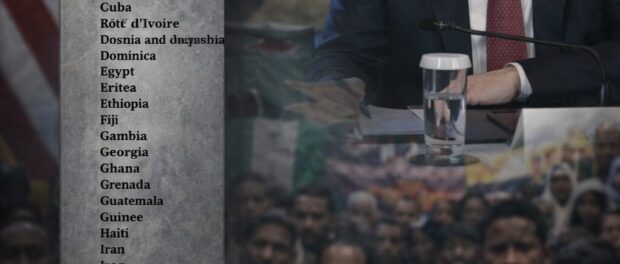
GLOBAL IMMIGRATION EARTHQUAKE
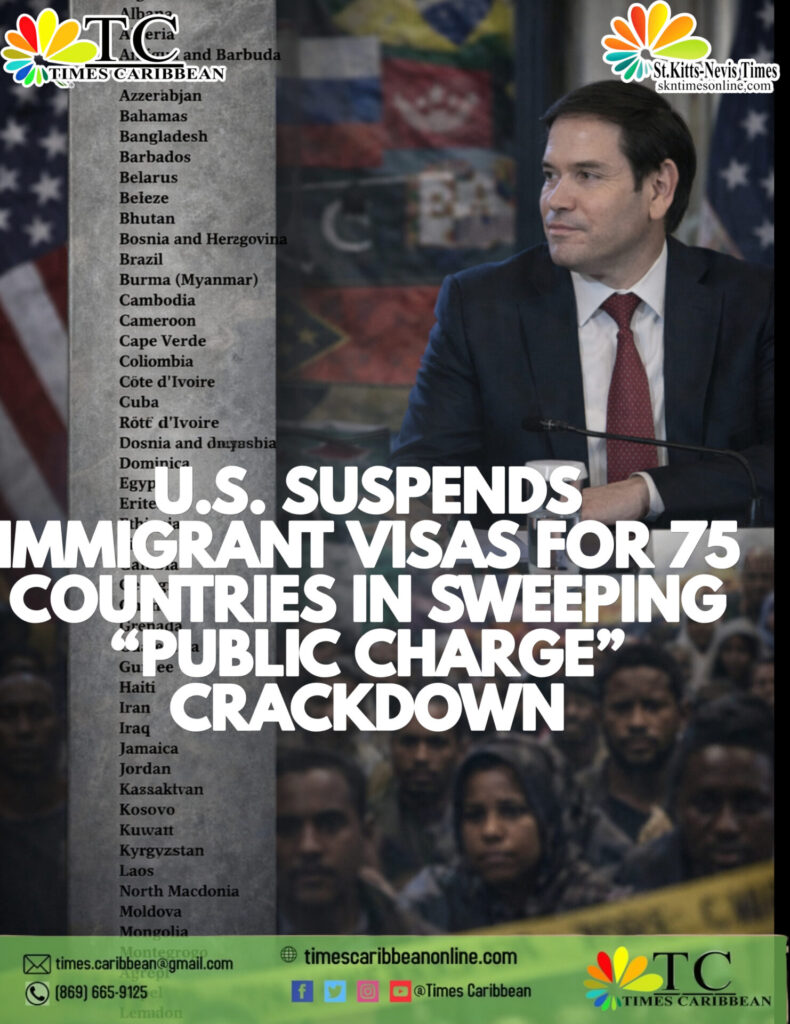
U.S. SUSPENDS IMMIGRANT VISAS FOR 75 COUNTRIES IN SWEEPING “PUBLIC CHARGE” CRACKDOWN
Times Caribbean Global | Breaking News
In one of the most far-reaching immigration actions in recent history, the has announced the suspension of immigrant visa processing for citizens of 75 countries, effective January 21, 2026, triggering alarm, outrage, and uncertainty across multiple continents.
The directive, issued under the leadership of U.S. Secretary of State , instructs consular officers worldwide to halt all immigrant visa applications from the listed countries, citing concerns that applicants may become “public charges” and rely on U.S. welfare or public benefits.
The policy stems from a broader immigration order issued in November under the administration of President , marking a renewed and intensified push to restrict lawful immigration pathways—particularly from developing nations.
“Immigration from these 75 countries will be paused while the State Department reassesses immigration processing procedures to prevent the entry of foreign nationals who would take welfare and public benefits,” a State Department spokesperson said.
While the suspension does not apply to non-immigrant visas such as tourist or business travel, its consequences are severe: family reunification cases frozen, employment-based green cards stalled, and thousands of lawful applicants plunged into limbo.
FULL LIST: 75 COUNTRIES AFFECTED BY THE U.S. IMMIGRANT VISA PAUSE
(Effective January 21, 2026)
- Afghanistan
- Albania
- Algeria
- Antigua and Barbuda
- Armenia
- Azerbaijan
- Bahamas
- Bangladesh
- Barbados
- Belarus
- Belize
- Bhutan
- Bosnia and Herzegovina
- Brazil
- Burma (Myanmar)
- Cambodia
- Cameroon
- Cape Verde
- Colombia
- Côte d’Ivoire
- Cuba
- Democratic Republic of the Congo
- Dominica
- Egypt
- Eritrea
- Ethiopia
- Fiji
- Gambia
- Georgia
- Ghana
- Grenada
- Guatemala
- Guinea
- Haiti
- Iran
- Iraq
- Jamaica
- Jordan
- Kazakhstan
- Kosovo
- Kuwait
- Kyrgyzstan
- Laos
- Lebanon
- Liberia
- Libya
- North Macedonia
- Moldova
- Mongolia
- Montenegro
- Morocco
- Nepal
- Nicaragua
- Nigeria
- Pakistan
- Republic of the Congo
- Russia
- Rwanda
- Saint Kitts and Nevis
- Saint Lucia
- Saint Vincent and the Grenadines
- Senegal
- Sierra Leone
- Somalia
- South Sudan
- Sudan
- Syria
- Tanzania
- Thailand
- Togo
- Tunisia
- Uganda
- Uruguay
- Uzbekistan
- Yemen
A PATTERN IMPOSSIBLE TO IGNORE
The list reveals a stark and uncomfortable reality: Africa, the Caribbean, the Middle East, and the Global South are overwhelmingly represented, alongside only a handful of wealthier or geopolitical rivals such as Russia.
For Caribbean nations—many of which enjoy long-standing diplomatic, security, and economic partnerships with Washington—the inclusion is being interpreted as a serious diplomatic insult and reputational downgrade, raising urgent questions about bilateral relations and international standing.
CRITICS WARN OF DISGUISED DISCRIMINATION
Human rights advocates, immigration attorneys, and policy analysts argue that the “public charge” justification is dangerously subjective, allowing U.S. officials to speculate about an applicant’s future economic circumstances—often based on nationality rather than individual merit.
What is being framed as administrative caution is, to many observers, economic and racial profiling on a global scale.
THE BOTTOM LINE
This is not a routine visa pause.
It is a systemic shutdown of lawful immigration channels for millions of people based solely on where they come from.
As governments scramble to respond and families face shattered timelines and dashed hopes, one question now looms large:
Who will challenge this policy—and how long will the world accept being sorted into “desirable” and “undesirable” nations?
More developments to follow.
















Leave a comment
You must be logged in to post a comment.