FROM HEART DISEASE TO HOMICIDES: THE FIVE BIGGEST THREATS TO LIFE IN TRINIDAD AND TOBAGO
TIMES CARIBBEAN | HEALTH & DEVELOPMENT
THE SILENT HEALTH CRISIS: THE TOP 5 LEADING CAUSES OF DEATH IN TRINIDAD AND TOBAGO AND WHY HEALTH EXPERTS ARE WARNING OF A NATIONAL EMERGENCY
Despite being one of the Caribbean’s most industrialized and economically developed nations, Trinidad and Tobago continues to battle a growing public health crisis driven largely by non-communicable diseases (NCDs), lifestyle-related illnesses, and rising chronic health complications.
According to regional and international health data, cardiovascular disease, diabetes, cancer, and other chronic illnesses remain the dominant causes of death in Trinidad and Tobago, placing enormous pressure on the healthcare system and national productivity.
Public health experts warn that obesity, hypertension, sedentary lifestyles, unhealthy diets, stress, alcohol use, smoking, and insufficient preventative healthcare continue to fuel worsening health outcomes across the twin-island republic.
Regional data indicate that non-communicable diseases account for the majority of deaths annually in Trinidad and Tobago.
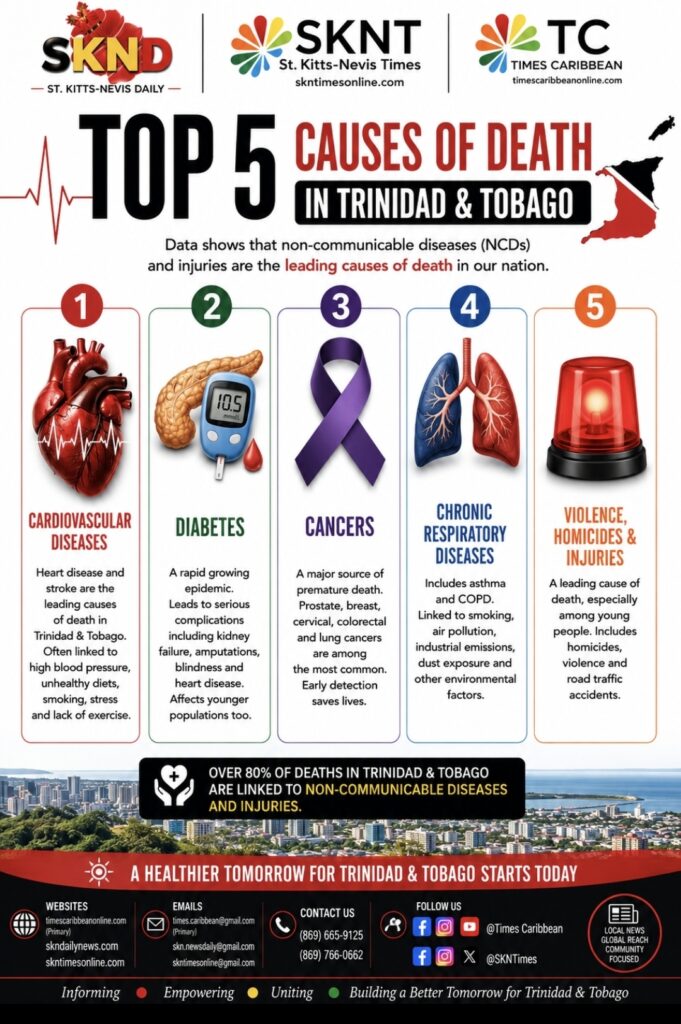
1. CARDIOVASCULAR DISEASE — THE NATION’S BIGGEST KILLER
Heart disease remains the leading cause of death in Trinidad and Tobago, accounting for approximately one-quarter of all deaths nationally, according to regional health reports.
These illnesses include hypertension, stroke, ischemic heart disease, heart attacks, and heart failure.
Medical experts say hypertension continues to be one of the most dangerous but under-controlled health conditions in the country. Many patients reportedly remain undiagnosed until severe complications occur.
Health officials have repeatedly stressed that poor diet, obesity, high salt intake, lack of exercise, stress, smoking, and alcohol use are major contributors to the country’s cardiovascular burden.
The Pan American Health Organization notes that cardiovascular disease remains the leading cause of mortality throughout the Americas and disproportionately affects Caribbean populations.
2. DIABETES — A RAPIDLY ESCALATING EPIDEMIC
Diabetes has become one of Trinidad and Tobago’s most serious public health concerns, with health professionals warning that the disease is affecting increasingly younger populations.
Type 2 diabetes, strongly associated with obesity and unhealthy diets, continues to contribute to kidney failure, amputations, blindness, heart disease, and premature death.
Regional research shows diabetes is among the top contributors to mortality and disability in Trinidad and Tobago and across the Caribbean.
Experts say sugary beverages, processed foods, and physical inactivity are major drivers behind the country’s rising diabetes prevalence.
The World Health Organization has also highlighted that over half of the population reportedly has multiple risk factors associated with non-communicable diseases.
3. CANCER — A GROWING SOURCE OF PREMATURE DEATH
Cancer remains among the top causes of death in Trinidad and Tobago, with prostate cancer, breast cancer, cervical cancer, colorectal cancer, and lung cancer among the most common and deadly forms.
Healthcare advocates say one of the country’s biggest challenges remains late diagnosis, as many patients reportedly seek treatment only after cancers have advanced significantly.
The Pan American Health Organization identified cancers among the top three causes of death and disability in Trinidad and Tobago.
Medical professionals continue to call for expanded screening programmes, greater public education, and improved access to oncology services and early detection systems.
4. VIOLENCE, HOMICIDES, AND INJURIES
Unlike many smaller Caribbean territories, Trinidad and Tobago also faces a serious challenge from violent crime, homicides, and injury-related deaths.
Public concern has grown in recent years over escalating gang violence, firearm-related incidents, domestic violence cases, and road traffic fatalities.
Regional health experts have warned that violence and self-harm are contributing significantly to years of healthy life lost in Trinidad and Tobago.
Road traffic accidents also remain a major concern, with speeding, distracted driving, impaired driving, and inconsistent road safety practices contributing to preventable deaths annually.
Health analysts warn that violence not only impacts mortality rates but also creates major psychological, economic, and social consequences for communities.
5. CHRONIC RESPIRATORY DISEASES
Chronic respiratory diseases, including asthma and chronic obstructive pulmonary disease (COPD), also rank among the country’s leading causes of death.
Experts point to smoking, environmental pollution, industrial emissions, dust exposure, and air quality issues as contributing factors.
Given Trinidad and Tobago’s industrial energy sector and urban population density, respiratory health concerns remain particularly significant.
The Pan American Health Organization continues to classify chronic respiratory diseases among the major non-communicable disease categories affecting the Americas.
A NATIONAL HEALTH BURDEN WITH MAJOR ECONOMIC CONSEQUENCES
Health experts warn that Trinidad and Tobago’s growing chronic disease crisis has implications far beyond hospitals and clinics.
Rising healthcare costs, reduced workforce productivity, increased disability, and premature mortality are creating major economic pressures for governments and families alike.
Regional studies suggest the Caribbean continues to experience disproportionately high burdens from cardiovascular disease, diabetes, and cancers compared to many other regions globally.
Experts argue that without aggressive intervention strategies, the long-term healthcare and economic consequences could become even more severe.
CALLS FOR URGENT PREVENTATIVE ACTION
Public health advocates continue calling for:
- Expanded national health screening programmes
- Greater investment in preventative healthcare
- Stronger anti-smoking and nutrition campaigns
- Increased physical activity initiatives
- Better mental health and violence prevention services
- Earlier cancer detection systems
- More aggressive diabetes and hypertension management
- Improved public education on healthy lifestyles
Health professionals say prevention, education, and early intervention will ultimately determine whether Trinidad and Tobago can reverse current health trends and reduce preventable deaths in the years ahead.
















Leave a comment
You must be logged in to post a comment.