CARIBBEAN CORPORATE POWER: BILLIONS, BALANCE SHEETS & REGIONAL DOMINANCE TITANS OF TRADE: INSIDE THE CARIBBEAN’S $2.32 BILLION POWER LIST


5
The Caribbean is often viewed through the lens of tourism, beaches, and leisure—but beneath that image lies a powerful and evolving economic engine driven by corporate giants generating hundreds of millions—and in some cases billions—of US dollars annually.
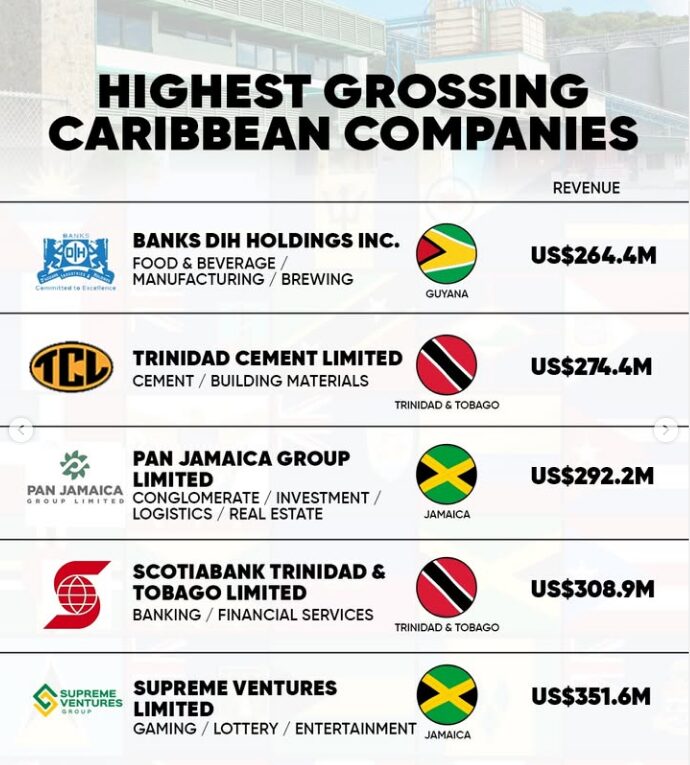
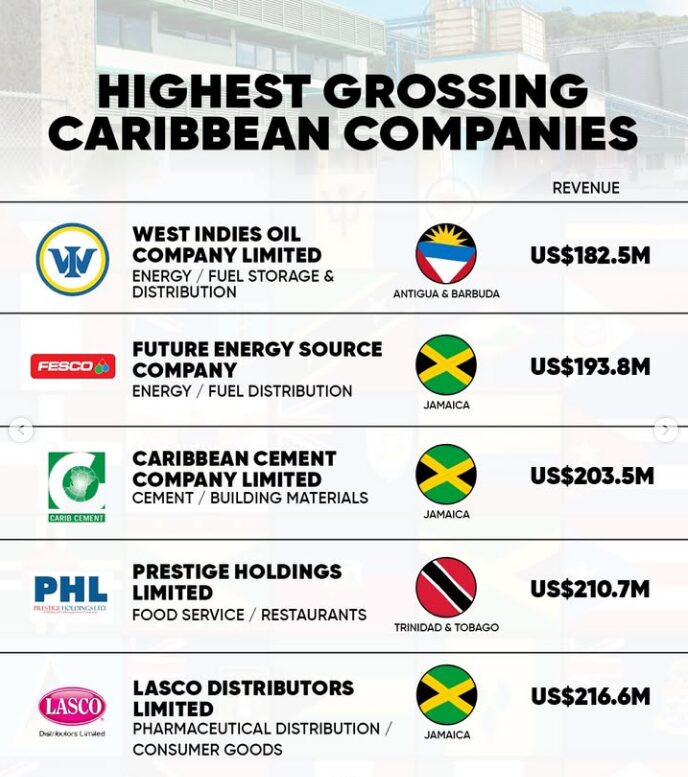
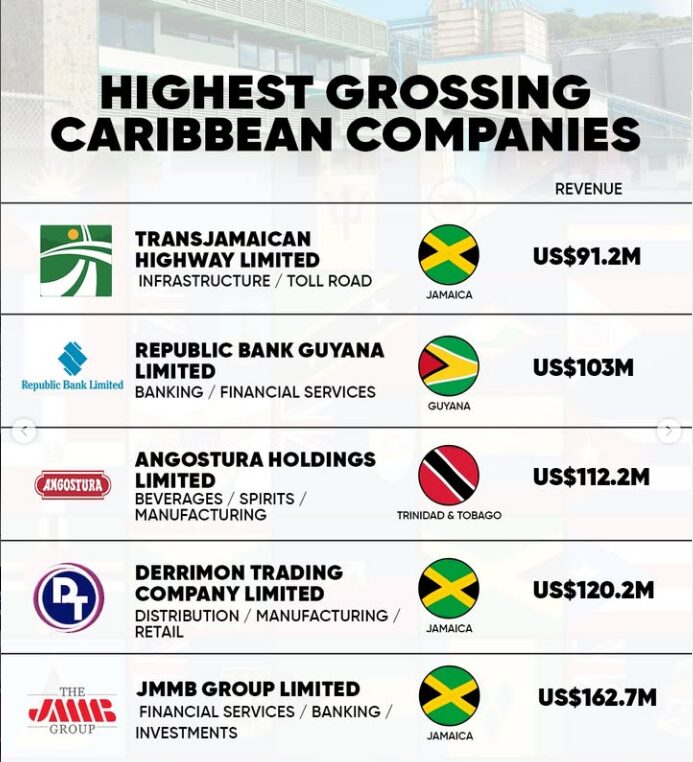
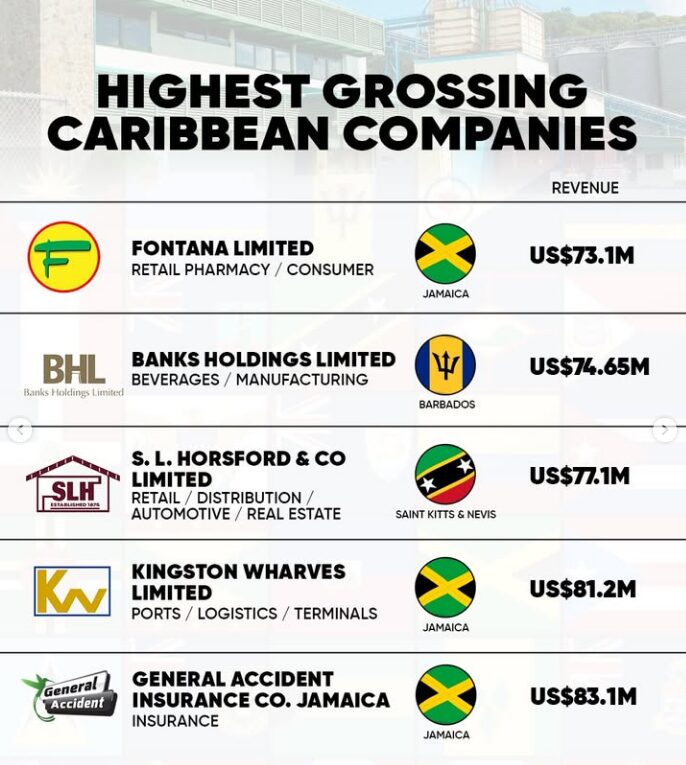
The Top 50 Highest-Grossing Caribbean Companies (2025) offers a revealing snapshot of regional economic power, dominance, and disparity.
At the summit stands Jamaica’s financial giant, National Commercial Bank Financial Group Limited, generating US$2.32 billion in 2025 revenue—firmly establishing itself as the region’s leading corporate force.
At the lower end of the Top 50, Trinidad & Tobago’s West Indian Tobacco Company Limited reports US$28.3 million in revenue, underscoring the wide range in scale among the region’s top-performing firms.
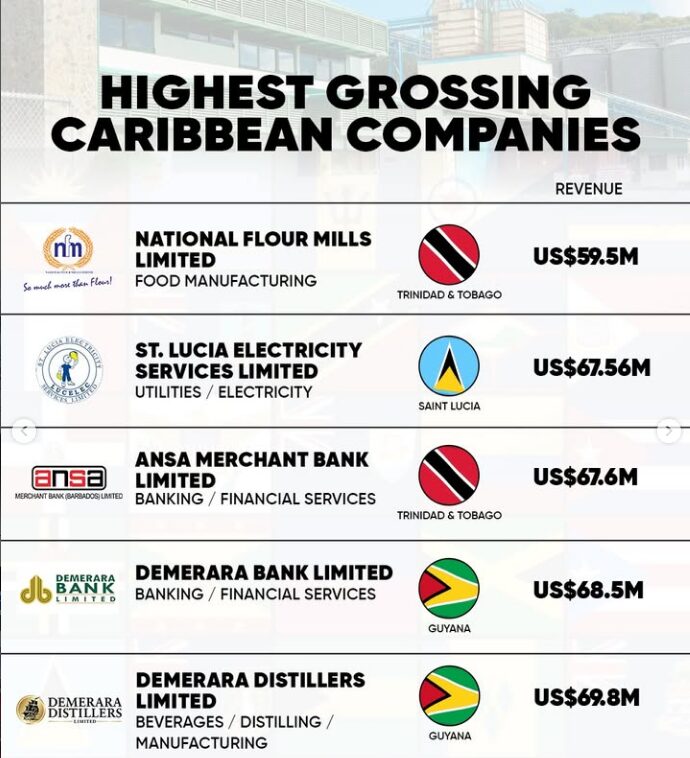
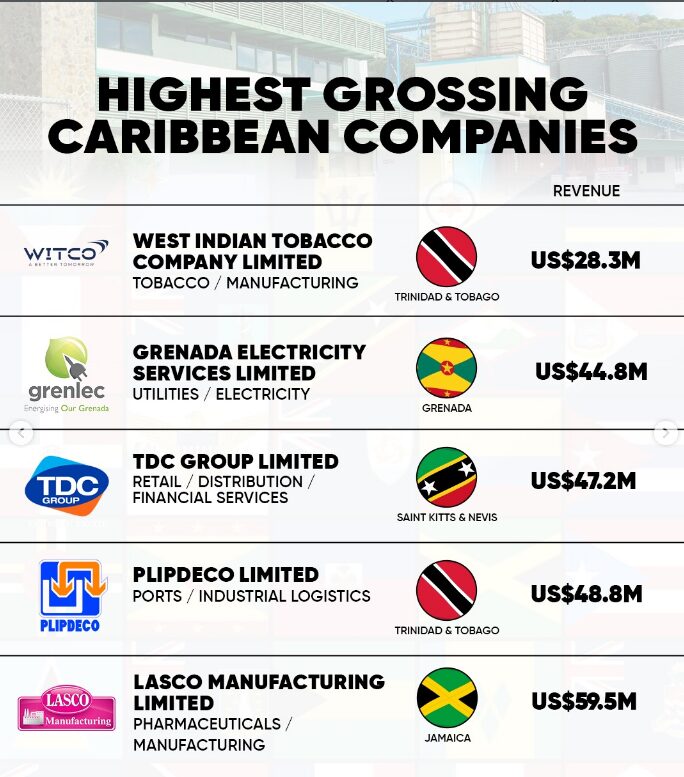
A TALE OF TWO GIANTS: JAMAICA AND TRINIDAD & TOBAGO
The data highlights a clear concentration of corporate strength:
- Jamaica: 20 companies in the Top 50
- Trinidad & Tobago: 15 companies in the Top 50
Together, these two countries account for 70 percent of the entire list.
This dominance reflects:
- Larger domestic markets
- More diversified economic structures
- Stronger capital markets
- Established industrial and financial sectors
Jamaica’s corporate footprint spans multiple industries, including financial services through JMMB Group Limited, distribution via Derrimon Trading Company Limited, infrastructure through TransJamaican Highway Limited, and gaming through Supreme Ventures Limited.
Trinidad & Tobago’s strength is rooted in manufacturing, energy-linked industries, and finance, with key players such as Scotiabank Trinidad & Tobago Limited and Angostura Holdings Limited.
SECTOR BREAKDOWN: WHERE THE MONEY FLOWS
Several industries consistently drive revenue across the region:
Financial Services and Banking
A core pillar of Caribbean economies, supporting investment, credit, and regional expansion.
Manufacturing and Distribution
Companies such as Trinidad Cement Limited and Banks DIH Holdings Inc. dominate production and supply chains.
Energy and Fuel Distribution
Entities like West Indies Oil Company Limited highlight the importance of energy logistics.
Retail and Consumer Goods
Growing rapidly, particularly in Jamaica, led by companies like Fontana Limited.
Infrastructure and Logistics
Ports and transport systems, including Kingston Wharves Limited, remain critical revenue drivers.
ST. KITTS & NEVIS: SMALL MARKET, STRONG PRESENCE
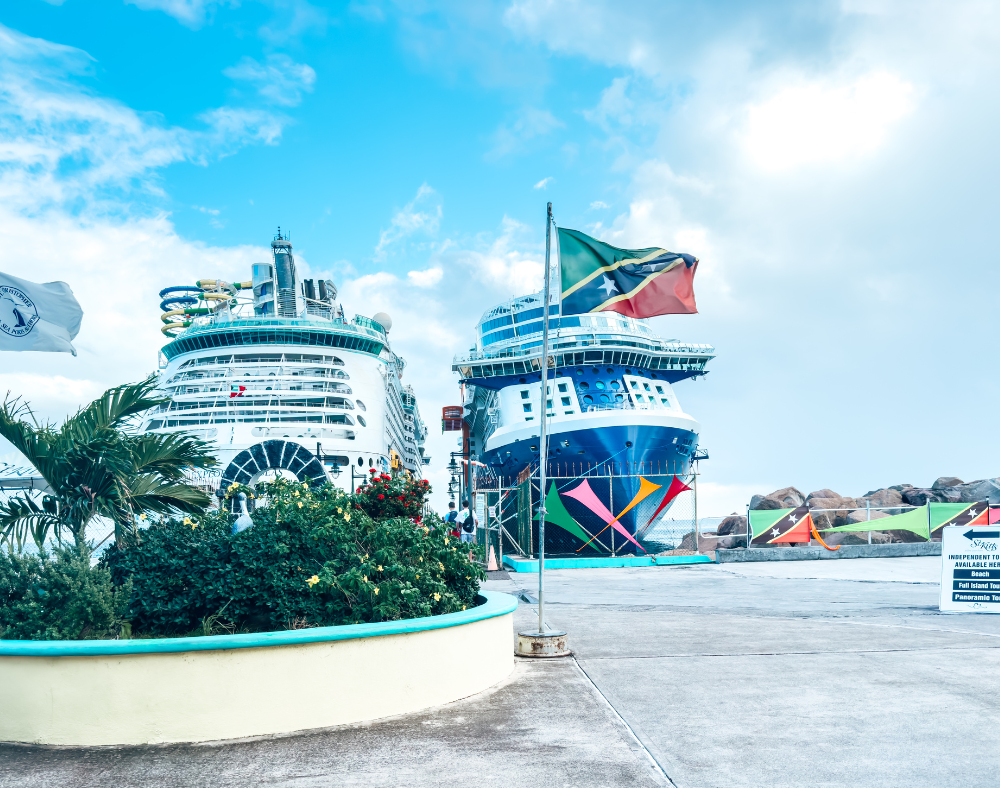

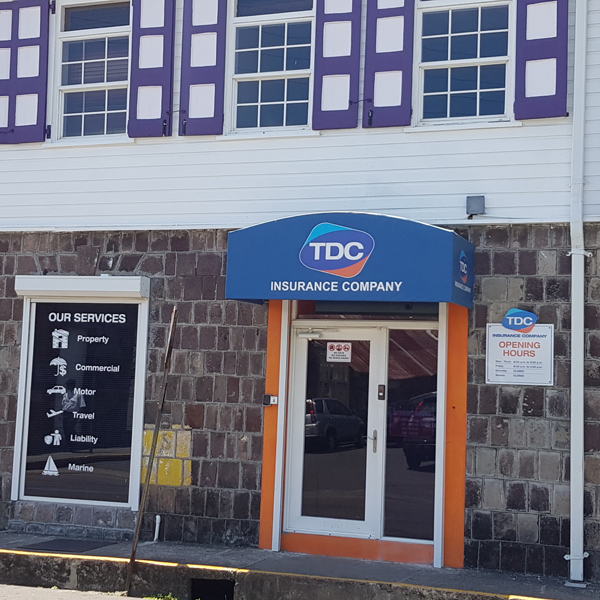
Despite its small population, St. Kitts & Nevis has secured two positions on the Top 50 list:
S. L. Horsford & Co. Limited
- Revenue: US$77.1 million
- Sector: Retail, Distribution, Automotive, Real Estate
TDC Group Limited
- Revenue: US$47.2 million
- Sector: Retail, Distribution, Financial Services
For a federation of fewer than 60,000 people, this represents a significant achievement.
These companies:
- Anchor domestic commerce
- Support employment across sectors
- Facilitate imports and construction supply chains
- Demonstrate the effectiveness of diversified conglomerate models in small economies
However, the scale gap remains substantial. When compared to Jamaica’s top firm at US$2.32 billion, the difference highlights structural limitations tied to market size and expansion capacity.
STRUCTURAL REALITIES: SCALE, CAPITAL AND COMPETITION
The rankings reveal deeper economic truths:
- Larger economies benefit from higher consumption and broader tax bases
- Diversification strengthens resilience and revenue generation
- Access to capital is a key driver of corporate expansion
- Many smaller states remain heavily domestically focused
THE OECS QUESTION: PATHWAYS TO SCALE
For OECS countries, including St. Kitts & Nevis, Antigua and Barbuda, St. Lucia, and Grenada, the challenge is not participation—but scale.
Key strategies for growth include:
- Regional integration and mergers
- Export-oriented business models
- Digital transformation and e-commerce expansion
- Greater engagement with diaspora markets
CONCLUSION: A REGION OF OPPORTUNITY—WITH CLEAR IMBALANCES
The Caribbean’s Top 50 companies collectively generate billions in annual revenue, reflecting a region with significant economic capability.
However, the distribution of that power remains uneven.
Jamaica and Trinidad & Tobago dominate the corporate landscape, while smaller nations continue to demonstrate resilience and potential within structural constraints.
The future of Caribbean business growth will depend not only on national success, but on the region’s ability to integrate, scale, and compete collectively on the global stage.
















Leave a comment
You must be logged in to post a comment.