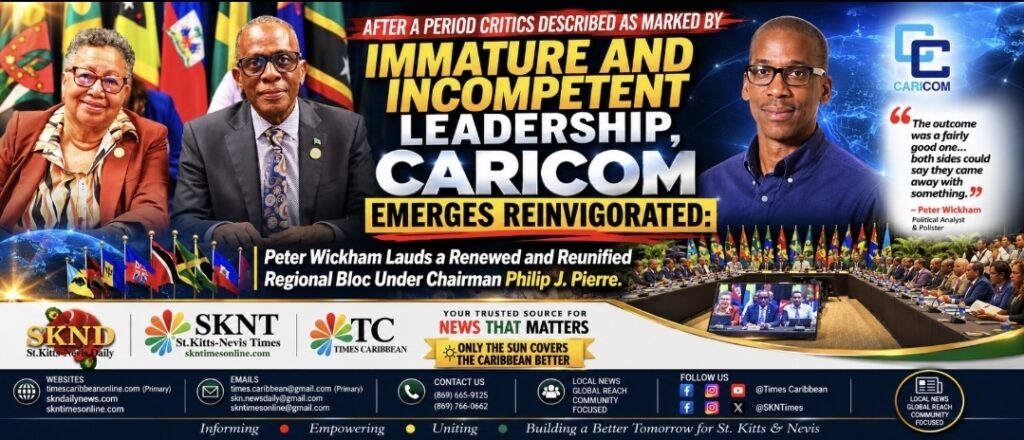
AFTER A PERIOD CRITICS DESCRIBED AS MARKED BY IMMATURE AND INCOMPETENT LEADERSHIP, CARICOM EMERGES REINVIGORATED: Peter Wickham Lauds a Renewed and Reunified Regional Bloc Under Chairman Philip J. Pierre
AFTER MONTHS OF DIVISION, CARICOM EMERGES REINVIGORATED: Wickham Praises Pierre’s Steady Leadership as Regional Bloc Turns the Page
TIMES CARIBBEAN | Special Analysis
CASTRIES, Saint Lucia — Political analyst and respected regional pollster Peter Wickham says CARICOM has emerged stronger, more united and better positioned for the future following the conclusion of the 51st Regular Meeting of the Conference of Heads of Government in Saint Lucia under the chairmanship of Saint Lucia Prime Minister Philip J. Pierre.
His assessment has fueled regional discussion, particularly because it follows what many observers described as one of the most contentious and politically difficult periods in the Community’s recent history.
Speaking to Barbados TODAY, Wickham praised the outcome of the summit, describing it as an example of mature diplomacy, constructive compromise and renewed political engagement. He said the leaders demonstrated an ability to resolve difficult disagreements while preserving the integrity of the regional institution.
“The outcome was a fairly good one… both sides could say they came away with something,” Wickham observed, referring to the agreement to seek an advisory opinion from the Caribbean Court of Justice regarding the Secretary-General appointment process.
His comments contrast sharply with the criticism that surrounded CARICOM in the months leading up to the Saint Lucia summit, when disagreements over governance, leadership and institutional procedures dominated regional headlines and exposed visible divisions among member states.
Critics had argued that the bloc appeared distracted by internal disputes at a time when it faced mounting regional challenges, including Haiti’s security crisis, rising food costs, climate resilience, transportation reform and economic competitiveness.
Against that backdrop, the Saint Lucia meeting has been viewed by many as an opportunity to reset the regional agenda.
Wickham highlighted several achievements emerging from the summit, including movement toward a regional ferry service, continued expansion of labour mobility under the CARICOM Single Market and Economy, and the decision to seek legal guidance from the CCJ rather than allowing political disagreement to deepen.
He also welcomed the attendance and participation of Trinidad and Tobago Prime Minister Kamla Persad-Bissessar throughout the meeting, suggesting that direct engagement strengthened the decision-making process.
Perhaps most significantly, Wickham concluded that CARICOM left Saint Lucia more cohesive than when it arrived.
For supporters of deeper regional integration, that assessment represents an important endorsement of the new chairmanship and the collaborative tone that characterised the summit’s closing sessions.
Whether that renewed momentum can now be translated into concrete action remains the next major test.
The region continues to face enormous challenges—from maritime transportation and food security to digital transformation and climate resilience—but many will now be watching to see whether the cooperative spirit displayed in Saint Lucia can be sustained.
The 51st Meeting may ultimately be remembered not for the disagreements that preceded it, but for demonstrating that CARICOM’s institutions remain capable of resolving difficult issues through dialogue, compromise and regional diplomacy.
As Wickham’s assessment suggests, many now believe the Community has an opportunity to move forward with renewed purpose and greater unity after a period that tested the resilience of regional governance.
















Leave a comment
You must be logged in to post a comment.