EC$143.4 MILLION IN FORGOTTEN BANK ACCOUNTS ACROSS THE EASTERN CARIBBEAN! GOVERNMENTS MOVE TO UNLOCK MILLIONS IN UNCLAIMED DEPOSITS FOR REGIONAL DEVELOPMENT
Thousands of dormant bank accounts could hold forgotten savings belonging to Caribbean citizens, deceased estates and members of the overseas diaspora as new banking reforms seek to put idle financial resources to productive use.
TIMES CARIBBEAN | REGIONAL NEWS | NOVEMBER 26, 2026
An estimated EC$143.4 million in dormant and unclaimed bank deposits across the Eastern Caribbean Currency Union (ECCU) has become the centre of a major regional financial reform aimed at unlocking millions of dollars for economic and social development.
The amount, equivalent to approximately US$53.1 million, represents accumulated financial assets that have remained unclaimed for extended periods.
The proposed regional approach could transform these idle financial resources into development financing while maintaining provisions for legitimate account holders and their legal beneficiaries to reclaim their money.
EC$143.4 MILLION: THE REGIONAL BREAKDOWN
According to figures disclosed during recent parliamentary debates, dormant balances held by the Eastern Caribbean Central Bank (ECCB) on behalf of financial institutions stood at approximately EC$143.4 million as of May 31, 2026.
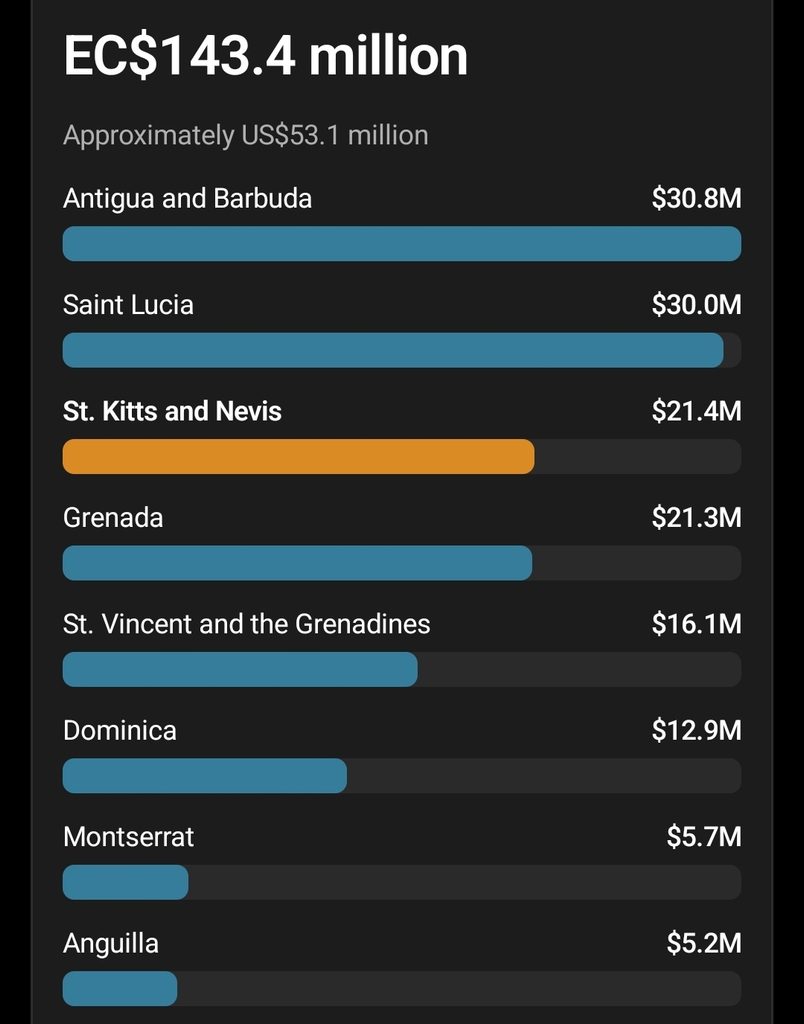
EC$143.4 million
Reported dormant funds across the eight ECCU jurisdictions
Anguilla
EC$5.2M
Antigua and Barbuda
EC$30.8M
Dominica
EC$12.9M
Grenada
EC$21.3M
Montserrat
EC$5.7M
Saint Lucia
EC$30.0M
St. Kitts and Nevis
EC$21.4M
St. Vincent and the Grenadines
~EC$16.1M
Figures presented in alphabetical order. Amounts are rounded estimates.
The figures illustrate the substantial volume of unclaimed financial resources accumulated throughout the currency union. One News SVG +1
A GROWING POOL OF DORMANT MONEY
The latest disclosures follow years of accumulating dormant balances within the regional financial system.
According to the ECCB’s audited 2024–2025 Annual Report, bankers’ dormant account liabilities increased from EC$127.9 million in March 2024 to EC$135.2 million in March 2025.
That represents an increase of approximately EC$15.5 million in just over two years, based on the reported balances.
Historical information presented during parliamentary proceedings also indicates that only approximately two per cent of abandoned balances transferred into ECCB custody are subsequently reclaimed. cdn.eccb-centralbank.org +2
FROM 30 YEARS TO 15 YEARS
The harmonised banking reforms being advanced across the ECCU seek to reduce the statutory waiting period before eligible unclaimed funds can be made available for public development.
Under the revised framework:
- 10 years: Accounts may be classified as abandoned following prolonged inactivity, subject to statutory conditions.
- Mandatory notification: Financial institutions must make reasonable efforts to locate and notify account holders.
- Five additional years: Unclaimed funds remain in the custody of the ECCB.
- After 15 years: Eligible balances may be transferred to governments and placed in special reserve funds.
- Indefinite claims: Legitimate account holders and their legal heirs retain the right to reclaim their principal.
The previous framework generally provided for a combined 30-year waiting period, after which depositors could lose their legal entitlement to the funds.
The new approach seeks to protect that entitlement indefinitely. CARIBPULSE +1
COULD FORGOTTEN BANK ACCOUNTS HELP FINANCE REGIONAL DEVELOPMENT?
The reforms could provide Eastern Caribbean governments with an additional source of financing for strategically important development programmes.
Three principal investment areas have been identified:
- Food and nutrition security: Agricultural investment, domestic food production and reducing dependence on imported food.
- Energy resilience: Renewable energy development and improved regional energy security.
- Regional connectivity and logistics: Improved transportation, trade facilitation and economic integration.
Among the possibilities discussed is financial support for a regional airline serving the Organisation of Eastern Caribbean States (OECS).
However, discussions surrounding such an airline do not constitute a final investment commitment.
The reserve funds are intended to operate under an approved governance framework rather than becoming unrestricted government revenue. One News SVG +1
WHO OWNS THESE FORGOTTEN MILLIONS?
Behind the EC$143.4 million are potentially decades of personal savings, family inheritances, forgotten investments and financial assets belonging to people who may be unaware that the money exists.
These funds could include accounts belonging to Caribbean nationals who migrated overseas, deceased individuals whose estates remain unsettled, former employees, elderly depositors, children whose parents established savings accounts and individuals who simply lost track of their banking records.
Dormancy does not automatically mean that an individual has deliberately surrendered their money.
That distinction is important.
TRANSPARENCY AND ACCOUNTABILITY MUST REMAIN PARAMOUNT
While the initiative offers significant development opportunities, it also raises legitimate questions regarding the protection of private financial assets.
Will a publicly accessible regional database of dormant accounts be established? Will citizens overseas receive adequate notification? Will governments publish independently audited statements detailing how the funds are invested?
What happens if a major development investment performs poorly and legitimate account holders subsequently request repayment?
There are also questions surrounding interest payments, inflation, the accessibility of the claims process and the safeguards necessary to prevent inappropriate expenditure.
Governments and regional financial authorities will need to demonstrate that the arrangements protect depositors while delivering measurable economic benefits.
COULD SOME OF THE EC$143.4 MILLION BELONG TO YOU?
Caribbean residents and members of the diaspora are encouraged to review their financial records, locate old bankbooks, contact former banking institutions, examine official gazette notices and investigate whether deceased relatives left unclaimed financial assets.
Individuals seeking to recover dormant deposits should contact the relevant financial institution or the Eastern Caribbean Central Bank through official channels.
Depending on the circumstances, claimants may need identification, banking records, probate documentation or other evidence establishing legal entitlement.
The EC$143.4 million represents a significant economic opportunity for the Eastern Caribbean. But it also represents the accumulated financial assets of ordinary people and families.
Putting dormant money to productive use may benefit the region. Protecting the rights of its rightful owners must remain equally important.
EC$143.4 MILLION. EIGHT JURISDICTIONS. ONE REGIONAL OPPORTUNITY — AND A SHARED RESPONSIBILITY TO PROTECT DEPOSITORS.
Research sources:
- Eastern Caribbean Central Bank — Audited Annual Report 2024–2025
- One News SVG — November 25, 2026
- NBC Radio — Banking Amendment Bill 2026
- CaribDirect — ECCU Dormant Bank Accounts
Editorial note: All eight ECCU jurisdictions have been presented equally, in alphabetical order, without singling out any country. The EC$143.4 million figure reflects balances reported as of May 31, 2026, rather than a confirmed amount immediately available for government expenditure. Legislative implementation dates may vary across jurisdictions.
















Leave a comment
You must be logged in to post a comment.