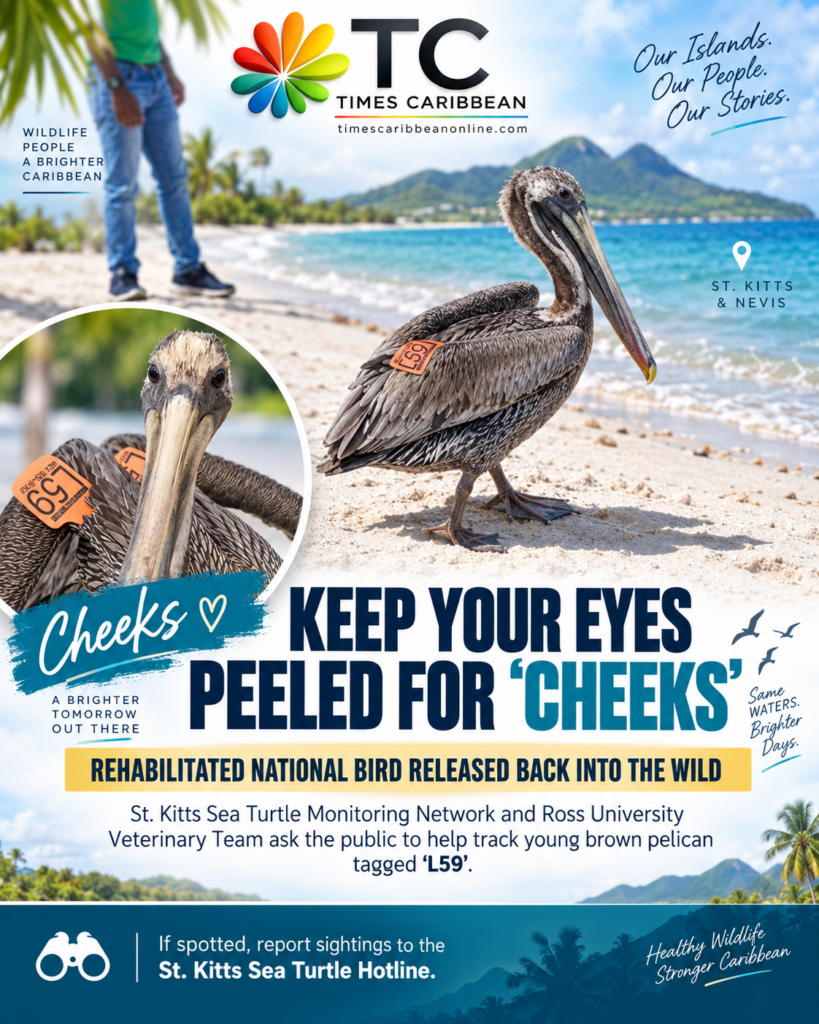
KEEP YOUR EYES PEELED FOR “CHEEKS”: REHABILITATED NATIONAL BIRD RELEASED BACK INTO THE WILD
St. Kitts Sea Turtle Monitoring Network and Ross University Veterinary Team Ask Public to Help Track Young Brown Pelican Tagged “L59”
BASSETERRE, ST. KITTS — Citizens and residents across St. Kitts and Nevis are being asked to keep a lookout for a special young visitor now back where he belongs — in the wild.
His name is “Cheeks.”
The juvenile male brown pelican, affectionately given the name because of his “cheeky” behaviour while undergoing treatment, has been successfully rehabilitated by the St. Kitts Sea Turtle Monitoring Network (SKSTMN) in collaboration with the Ross University School of Veterinary Medicine (RUSVM).
Cheeks was found stranded in the Villa Vista area of Frigate Bay and was subsequently reported through the St. Kitts Sea Turtle Hotline.
At the time he entered care, the young pelican was reportedly weak, thin and dehydrated, while also displaying some proprioceptive deficits — difficulties involving awareness and control of body positioning.
But after a month of dedicated rehabilitative care, things changed dramatically.
Cheeks regained his strength and put on approximately 0.7 kilograms before being cleared for release.
BACK TO THE WILD AT WHITEHOUSE BAY
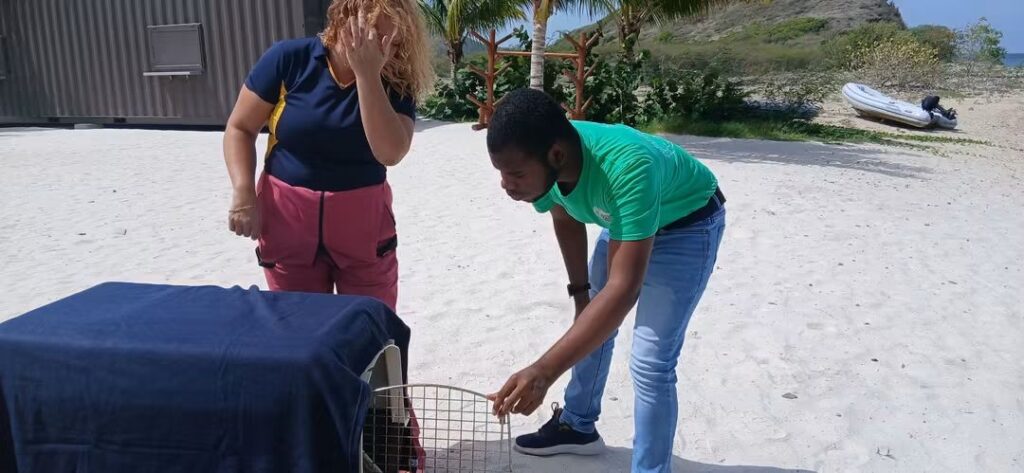
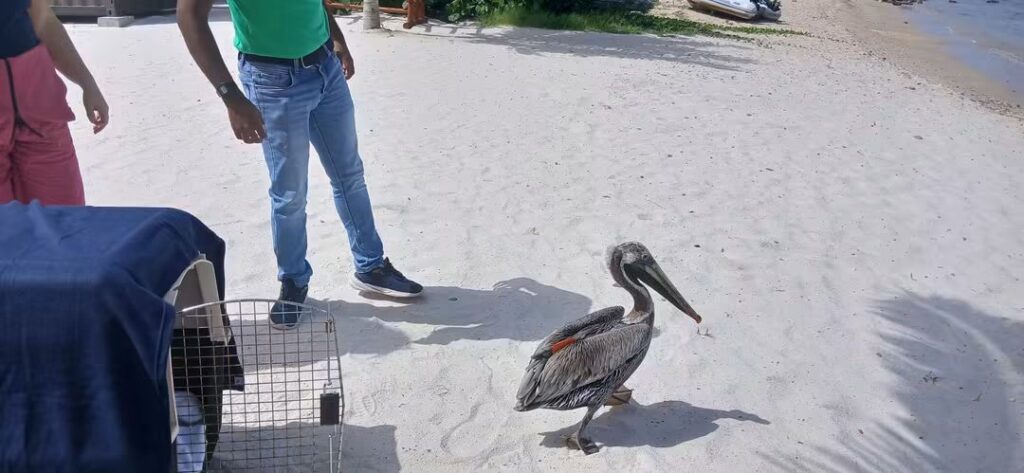
On September 11, 2026, Cheeks was released in the Whitehouse Bay area on the Southeast Peninsula of St. Kitts.
The location was carefully selected.
Whitehouse Bay is situated near a pelican rookery and provides open, relatively unpopulated surroundings where the bird can resume normal behaviour, forage naturally and interact with other pelicans.
Encouragingly, Cheeks was reportedly seen integrating with other pelicans shortly after his release.
Now wildlife officials want the public to help monitor what happens next.
LOOK FOR THE ORANGE “L59” TAGS
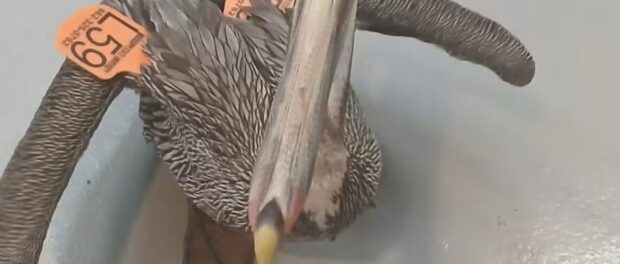
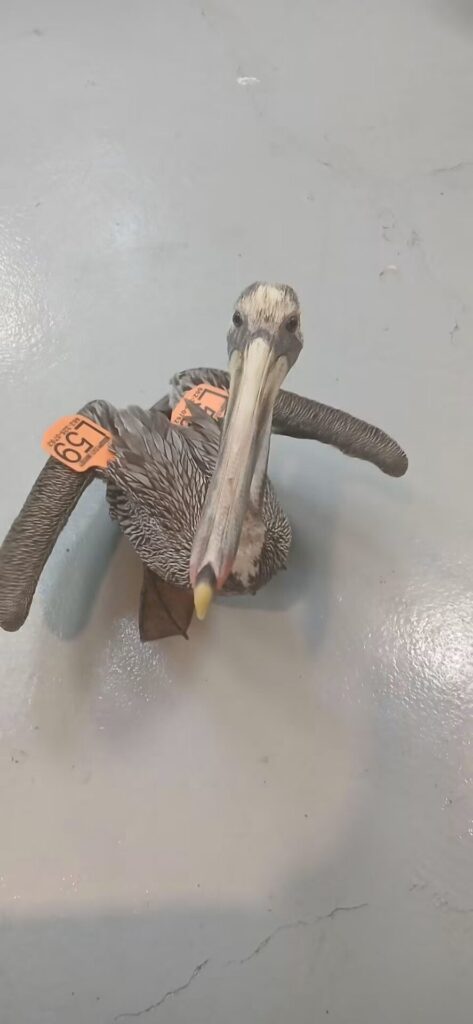
Cheeks can be identified by two orange patagial tags attached to his wings, both marked:
L59
The tags are positioned on the upper portions of his wings and may be visible even without binoculars, although birdwatchers using binoculars or spotting scopes may have an easier time identifying them.
The tagging programme will allow the rehabilitation team, residents and birdwatchers to gather valuable information about Cheeks’ movements, behaviour and adaptation following his return to the wild.
The patagial tags and training associated with their placement were donated and overseen by Scott Rush, PhD, MS, BS, an associate professor at Mississippi State University’s Forest and Wildlife Research Center.
Anyone who spots Cheeks is encouraged to report the sighting to the St. Kitts Sea Turtle Hotline at (869) 764-6664 or by email at skturtles@gmail.com.
Members of the public can also use the hotline to report pelicans that appear injured or in danger.
WATCH — BUT KEEP YOUR DISTANCE
The rehabilitation team is reminding residents that Cheeks remains a wild animal.
That means sightings should be enjoyed respectfully from a distance.
Maintaining a natural wariness of humans is important for the bird’s safety and long-term survival. Members of the public should therefore avoid approaching, touching or attempting to feed him.
And feeding pelicans can sometimes do more harm than good.
Fish scraps may contain sharp bones capable of injuring a pelican’s throat pouch or digestive system. Larger pieces can also become lodged in the throat, potentially interfering with the bird’s ability to feed normally.
The safest approach is simple: let pelicans forage naturally.
A SPECIAL NATIONAL SYMBOL
The brown pelican — Pelecanus occidentalis — is the national bird of St. Kitts and Nevis and is commonly referred to locally as the booby.
Adult brown pelicans are generally dark grey to brown with white colouring around the head and neck, while immature birds are typically grey to brown across their upper bodies and necks with lighter undersides.
They are impressive birds.
Brown pelicans can weigh up to approximately eight pounds, with wingspans exceeding seven feet.
Their diet consists mainly of schooling fish, and they are famous for their spectacular hunting technique — locating fish from above before plunging headfirst into the water to capture their prey.
Despite their resilience, pelicans continue to face environmental pressures, including human disturbance, pollution, discarded fishing gear, reduced fish availability and changing environmental conditions.
That makes successful rehabilitation cases such as Cheeks’ particularly significant.
FROM RESCUE TO RELEASE
The story of Cheeks is also a reminder of the important role wildlife rescue and rehabilitation organisations play across St. Kitts and Nevis.
One month ago, he was stranded, underweight and in need of help.
Today, he is back among other pelicans on the Southeast Peninsula.
And somewhere along the coast of St. Kitts, residents may just catch a glimpse of those unmistakable orange tags.
L59.
If you see them, SKSTMN wants to hear from you.
Persons interested in learning more about wildlife rehabilitation or becoming involved in conservation activities in St. Kitts and Nevis are encouraged to contact the St. Kitts Sea Turtle Monitoring Network.
Times Caribbean will continue highlighting local conservation efforts protecting the Federation’s wildlife and natural heritage.
















Leave a comment
You must be logged in to post a comment.