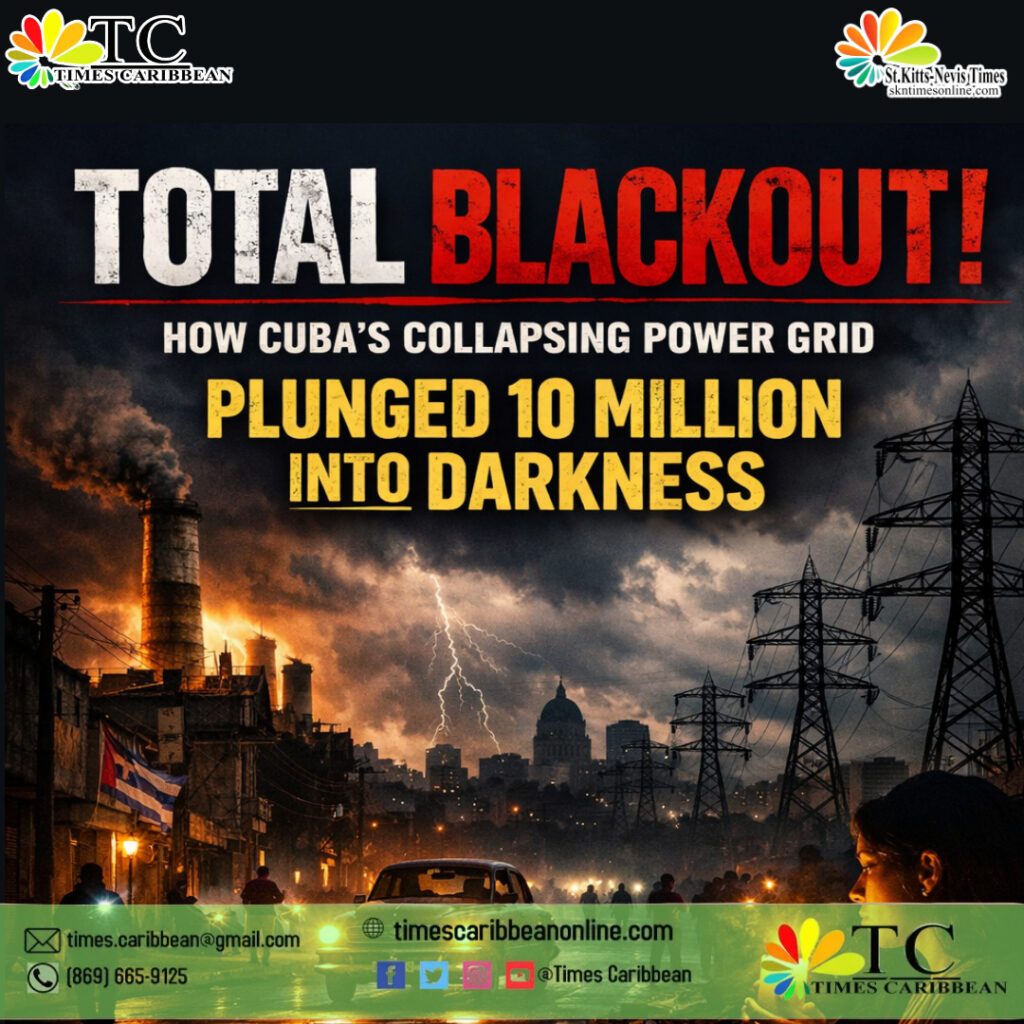
TOTAL BLACKOUT: HOW CUBA’S COLLAPSING POWER GRID PLUNGED 10 MILLION INTO DARKNESS
TIMES CARIBBEAN | SPECIAL INVESTIGATION
TOTAL BLACKOUT: HOW CUBA’S COLLAPSING POWER GRID PLUNGED 10 MILLION INTO DARKNESS
In a stunning and deeply troubling development, Cuba has been thrust into near-total darkness after the country’s national electrical grid suffered a catastrophic collapse—leaving approximately 10 million citizens without power and exposing the fragile underbelly of the island’s long-strained energy system.
This was not merely a blackout. It was a systemic failure decades in the making.
A GRID ON LIFE SUPPORT
Cuba’s electricity infrastructure, much of it dating back to the 1970s and 1980s, has long operated on borrowed time. Aging thermoelectric plants—many running far beyond their intended lifespan—have become increasingly unreliable, plagued by frequent breakdowns, deferred maintenance, and chronic underinvestment.
Energy experts have repeatedly warned that the grid was dangerously overstretched. With limited modernization and spare parts scarce, the system had little resilience left. When multiple generating units reportedly failed in rapid succession, the grid simply could not absorb the shock.
The result: a nationwide collapse.
FUEL SHORTAGES AND THE OIL STRANGLEHOLD
At the heart of the crisis lies a crippling shortage of fuel.
Cuba depends heavily on imported oil to power its plants. However, tightening U.S. sanctions and restrictions on fuel shipments—particularly those targeting Venezuela, Cuba’s primary oil supplier—have severely disrupted supply chains. Tankers have been delayed, rerouted, or deterred altogether, creating a chokehold on the island’s energy lifeline.
Without sufficient fuel, even operational plants cannot generate electricity. In recent months, rolling blackouts had already become a daily reality. The total collapse now signals that the system has crossed a dangerous threshold—from instability to outright failure.
A PERFECT STORM OF CRISIS
The blackout is the result of multiple converging pressures:
- Obsolete infrastructure unable to meet modern demand
- Severe fuel shortages driven by external restrictions
- Economic constraints limiting repairs and upgrades
- Rising energy demand from households and industry
- Climate stressors, including extreme heat increasing consumption
This is not a single-point failure—it is a cascading crisis.
HUMAN IMPACT: A NATION IN DARKNESS
The consequences are immediate and severe.
Hospitals have been forced onto backup generators. Food supply chains are under threat as refrigeration systems fail. Water pumping stations have slowed or stopped, raising concerns about access to clean water. Communications infrastructure is strained, and entire communities have been plunged into darkness.
For ordinary Cubans, already grappling with inflation, shortages, and economic hardship, the blackout represents yet another layer of uncertainty and distress.
POLITICAL AND GEOPOLITICAL FALLOUT
The crisis is also intensifying geopolitical tensions.
Cuban officials point directly to the U.S. embargo and fuel restrictions as a primary driver of the collapse, arguing that external pressures have made it nearly impossible to maintain a stable energy system.
Critics, however, argue that internal mismanagement, lack of diversification into renewable energy, and decades of delayed reform have left the country dangerously exposed.
The truth likely lies in a complex intersection of both.
WHAT COMES NEXT?
Restoring power will not be simple.
Even if emergency fuel shipments arrive, the structural weaknesses of the grid remain. Without significant investment, modernization, and diversification—particularly into renewables such as solar and wind—Cuba risks repeated collapses.
This blackout may ultimately be remembered not just as a crisis, but as a turning point—a moment when a nation’s energy reality could no longer be sustained.
FINAL WORD
Cuba’s nationwide blackout is more than an infrastructure failure. It is a stark warning of what happens when aging systems, geopolitical pressure, and economic limitation collide.
A nation of 10 million now sits in the dark—caught between history, hardship, and an uncertain energy future.
















Leave a comment
You must be logged in to post a comment.