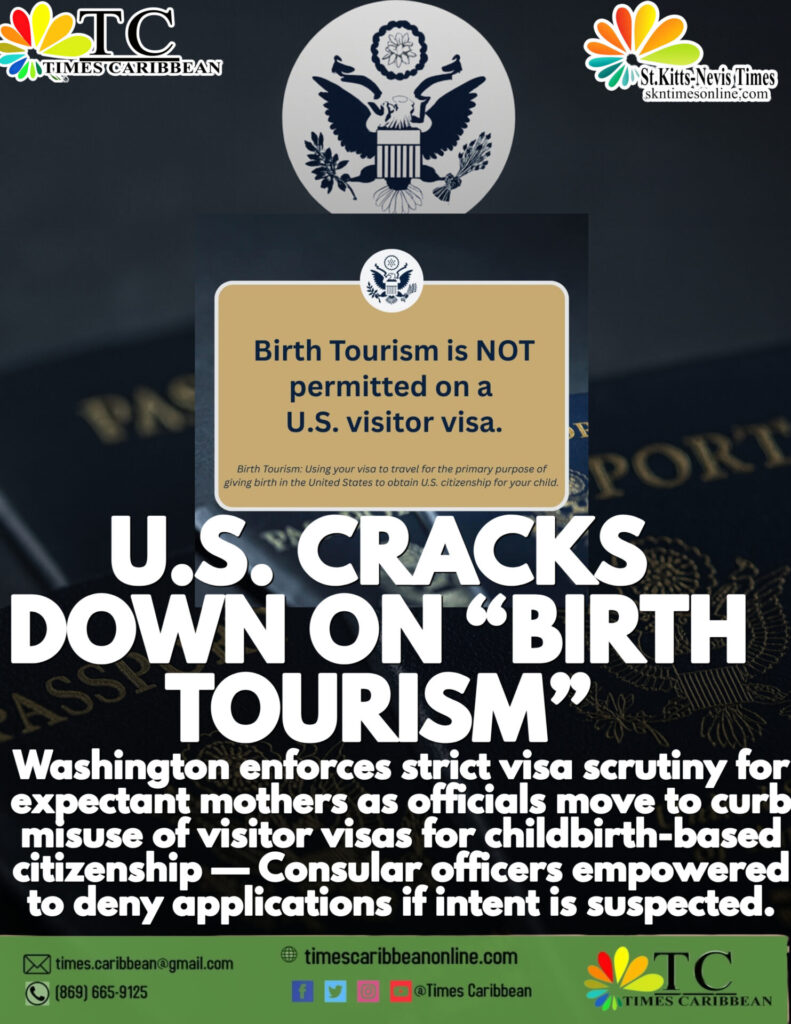
U.S. CRACKS DOWN ON “BIRTH TOURISM”
Washington enforces strict visa scrutiny for expectant mothers as officials move to curb misuse of visitor visas for childbirth-based citizenship — Consular officers empowered to deny applications if intent is suspected.
TIGHTENING VISA RULES AND THE END OF LOOPHOLES
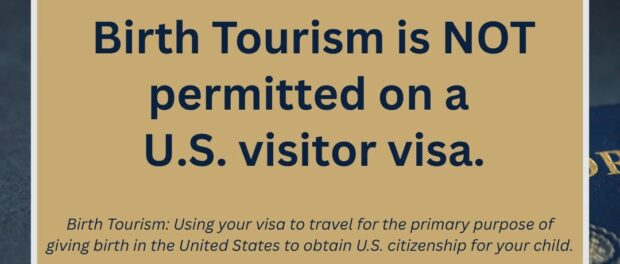
The United States has reaffirmed its firm stance against “birth tourism” — the practice of traveling to the country on a visitor visa for the primary purpose of giving birth so that the child automatically acquires U.S. citizenship. According to a recent advisory issued by the U.S. Department of State, this practice is explicitly prohibited, and consular officers are now required to deny visa applications if they suspect such intent.
The directive comes amid growing concerns about the exploitation of America’s birthright citizenship law under the 14th Amendment, which grants automatic citizenship to anyone born on U.S. soil.
Authorities argue that some foreign nationals — including applicants from the Caribbean, Africa, and Asia — have used tourist visas to bypass immigration systems and gain U.S. citizenship benefits for their children, a move officials describe as “fraudulent misrepresentation of travel intent.”
THE LEGAL BASIS: VISITOR VISAS ARE NOT MATERNITY PERMITS
The B-1/B-2 visitor visa allows travel for business, leisure, or medical reasons — but not for the sole or primary purpose of childbirth.
U.S. law stipulates that visa applicants must clearly demonstrate non-immigrant intent, meaning they plan to return to their home country after a temporary stay. When the main goal of travel is to give birth in the United States, the U.S. government considers it an abuse of visa privileges and a deceptive act under immigration law.
A senior consular official explained that pregnancy itself is not disqualifying, but intent matters:
“A woman may travel while pregnant for legitimate purposes such as visiting family, business meetings, or tourism. However, if the consular officer believes the primary purpose is to deliver a child for citizenship, the visa must be denied.”
This distinction has become a key part of U.S. consular interviews, with officers trained to look for signs of medical arrangements, third-party birth services, or extended stays near delivery dates.
GLOBAL BUSINESS OF “BIRTH TOURISM” UNDER SCRUTINY
The crackdown is part of a larger global effort to address the multi-million-dollar “birth tourism industry”, where private agencies in some countries advertise U.S. birth packages — offering hospital bookings, accommodation, and even passport assistance for newborns.
Such practices have raised red flags in Washington, with authorities citing cases of visa fraud, false documentation, and unpaid medical bills left to U.S. taxpayers.
In 2020, the Trump administration codified this rule, and it continues to be enforced under the Biden administration, emphasizing national security, integrity, and fiscal responsibility.
“Birth tourism is not a victimless act,” one U.S. immigration expert noted.
“It burdens the health system, exploits loopholes in the law, and undermines trust in legitimate visa applicants.”
IMPLICATIONS FOR CARIBBEAN TRAVELERS
Caribbean nationals, particularly from small island nations where U.S. visas are prized, are being urged to exercise caution and absolute honesty during visa interviews.
Embassies across the region — including those in Bridgetown, Kingston, and Basseterre — are now emphasizing that using a visitor visa to give birth will result in denial, cancellation, or future ineligibility.
Applicants are reminded that providing false information or concealing pregnancy-related plans can trigger permanent bans under U.S. immigration law.
“It is not about punishing motherhood,” a Caribbean-based immigration consultant said.
“It’s about respecting the integrity of the visa system. If your goal is childbirth, apply for the proper medical visa and declare it honestly.”
TIMES CARIBBEAN ANALYSIS: A WARNING AND A WAKE-UP CALL
This latest enforcement highlights a broader geopolitical and ethical debate about citizenship, privilege, and the global inequality of passports.
For many developing nations, U.S. birthright citizenship represents opportunity — access to education, security, and mobility. Yet, Washington’s tightening of visa policy signals a determination to close perceived loopholes and reinforce sovereign control over immigration pathways.
For Caribbean families, the message is clear:
Transparency is now non-negotiable.
Any attempt to misuse a U.S. visitor visa for childbirth is not only unlawful but risks long-term consequences — including visa revocation and blacklisting.
As the United States moves to preserve the integrity of its immigration system, Caribbean nationals are being urged to engage responsibly with the process — truthfully, lawfully, and with respect for the rules that govern entry into America’s borders.
















Leave a comment
You must be logged in to post a comment.