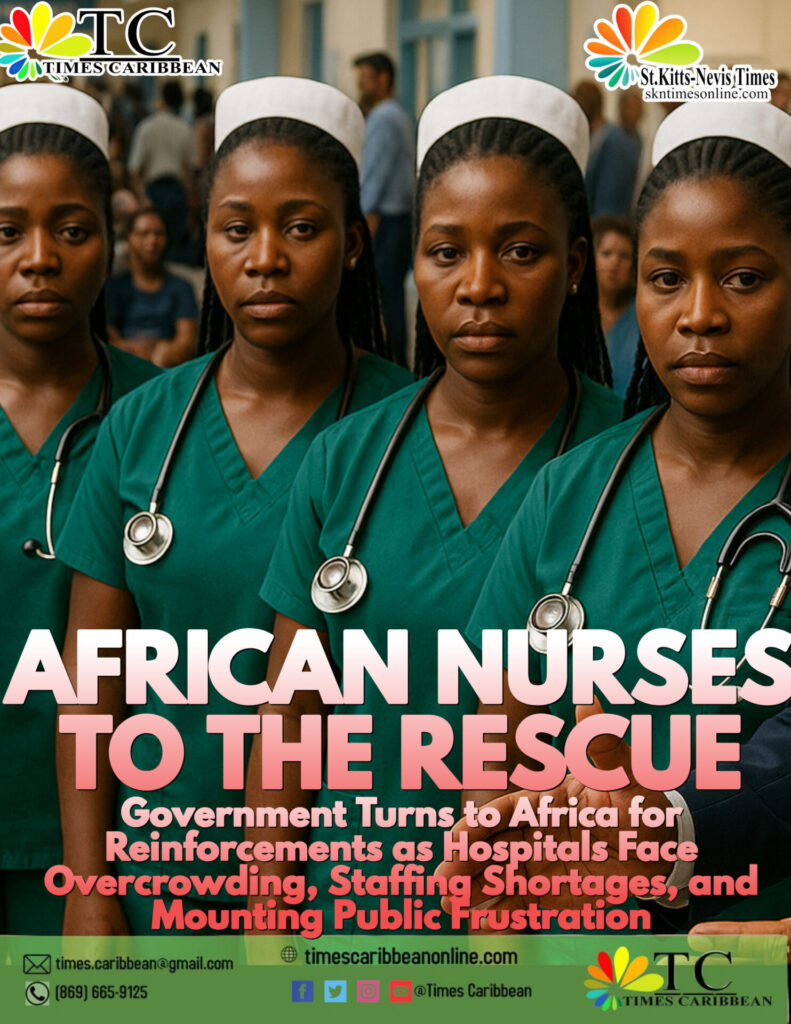
AFRICAN NURSES TO THE RESCUE: Government Turns to Africa for Healthcare Reinforcements as Hospitals Face Staffing Shortages,Mounting Public Frustration and detiorating healthcare system
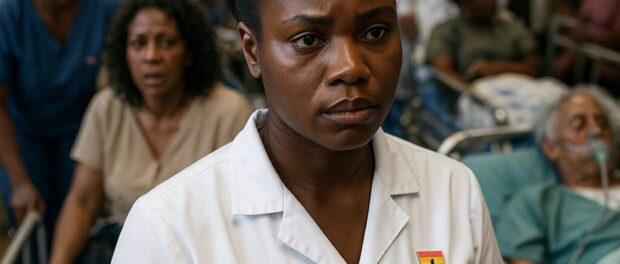
Basseterre, St. Kitts — Prime Minister Hon. Dr. Terrance Drew has announced that a contingent of professional nurses from the Republic of Ghana will soon arrive in St. Kitts and Nevis to bolster the Federation’s overburdened healthcare system. The move, which Dr. Drew hailed as a “tangible benefit” of his administration’s growing partnership with Africa, comes at a time when the nation’s hospitals and clinics are grappling with what many describe as an escalating healthcare crisis.
The Prime Minister made the revelation during his October 7 media roundtable, touting the initiative as a landmark example of “South–South cooperation” and a pillar of his Sustainable Island State Agenda (SISA). The Ghanaian nurses, he said, will join the local healthcare workforce in the coming months to strengthen service delivery and alleviate crippling staff shortages across public facilities.
A Crisis That Can No Longer Be Hidden
Behind the government’s polished narrative of “international partnership” lies a system in distress. Reports from within the Joseph N. France General Hospital and several health centers paint a grim picture — exhausted nurses, delayed surgeries, limited supplies, and patients waiting hours — sometimes days — for basic medical attention.
Insiders say chronic understaffing and low morale have pushed many local healthcare professionals to the breaking point, with some leaving for better-paying jobs abroad. The importation of nurses from Ghana, while welcomed by some as a stopgap measure, is being viewed by critics as a symptom of deeper dysfunction rather than a sustainable solution.
“From Crisis to Dependence?”
While Dr. Drew framed the partnership as a progressive policy linking the Federation to its African heritage, opposition voices are asking tough questions:
- Why has the government failed to retain or adequately compensate local nurses?
- What steps are being taken to fix the root causes of the healthcare collapse — from poor management to lack of modern infrastructure?
- And how transparent is the recruitment process for these foreign professionals?
Political analysts argue that the administration’s growing reliance on imported labor — whether in healthcare, construction, or agriculture — reflects a failure of domestic policy and planning. “You don’t outsource your way out of a national crisis,” one commentator said bluntly.
Africa Connection: Symbolism or Substance?
Dr. Drew, who co-chaired the first-ever CARICOM–African Union Heads of Government meeting in Addis Ababa earlier this year, has positioned himself as a bridge between the Caribbean and Africa. Through this cooperation, the Federation has forged ties with institutions like Cape Coast University in Ghana, the Open University of Tanzania, and Afreximbank.
But while the partnerships may sound visionary, skeptics say citizens care less about diplomatic optics and more about whether they can access quality care when their children fall ill or their elderly relatives need attention.
A Band-Aid on a Broken System
For many in St. Kitts and Nevis, the arrival of Ghanaian nurses represents both hope and hypocrisy — hope that relief is coming to a buckling system, but hypocrisy that it took foreign intervention for the government to admit the crisis exists.
As one senior nurse put it: “We welcome our Ghanaian sisters and brothers, but until this government starts treating healthcare workers as professionals, not political pawns, the system will keep bleeding out — no matter who you import.”
— SKN TIMES | Investigative Desk
(All Rights Reserved)
















Leave a comment
You must be logged in to post a comment.