JAMAICA: THE LITTLE ISLAND WITH A GIANT GLOBAL FOOTPRINT
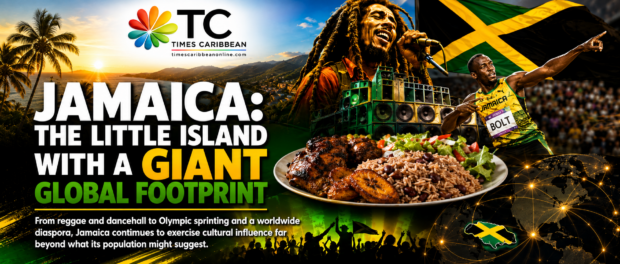
From reggae and dancehall to Olympic sprinting and a worldwide diaspora, Jamaica continues to exercise cultural influence far beyond what its population might suggest
KINGSTON, JAMAICA — Jamaica may be one of the clearest examples of a nation that consistently punches above its weight.
With a population of roughly 2.8 million people, the Caribbean island has built a global cultural footprint that many much larger countries would struggle to match.
Start with the music.
Jamaica gave the world reggae, ska, rocksteady, dub and dancehall, creating sounds that travelled far beyond the island’s shores and helped shape generations of artists across continents. Jamaican sound-system culture also influenced the development of hip-hop and left a lasting mark on jungle, drum and bass and several other forms of modern electronic music.
That influence is enormous.
The unmistakable rhythms, basslines and deejay traditions developed in Jamaican communities became part of a global musical vocabulary. Reggae icon Bob Marley remains one of the most internationally recognizable Caribbean artistes in history, while dancehall continues to influence mainstream pop, Afrobeats and other contemporary genres.
But Jamaica’s reach goes much further than music.
Jamaican food, expressions, Patois, fashion, Rastafari culture and the island’s instantly recognizable black, green and gold national identity have become familiar around the world. From jerk cuisine and patties to Jamaican phrases heard in international entertainment, pieces of the island’s culture have travelled almost everywhere.
Then there is sport.
Jamaica transformed itself into one of the most respected sprinting nations on Earth, producing generations of world-class athletes and repeatedly challenging countries many times its size on track and field’s biggest stages.
Usain Bolt became a global sporting superstar and one of athletics’ most recognizable personalities, but Jamaica’s sprinting story extends far beyond one individual. The island has consistently produced elite male and female athletes capable of competing for major international honours.
For a country of its size, that level of success is remarkable.
Jamaica’s worldwide diaspora has also played a major role in expanding the island’s influence. Large Jamaican communities in the United Kingdom, Canada and the United States, along with Jamaicans living throughout the Caribbean and elsewhere, have carried the country’s food, language, music, traditions and entrepreneurial spirit across borders.
There is even a popular saying among Jamaicans that “there is hardly a country in the world where you cannot find a Jamaican.”
It is more cultural expression than measurable statistic, but the saying captures something very real: Jamaica’s people and influence have travelled remarkably far.
Its position within the English-speaking Caribbean also helped Jamaican music and popular culture move easily into major international markets, while migration strengthened connections with cities such as London, Toronto, Miami and New York.
And somehow, the influence keeps growing.
Jamaica is geographically small. Its population is modest.
But culturally?
Jamaica is a giant.
From Kingston studios to Olympic stadiums, Caribbean kitchens to international stages, few countries have exported so much identity, creativity and influence from such a relatively small population.
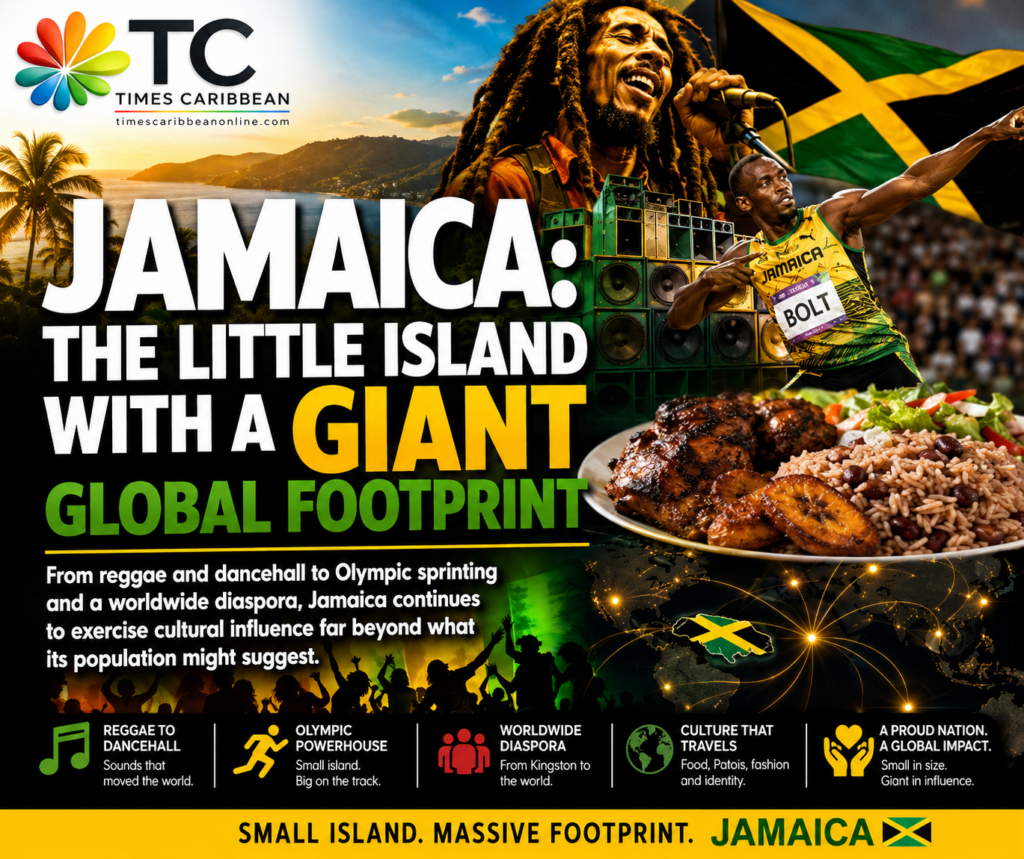
Small island. Massive footprint. Jamaica continues to leave its mark on the world.
















Leave a comment
You must be logged in to post a comment.