TWO YEARS AFTER DECLARING CBI “SAVED,” PM DREW FACES TOUGH QUESTIONS AS EU PUSHES FOR SHUTDOWN! ST. KITTS AND NEVIS STILL WITHOUT DEFINITIVE PUBLIC POSITION AS NOVEMBER 12 DEADLINE LOOMS!
TIMES CARIBBEAN | SPECIAL INVESTIGATIVE NEWS ANALYSIS | MONDAY, NOVEMBER 9, 2026
FROM “CBI HAS BEEN SAVED” IN 2024 TO WARNINGS OF POSSIBLE FINANCIAL BLACKLISTING IN 2026! AS ANTIGUA AND DOMINICA PUBLICLY ADDRESS EUROPEAN UNION DEMANDS, QUESTIONS GROW OVER ST. KITTS AND NEVIS’ NEGOTIATING POSITION, ECONOMIC READINESS AND THE FUTURE OF BILLIONS IN CBI REVENUE.
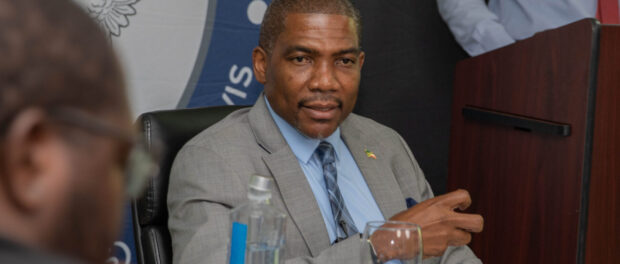
BASSETERRE, ST. KITTS — Two years ago, Prime Minister Dr. Terrance Drew stood before the people of St. Kitts and Nevis and confidently declared that his administration’s reforms had saved the country’s Citizenship by Investment (CBI) Programme.
Today, that declaration faces one of its most serious tests.
The European Union is pressing five Eastern Caribbean countries, including St. Kitts and Nevis, to phase out their citizenship programmes by June 1, 2028. Regional governments are confronting difficult decisions about the future of an industry that has financed public expenditure, infrastructure and economic development for decades.
Yet, with a significant November 12 diplomatic deadline approaching, the Drew administration has not publicly presented a definitive national position explaining whether St. Kitts and Nevis intends to accept the proposed closure timetable, seek an extension, pursue an alternative arrangement or accept the consequences of maintaining its programme.
The Prime Minister has acknowledged the challenge. He has also publicly addressed the risks.
But a comprehensive explanation of the Federation’s negotiating position and proposed economic transition remains outstanding.
For a country whose public finances have historically depended heavily on CBI receipts, that uncertainty deserves serious national attention. Reuters+3
THE 2024 DECLARATION: “THE CBI PROGRAMME HAS BEEN SAVED”
On October 17, 2024, Prime Minister Drew delivered a nationally broadcast address outlining reforms introduced by his administration following its August 2022 election victory.
He credited legislative changes, enhanced due diligence, higher minimum investment thresholds and cooperation among the five OECS countries operating CBI programmes with restoring confidence in the industry.
His declaration was unmistakable:
“The Saint Kitts and Nevis CBI programme has been saved.”
At the time, Drew argued that his administration had rescued the programme from serious international concerns inherited from the previous government.
He also acknowledged that CBI receipts had declined during 2024, describing the reduction as an expected consequence of reforms intended to strengthen the programme’s long-term sustainability.
The Prime Minister’s statement was therefore more than a celebration of regulatory changes. It represented a major political assurance that his administration had positioned the industry for a more secure future.
Now, just over two years later, the EU’s evolving policy raises an unavoidable question:
Was the programme genuinely secured for the long term, or did the reforms merely address the immediate concerns while a much larger threat to the industry’s existence continued to develop?
There is an important distinction.
The government’s 2024 reforms may have improved the programme’s integrity and helped preserve international confidence at that time. However, those measures could not guarantee that the European Union would never change its underlying policy towards citizenship programmes.
That distinction is essential to any fair assessment of the Prime Minister’s earlier declaration. SKNIS+2
THE EU’S POSITION HAS CHANGED — AND THE THREAT IS REAL
The European Union’s revised visa suspension mechanism, established under Regulation (EU) 2025/2441, explicitly allows the operation of an investor citizenship scheme to be considered grounds for suspending visa-free travel.
This development fundamentally changes the debate.
Previously, much of the discussion centred on whether Caribbean governments could implement sufficient safeguards to satisfy European security concerns.
Those safeguards included stronger background checks, interviews, financial investigations and improved regional coordination.
Under the revised European framework, however, operating an investor citizenship programme may itself provide grounds for visa suspension, even where regulatory reforms have been implemented.
In a formal July 6, 2026 statement, Antigua and Barbuda confirmed receiving a June 25 letter from European Commissioner Magnus Brunner requesting that its programme be phased out by June 1, 2028.
Dominica subsequently confirmed that it and other OECS CBI jurisdictions were facing the same proposed transition deadline.
The legal distinction must be clearly understood: the EU has not enacted a law directly closing the sovereign citizenship programmes of Caribbean countries. Its principal leverage is the potential suspension of visa-free travel to the Schengen Area.
That consequence could nevertheless be commercially devastating because visa-free international mobility remains an important attraction for citizenship investors.
The choice facing governments is therefore deeply consequential: preserve an economically valuable programme while risking European travel privileges, or negotiate an orderly transition away from the industry. ab.gov.ag+3
ANTIGUA AND DOMINICA SPEAK PUBLICLY. WHERE DOES ST. KITTS AND NEVIS STAND?
The contrast between regional governments has become increasingly apparent.
Antigua and Barbuda publicly acknowledged the European Commission’s request in July. Prime Minister Gaston Browne subsequently advanced a proposal reportedly offering to phase out the country’s programme by the end of 2030, conditional on European financial support and a longer transition.
Dominica adopted a similarly public approach.
In its October 28 statement, the Dominican government confirmed the June 2028 deadline, outlined the importance of CBI revenue to national development and explained that discussions with the EU included financial assistance, technical support, economic diversification and realistic transition arrangements.
Dominica also committed to further communication with the EU by November 12.
Saint Lucia’s government publicly confirmed the participation of Prime Minister Philip J. Pierre in September discussions with EU officials and other regional leaders, during which the economic consequences of discontinuing CBI programmes were emphasised. IMI Daily+2
St. Kitts and Nevis has participated in collective regional discussions. Prime Minister Drew was among the leaders attending the July 10 meeting in Dominica, and the government has spoken about diversification and the risks associated with continued CBI dependence.
It would therefore be inaccurate to suggest the Federation has undertaken no diplomatic engagement.
The central concern is the absence, as of November 9, of a similarly detailed public statement explaining St. Kitts and Nevis’ own negotiating position.
Is the government supporting a June 2028 shutdown?
Is it advocating an extension to 2030 or beyond?
Has it requested specific financial support from European partners?
What is its position on protecting existing investors, pending applications and the economic projects financed through CBI?
And perhaps most importantly, has the administration produced a credible national fiscal transition plan should the programme eventually close?
These questions should not be dismissed as partisan speculation.
They concern the country’s economic future.
PM DREW NOW RAISES AN EVEN BIGGER CONCERN: FINANCIAL BLACKLISTING
At his November 5, 2026 media roundtable, Prime Minister Drew introduced another potentially serious dimension to the debate.
According to an official statement published by the St. Kitts and Nevis Information Service on November 6, Drew indicated that information reaching him suggested the continued operation of a CBI programme could potentially become a consideration in financial blacklisting decisions.
He described such an outcome as potentially more damaging than losing visa-free access to Europe.
The Prime Minister’s concern is understandable.
Financial blacklisting could carry substantial consequences for the country’s international financial relationships, including additional compliance costs, increased scrutiny of transactions and potential difficulties accessing overseas banking services.
But there is an important qualification.
The published EU visa suspension rules and the EU’s financial anti-money-laundering high-risk-country listing are separate regulatory frameworks.
The revised visa rules explicitly identify investor citizenship programmes as a possible basis for suspending visa-free travel.
By contrast, the EU’s financial high-risk-country framework assesses deficiencies in systems for preventing money laundering and related financial offences. The operation of a CBI programme is not established in the published framework as an automatic or independent ground for financial blacklisting.
Nor has the European Commission publicly announced that St. Kitts and Nevis will be financially blacklisted for continuing its CBI programme.
Drew presented the matter as an emerging concern based on information he had received, not as a confirmed European decision.
That makes clarification especially important.
If the government has received credible diplomatic information suggesting an additional financial-blacklisting threat, the public deserves to understand the nature of that information, the institution involved and whether the concern has been formally communicated.
The implications are too serious for speculation. SKNIS+2
THE ECONOMIC NUMBERS MAKE THE ISSUE EVEN MORE URGENT
Beyond the political debate lies a troubling financial reality.
The International Monetary Fund’s May 2026 assessment confirmed that St. Kitts and Nevis had experienced a sharp decline in CBI revenue since 2024, contributing to substantial fiscal deficits and reduced government financial buffers.
The following figures illustrate the magnitude of the change.
CBI FEES AS A SHARE OF GDP — ST. KITTS AND NEVIS
0%7%14%21%28%2022202320242025
Source: IMF 2026 Article IV Consultation. Figures are percentages of GDP, not dollar amounts.
The IMF reported an overall fiscal deficit of 11.7% of GDP for 2025. It also warned that persistently lower CBI receipts could keep deficits elevated and contribute to rising public debt.
The Fund projected public debt increasing from 58.4% of GDP in 2025 to approximately 64% in 2026, with further increases anticipated without adequate fiscal adjustment.
These figures do not prove that CBI reforms alone caused the revenue decline. International market conditions, investor demand, changes in programme rules and other factors can all affect receipts.
But they reveal the scale of the economic challenge facing the Federation. International Monetary Fund+1
In his October 2024 address, Drew himself presented the following historical CBI revenue figures:
| Year | CBI revenue reported |
|---|---|
| 2019 | EC$443 million |
| 2020 | EC$271 million |
| 2021 | EC$543 million |
| 2022 | EC$669 million |
| 2023 | EC$620 million |
| 2024, January–September | EC$218 million |
Source: Prime Minister Drew’s October 17, 2024 national address. The 2024 figure covers only nine months and is not directly comparable with full-year totals.
This historical revenue stream helped support public expenditure and economic development.
Its continued contraction places additional pressure on the government to identify alternative, dependable sources of revenue.
And that raises another important question: how quickly can economic diversification realistically replace an industry that once generated hundreds of millions of dollars annually?SKNIS+1
“WE ARE ON A PATH TO LIVE WITHOUT CBI” — BUT WHAT IS THE PLAN?
Prime Minister Drew has maintained that his administration recognised the risks associated with CBI dependence from the beginning of its term.
At the November 5 roundtable, he reaffirmed that the government had been pursuing economic diversification since 2022.
He also indicated that a formal statement would be issued once the administration had gathered the necessary information.
That explanation deserves consideration. Governments engaged in sensitive international negotiations must sometimes preserve confidentiality until a coordinated position has been established.
And responsible economic diversification cannot be accomplished overnight.
However, there is a meaningful difference between announcing an intention to reduce CBI dependence and demonstrating how lost revenue will actually be replaced.
The critical issue is no longer simply whether St. Kitts and Nevis should diversify.
It is whether the country can diversify quickly enough to withstand a potentially permanent loss of one of its most important revenue sources.
In the absence of a detailed transition strategy, uncertainty will continue surrounding the implications for public services, infrastructure development, employment, taxation, government borrowing and economic growth.
The administration’s assurances must therefore be accompanied by measurable projections, realistic timelines and identifiable alternative sources of revenue. SKNIS+1
FIVE QUESTIONS THE DREW ADMINISTRATION SHOULD ANSWER
With November 12 approaching, Times Caribbean believes the public deserves clarification on five central issues:
1. What precisely has the European Union communicated? Has St. Kitts and Nevis received a formal request to phase out its CBI programme by June 2028, and what response is being prepared?
2. What is the Federation’s negotiating position? Will the government seek to maintain the programme, negotiate a longer transition or accept a timetable for eventual closure?
3. What evidence supports the concern about financial blacklisting? Has a European institution formally raised that possibility, or is it currently a risk assessment being considered by the administration?
4. How much revenue could be lost? What are the government’s fiscal projections under different closure scenarios, and how would essential public services be protected?
5. What is the economic replacement strategy? Which industries, investments and tax revenues are expected to compensate for declining CBI receipts, and within what timeframe?
These are questions of national accountability, not merely political disagreement.
FROM POLITICAL ASSURANCE TO ECONOMIC REALITY
The central contradiction now confronting the Drew administration is political rather than necessarily factual.
In 2024, the Prime Minister assured the nation that his reforms had saved the programme.
In 2026, he acknowledges that the Federation must prepare to live without it, while warning that financial blacklisting could represent an even more serious danger than losing European visa-free access.
Both positions can be reconciled if the earlier reforms addressed immediate threats while subsequent European policy changes created new challenges.
But that explanation requires a clear public account of what changed, when the government became aware of those changes and how it intends to respond.
The Prime Minister is entitled to defend the reforms undertaken by his administration.
He is also entitled to argue that the country must reduce its reliance on citizenship revenue.
What the public reasonably expects, however, is a transparent explanation of the government’s current position and the practical consequences of the choices now before it.
Other Caribbean governments have publicly acknowledged the gravity of the EU’s demands.
St. Kitts and Nevis should be no exception.
With the November 12 communication deadline approaching, the most pressing question is no longer whether the CBI programme was saved in 2024. It is whether the government has a credible plan to protect the economy if the programme cannot be preserved beyond 2028.
The Federation’s economic future deserves more than general assurances.
It deserves answers.
TIMES CARIBBEAN | SPECIAL NEWS ANALYSIS
Reporting and analysis based on official statements from the governments of St. Kitts and Nevis, Antigua and Barbuda, Dominica and Saint Lucia; European Commission regulations and guidance; IMF 2026 Article IV findings; and Reuters reporting published through November 9, 2026. The November 12 date concerns diplomatic communication and negotiations, not an automatic programme shutdown. No final EU decision on the Federation’s programme closure or financial blacklisting was independently verified.
















Leave a comment
You must be logged in to post a comment.