WHO REALLY CONTROLS THE SOUTHEAST PENINSULA? INSIDE THE CHRISTOPHE HARBOUR AGREEMENT AND THE “STATE WITHIN A STATE” QUESTION: A CLOSER LOOK AT THE 2007 AGREEMENT THAT STILL DEMANDS PUBLIC SCRUTINY
By Times Caribbean News Desk
BASSETERRE, ST. KITTS — Nearly two decades after the Government of St. Kitts and Nevis signed a sweeping development agreement for the Christophe Harbour project, some of its provisions continue to raise serious questions about public access, planning authority, state power and just how much control a private development should be permitted to exercise over a significant section of the country.
One provision deserves especially close attention.
Paragraph 24 of the Second Amendment to the St. Kitts Development Agreement, dated June 15, 2007, deals with the Dr. Kennedy Simmonds Highway and other roads inside the Christophe Harbour resort area.
And when the language is read carefully, the debate becomes much bigger than a luxury resort.
It becomes a sovereignty question.
THIS IS NOT LITERALLY A SEPARATE STATE
First, an important distinction.
There is no evidence in the material reviewed by Times Caribbean that Christophe Harbour was legally granted its own sovereign government, constitution or independent body of criminal and civil law.
St. Kitts and Nevis remains sovereign territory governed under the Constitution and laws of the Federation.
So the phrase “state within a state” should be understood as political and governance commentary — not a literal legal description.
But that does not make the underlying concerns insignificant.
The real question is whether the package of contractual commitments, planning privileges and control over infrastructure created an unusually autonomous private enclave within St. Kitts.
And Paragraph 24 deserves examination in that context.
THE HIGHWAY CLAUSE
According to the copy of the 2007 agreement provided to Times Caribbean, the Government agreed that it would acquire title to the Dr. Kennedy Simmonds Highway, its right-of-way and associated road reserve.
The agreement then states that, at the reasonable request of the Joint Venture and following consultation with planning authorities, Government would relocate all or portions of the highway within the resort where necessary to accommodate development.
Perhaps even more significantly, where a road was relocated, Government agreed to transfer title to the old road and road reserve to the Joint Venture.
The agreement further says the Joint Venture could:
relocate, widen, improve, alter, raise, lower, landscape, bridge over, tunnel under and maintain roads within the Resort in its sole discretion.
Those are extraordinary words when attached to infrastructure intertwined with what had historically been a public access corridor.
WHAT DOES “COMPULSORY ACQUISITION” ACTUALLY MEAN?
Compulsory acquisition is not, by itself, unusual.
Governments around the Caribbean and elsewhere possess legal powers to acquire property for public purposes, normally subject to statutory procedures and compensation.
Under the St. Kitts and Nevis Land Acquisition Act, land may be compulsorily acquired by the State for a public purpose through a process involving the Governor-General, Cabinet advice, National Assembly approval and publication requirements.
The Development Control and Planning Act also permits the Minister to acquire land compulsorily for certain planning purposes, including new roads or widening existing roads, where statutory conditions are met.
The concern surrounding the Christophe Harbour agreement is therefore not simply that compulsory acquisition exists.
It is why, for whose ultimate benefit, and under what circumstances Government committed itself contractually to using or facilitating public powers in connection with a privately controlled luxury development.
That distinction matters.
A PUBLIC HIGHWAY WITH DEEP NATIONAL SIGNIFICANCE
The Dr. Kennedy Simmonds Highway was not originally constructed as a private resort road.
Historical accounts say construction began during the 1980s and the highway opened in 1989, bringing road access and utilities into the Southeast Peninsula and laying the infrastructure for future development.
That history makes Paragraph 24 particularly important.
A roadway developed through state policy to open an entire section of St. Kitts to future economic activity subsequently became subject to contractual provisions allowing substantial alteration in response to the requirements of a private master development.
That deserves scrutiny.
Not because development is inherently wrong.
But because public infrastructure carries a fundamentally different character from privately owned residential roads.
THE AGREEMENT WENT WELL BEYOND ROADS
The 2007 arrangement becomes even more significant when Paragraph 24 is considered alongside the broader planning framework that followed.
The St. Kitts Peninsula was formally designated as a Resort District under the Special Resort Development Act.
Then came another striking provision.
The Development Control and Planning (Permitted Development) Order explicitly defines the relevant “Agreement” as the St. Kitts Development Agreement finalized between Government and KHT Land Holding Limited on June 15, 2007.
It provides that development within the St. Kitts Peninsula Resort District could proceed in accordance with the Development Standards established under that agreement without requiring an application for express development permission for each development.
That does not mean the developer was outside the law.
But it does mean the project operated within a specially constructed regulatory framework considerably different from the ordinary development-permission process faced by most developers and citizens.
And that strengthens the case for asking how much administrative flexibility Government surrendered in exchange for the promised investment.
THE “STATE WITHIN A STATE” ARGUMENT
Critics using the phrase “state within a state” are therefore not necessarily arguing that Christophe Harbour possesses its own legislature or courts.
The concern is subtler.
It is about functional control.
Consider the combination:
A specially designated resort district.
A development agreement encompassing approximately 2,500 acres and potentially enormous residential, hotel, commercial, marina and recreational development.
A planning regime specifically tied to the development agreement.
Broad authority over internal roads.
Government commitments concerning the relocation of a major highway.
The potential transfer of former road reserves into private ownership.
And extensive incentives intended to provide long-term certainty to developers, lenders and investors.
Taken together, critics can reasonably ask whether the arrangement created an enclave enjoying a degree of contractual and regulatory autonomy rarely available elsewhere in St. Kitts and Nevis.
That remains a legitimate public-policy question.
DOES THE AGREEMENT PERMIT PUBLIC EXCLUSION?
This is where precision becomes important.
Paragraph 24, by itself, does not explicitly state that Christophe Harbour may prohibit Kittitians from entering the Southeast Peninsula.
Any claim that the provision automatically gives the developer power to permanently exclude citizens from public territory would therefore go beyond the wording reproduced in the agreement.
But the clause does demonstrate something significant.
Government accepted a framework under which the location and configuration of an important roadway could be altered to accommodate the resort, while old roads and road reserves could ultimately become property of the Joint Venture.
That inevitably raises questions concerning future public access.
What routes must remain publicly accessible?
Could access to beaches, bays or other historically used areas be affected?
Who determines where replacement roads run?
Could development progressively redirect ordinary residents away from portions of the peninsula?
What guarantees exist preventing public infrastructure decisions from being driven primarily by the needs of private property owners?
Those are questions the public deserves to have answered clearly.
THE ORIGINAL VISION WAS ECONOMIC TRANSFORMATION
It is also important to present the other side of the story.
The agreement was negotiated during an era when St. Kitts and Nevis was aggressively pursuing major tourism investment after the closure of the sugar industry.
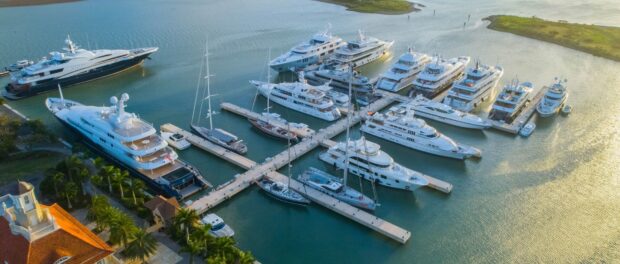
Contemporary reports described Christophe Harbour as a transformative luxury development built around five-star hotels, high-end residences, a championship golf course and a mega-yacht marina.
Government officials argued that major investors required long-term predictability, infrastructure and development incentives before committing hundreds of millions of dollars.
Christophe Harbour later promoted itself as a master-planned development encompassing approximately 2,500 acres of the Southeast Peninsula.
The project also resulted in significant road improvements. In 2008, Christophe Harbour was reported to be spearheading improvements along roughly six miles of the Kennedy Simmonds Highway, including repairs and safety enhancements.
Supporters could therefore argue that the agreement reflected an attempt to unlock an underdeveloped peninsula through major private capital.
That historical argument cannot simply be dismissed.
BUT INVESTMENT DOES NOT ELIMINATE ACCOUNTABILITY
The fact that an agreement was intended to attract investment does not mean every concession should escape examination years later.
Indeed, the larger the concession, the greater the justification for transparency.
Christophe Harbour eventually became intertwined with public financing institutions as well.
A 2016 statement to Parliament concerning the Sugar Industry Diversification Foundation said that a 2013 transaction involved US$16 million in loan capital connected to a 30 percent shareholding in the development arrangement.
That history makes the project more than a purely private real-estate story.
Public policy, public infrastructure and public financial interests have all intersected with Christophe Harbour at different stages.
THE CENTRAL QUESTION
The strongest argument arising from Paragraph 24 is therefore not:
“Christophe Harbour has its own laws.”
The available documents do not establish that.
The stronger question is this:
Did successive contractual and legislative arrangements give a private resort developer an exceptional degree of influence over public infrastructure, planning and access within a strategically important part of St. Kitts?
That is where the debate should be focused.
And nearly 20 years after the agreement was executed, citizens should not have to speculate.
Government should be able to explain precisely which provisions remain legally enforceable today, which have been amended, transferred or extinguished, who presently holds the rights originally granted to KHT Land Holdings Limited, and what protections remain in place for unrestricted public access throughout the Southeast Peninsula.
PUBLIC ACCESS MUST REMAIN PART OF THE DISCUSSION
St. Kitts is small.
Land is finite.
Coastline is precious.
And development agreements lasting decades can shape the relationship between citizens and their own country long after the politicians and developers who negotiated them have moved on.
That is why Paragraph 24 matters.
It illustrates the extraordinary concessions governments sometimes make in pursuit of transformative foreign investment.
Whether those concessions ultimately represented prudent economic planning or surrendered too much state leverage is a question that deserves continued examination using the complete agreement, subsequent amendments, land records, legislation and the project’s present ownership structure.
Calling Christophe Harbour literally an independent “state within a state” would overstate what the documents establish.
But asking whether the agreement attempted to create an unusually self-contained, highly privileged private resort jurisdiction inside St. Kitts?
That question is entirely legitimate.
And Paragraph 24 ensures it cannot simply be brushed aside.
















Leave a comment
You must be logged in to post a comment.