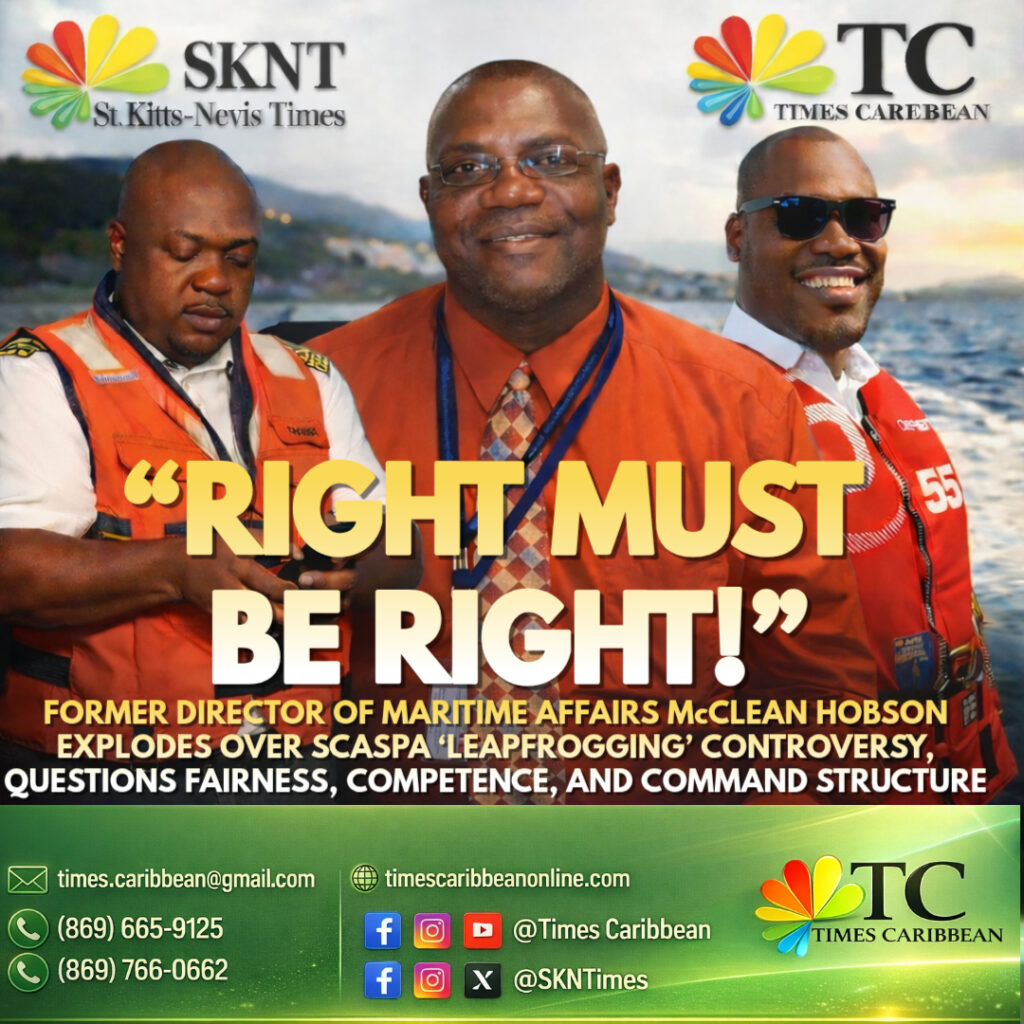
“RIGHT MUST BE RIGHT!” — FORMER DIRECTOR OF MARITIME AFFAIRS McCLEAN HOBSON EXPLODES OVER SCASPA ‘LEAPFROGGING’ CONTROVERSY, QUESTIONS FAIRNESS, COMPETENCE, AND COMMAND STRUCTURE
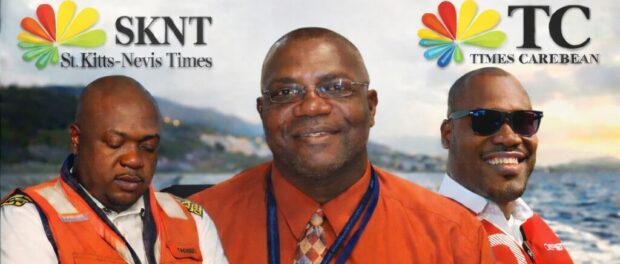
BASSETERRE, ST. KITTS — A firestorm is brewing within the maritime sector as respected social commentator and former Director of Maritime Affairs, McClean Hobson, has unleashed a blistering and deeply unsettling critique of leadership and decision-making at the St. Christopher Air and Sea Ports Authority (SCASPA), raising serious questions about merit, fairness, and institutional integrity.
In a sharply worded public commentary that has already begun circulating widely, Hobson did not mince words. His central thesis was as simple as it was explosive: “Right must be right and wrong must be wrong.” But behind that statement lies a damning narrative that is now forcing uncomfortable scrutiny of SCASPA’s internal operations.
A TALE OF TWO PILOTS — EXPERIENCE VS. OPPORTUNITY?
Hobson laid out a detailed comparison between two marine pilots—Mr. Jamo Gishard and Mr. Shawn O’Garro—painting a picture that, if accurate, raises troubling questions about how authority is assigned within one of the Federation’s most critical institutions.
According to Hobson, Gishard represents the embodiment of experience and technical competence—having piloted vessels independently for years, backed by over a decade of Coast Guard service and mentorship from senior pilots. By contrast, O’Garro is described as entering the field with “absolutely no pilotage experience” and facing significant challenges during his early tenure.
The most contentious issue? Despite Gishard’s seniority and a reported seven-year track record acting as Chief Pilot during absences, SCASPA management allegedly bypassed him—appointing his junior, O’Garro, to act in the top role during a critical period of the cruise season.
“LEAPFROGGING” OR LEADERSHIP FAILURE?
Hobson’s commentary goes beyond personal comparison and ventures into the realm of organizational dysfunction. He highlights the concept of “leapfrogging”—a scenario where a junior officer is elevated over a more experienced counterpart—warning that such actions are not just controversial, but potentially destabilizing.
In strong terms, Hobson suggests that such a move could erode authority, fracture morale, and disrupt the chain of command within a high-risk operational environment where precision, trust, and hierarchy are non-negotiable.
The implication is clear: this is not merely a personnel decision—it is a decision with safety, efficiency, and institutional credibility at stake.
MERIT OR MANAGEMENT FAVORITISM?
Perhaps the most stinging element of Hobson’s critique is his pointed questioning of the criteria used in the appointment process. He challenges whether the decision was grounded in objective performance metrics—or influenced by less transparent considerations.
In a line that has already ignited public debate, Hobson warns against a system where advancement is determined not by competence in navigation and vessel handling, but by “relationships with management” or possession of qualifications “not relevant to piloting.”
For an industry where a single miscalculation can have catastrophic consequences, the suggestion that merit may be sidelined is as alarming as it is controversial.
SILENCE FROM SCASPA—AND GROWING QUESTIONS
As of publication, SCASPA has not issued any official response to Hobson’s claims, leaving a vacuum now rapidly being filled by speculation, concern, and public discourse.
Key questions remain unanswered:
- What criteria were used in selecting the acting Chief Pilot?
- Were established seniority protocols overridden—and if so, why?
- Does the decision align with internal regulations governing advancement?
- And most critically—what does this say about the state of governance within SCASPA?
A BROADER NATIONAL CONVERSATION EMERGING
Hobson’s intervention has done more than spotlight a single appointment—it has ignited a broader conversation about accountability, transparency, and standards across public institutions in St. Kitts and Nevis.
In a country striving for excellence in governance and service delivery, the issues raised strike at the heart of public confidence.
Because in the end, as Hobson so forcefully reminds the nation:
“Right must be right… and wrong must be wrong.”
Whether this controversy fades quietly or triggers deeper investigation may well depend on how quickly—and how transparently—answers are provided.
















Leave a comment
You must be logged in to post a comment.