ST. KITTS & NEVIS’ GDP SLOWS SHARPLY: FROM STRONG POST-COVID REBOUND TO REGIONAL UNDERPERFORMANCE
— HOW THE FEDERATION FELL BEHIND ITS CARIBBEAN PEERS
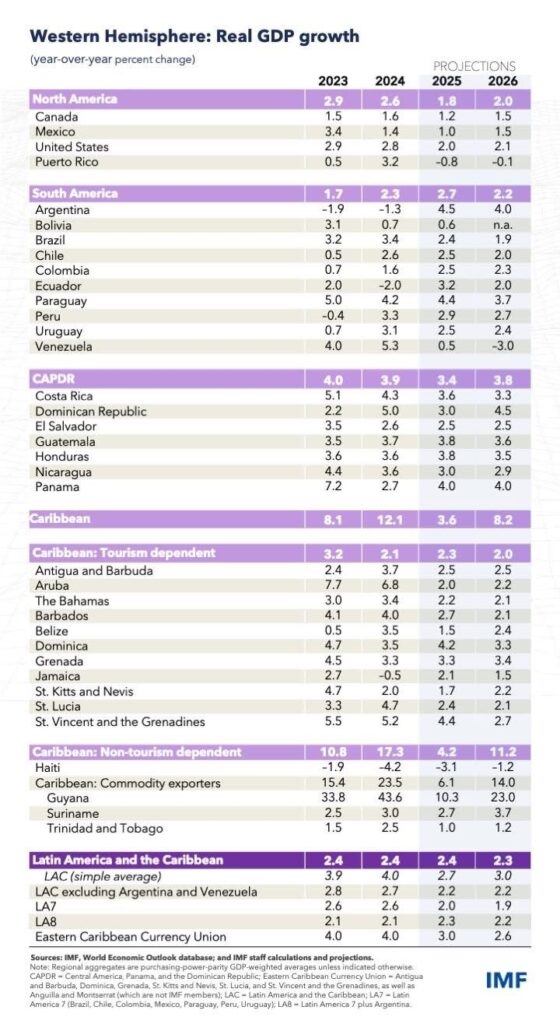
Basseterre — The latest IMF Western Hemisphere economic outlook delivers a sobering verdict on St. Kitts & Nevis’ economic trajectory. After recording a strong post-COVID rebound in 2023, the Federation’s momentum has faltered. GDP growth stood at a robust 4.7% in 2023, the year after the full recovery from the pandemic — one of the highest rates in the Eastern Caribbean. But by 2024, that growth plunged to 2.0%, is projected to slow further to 1.7% in 2025, and will only edge back up to 2.2% by 2026.
For a small, tourism-driven economy that once led the region’s post-pandemic recovery, the slide underscores a deeper problem: St. Kitts & Nevis is losing its growth engine just as its neighbors are accelerating theirs.
From regional leader to regional slowdown
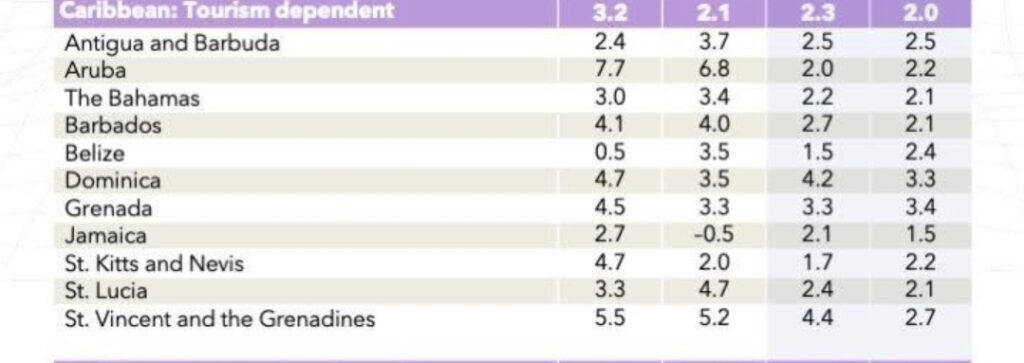
Tourism-dependent Caribbean average: 3.2% (2023) → 2.1% (2024) → 2.3% (2025) → 2.0% (2026).
St. Kitts & Nevis: 4.7 → 2.0 → 1.7 → 2.2.
- 2023: SKN was among the regional standouts, outpacing the Caribbean tourism average and signaling a healthy rebound after COVID-19’s economic shutdowns.
- 2024: SKN’s growth collapsed to 2.0%, among the lowest in the region—just above Jamaica (-0.5%), but lagging behind Antigua & Barbuda (3.7), Aruba (6.8), The Bahamas (3.4), Barbados (4.0), Dominica (3.5), Grenada (3.3), St. Lucia (4.7), and St. Vincent & the Grenadines (5.2).
- 2025: The slowdown continues, with SKN’s projected 1.7% growth only surpassing Belize (1.5%).
- 2026: A mild rebound to 2.2% puts SKN in the lower middle of the regional table, still trailing most Eastern Caribbean peers.
The Eastern Caribbean leaves Basseterre behind
The Eastern Caribbean Currency Union (ECCU) is expected to grow 4.0% (2023), 4.0% (2024), 3.0% (2025), and 2.6% (2026).
That means from 2024 onward, SKN consistently underperforms its own currency union average—2.0 vs 4.0, 1.7 vs 3.0, 2.2 vs 2.6—a worrying indicator for competitiveness and policy execution across the twin-island Federation.
What went wrong after a promising rebound?
1. Lost post-COVID momentum.
The 2023 rebound was real and well-earned, fueled by pent-up travel demand, reopened hotels, and a tourism surge. But instead of building on that success, the economy lost traction—dropping by 2.7 percentage points in just one year, one of the steepest slowdowns in the Caribbean.
2. Narrow growth base.
Other Caribbean economies are pairing tourism with construction booms, foreign investment, and renewable energy projects. SKN’s growth remains heavily concentrated in tourism, without comparable diversification.
3. Delayed project execution.
When ECCU peers average 3–4% and SKN remains near 2%, it points to slow government delivery, bureaucratic drag, and uncertain investment policy signals that have chilled confidence and delayed key developments.
What the slowdown means for ordinary people
- Jobs & wages: Sub-2% growth is not enough to create meaningful new employment or raise wages.
- Government revenue: Lower growth means weaker tax inflows, even as public spending and debt service rise.
- Household pressure: With limited productivity gains, real incomes remain stagnant while cost-of-living pressures persist.
Lessons from neighbors that are still rising
- Grenada / Dominica / St. Vincent & the Grenadines: Sustaining growth above 3% by blending tourism, construction, and climate-resilient infrastructure projects.
- Aruba / Barbados / St. Lucia: Doubling down on airlift agreements, hotel upgrades, and high-value visitor spending.
- Belize: Diversifying through agriculture and eco-tourism, protecting against external shocks.
A rescue plan for St. Kitts & Nevis
- Tourism & airlift expansion: Negotiate multi-carrier airlift guarantees, accelerate hotel refurbishments, and ensure faster project approvals through a “single-window” system.
- Construction stimulus: Launch a transparent, climate-resilient housing and infrastructure programme to create jobs and boost GDP.
- Investor confidence package: Stabilize policy direction, publish a five-year investment incentives framework, and deliver quarterly project progress reports.
- Economic diversification: Invest in medical tourism, yachting, renewable energy, and creative industries to reduce dependence on hotel arrivals.
- Workforce upskilling: Introduce certification programs in hospitality, construction, and digital services tied to private sector hiring commitments.
- Accountability through data: Publish real-time dashboards tracking arrivals, FDI inflows, project completion rates, and employment numbers.
The bottom line
St. Kitts & Nevis had one of the strongest recoveries in 2023—a hopeful sign that resilience and potential remain. But that recovery has been squandered by a failure to sustain momentum, diversify the economy, and manage execution.
While regional neighbors maintain 3–4% trajectories, SKN is projected to hover between 1–2%—a pace that neither reduces unemployment nor raises living standards.
If the government wants to reclaim the 2023 energy that powered the post-COVID rebound, it must shift from talk to tangible results: projects built, tourists landed, investments finalized, and local entrepreneurs thriving. Until then, the scoreboard remains unchanged:
Region: accelerating. St. Kitts & Nevis: slowing.
















Leave a comment
You must be logged in to post a comment.