TIMES CARIBBEAN | HEALTH & DEVELOPMENT
THE SILENT HEALTH CRISIS: THE TOP FIVE LEADING CAUSES OF DEATH IN ANTIGUA AND BARBUDA AND WHY PUBLIC HEALTH EXPERTS ARE SOUNDING THE ALARM
As Antigua and Barbuda continues to make strides in tourism, infrastructure development, and economic modernization, health experts are increasingly warning that the nation is facing a growing non-communicable disease crisis that threatens long-term national productivity, healthcare sustainability, and quality of life.
According to regional and international health data, non-communicable diseases (NCDs) now account for the overwhelming majority of deaths in Antigua and Barbuda, mirroring a wider trend across the Caribbean where lifestyle-related illnesses have become the dominant public health challenge.
The latest available estimates from the World Health Organization and the Pan American Health Organization indicate that cardiovascular diseases, diabetes, cancers, and other chronic illnesses collectively account for more than 80 percent of healthy life lost in Antigua and Barbuda.
Health analysts say the country’s aging population, rising obesity rates, sedentary lifestyles, high sugar and sodium consumption, alcohol use, and limited physical activity are all contributing to a dangerous health trajectory.
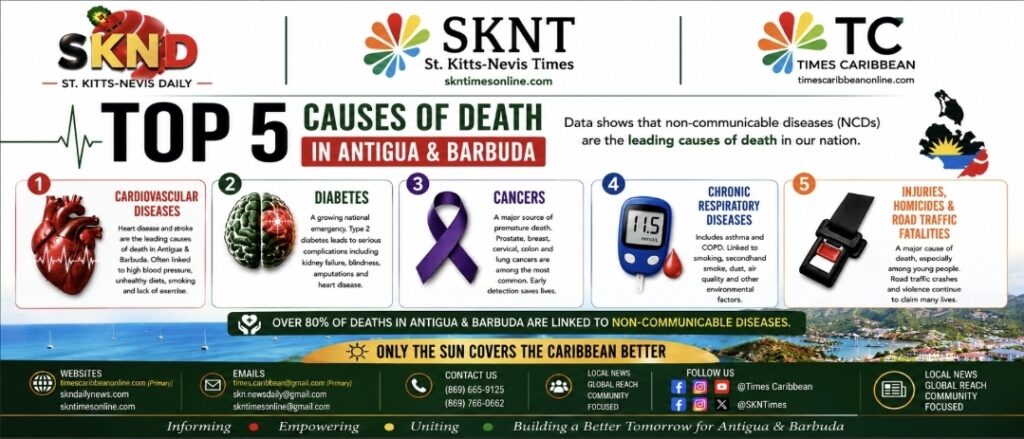
1. CARDIOVASCULAR DISEASES — THE NATION’S DEADLIEST KILLER
Heart disease and stroke remain the leading causes of death in Antigua and Barbuda, consistent with broader Caribbean and global patterns. These illnesses include hypertension-related complications, ischemic heart disease, heart failure, and cerebrovascular disease.
Medical experts warn that hypertension — often referred to as the “silent killer” — is one of the most widespread but under-managed conditions in the Caribbean.
The problem is compounded by unhealthy diets, high stress levels, obesity, smoking, and insufficient exercise. Regional data show cardiovascular diseases remain the largest contributor to mortality across the Americas.
Healthcare professionals have repeatedly emphasized that many cardiovascular deaths are preventable through earlier screening, improved nutrition, and stronger public health education.
2. DIABETES — A GROWING NATIONAL EMERGENCY
Diabetes has emerged as one of the fastest-growing health threats in Antigua and Barbuda and the wider Caribbean.
Type 2 diabetes, heavily linked to obesity and poor diet, has become increasingly common among adults and is now appearing more frequently in younger populations.
Health officials have expressed concern over complications such as kidney failure, amputations, blindness, and cardiovascular disease associated with uncontrolled diabetes.
Regional health studies identify diabetes as one of the top contributors to premature mortality and disability throughout the Caribbean region.
Public health advocates say sugary beverages, processed foods, and reduced physical activity are fueling the epidemic.
3. CANCERS — A MAJOR SOURCE OF PREMATURE DEATH
Cancer remains among the top causes of mortality in Antigua and Barbuda, with prostate cancer, breast cancer, cervical cancer, colon cancer, and lung cancer among the most significant concerns.
Medical specialists stress that early detection remains one of the country’s greatest healthcare challenges. Many patients reportedly seek medical attention only after cancers have reached advanced stages.
Regional health data show cancers are among the top three causes of death and disability in Antigua and Barbuda and across the Americas.
Healthcare advocates continue to call for expanded screening programmes, stronger cancer awareness campaigns, and improved access to specialized treatment and diagnostics.
4. CHRONIC RESPIRATORY DISEASES
Chronic respiratory diseases — including asthma and chronic obstructive pulmonary disease (COPD) — also rank among the leading causes of death in the region.
Environmental conditions, smoking, occupational exposure, and air quality issues are among the factors linked to respiratory illnesses.
Although Antigua and Barbuda has relatively lower industrial pollution compared to larger countries, health experts note that tobacco use, secondhand smoke exposure, dust particles, and climate-related environmental factors can still significantly impact respiratory health.
The Pan American Health Organization has identified chronic respiratory diseases as one of the four major NCD categories contributing heavily to mortality throughout the Americas.
5. INJURIES, HOMICIDES, AND ROAD TRAFFIC FATALITIES
While non-communicable diseases dominate national mortality statistics, external causes such as homicides, violence, and road traffic accidents continue to claim lives, particularly among younger age groups.
Regional data from the Americas show injuries and external causes remain major contributors to premature death, especially among men and young adults.
Health and safety advocates in Antigua and Barbuda have repeatedly called for stronger road safety enforcement, mental health interventions, violence prevention programmes, and public awareness campaigns.
Road traffic injuries remain a serious concern throughout the Caribbean due to speeding, impaired driving, distracted driving, and inconsistent enforcement of road safety regulations.
A CARIBBEAN-WIDE NON-COMMUNICABLE DISEASE CRISIS
Health experts say Antigua and Barbuda’s health challenges are not isolated but are part of a wider Caribbean public health crisis.
The Caribbean has some of the highest rates of obesity, hypertension, and diabetes in the world, creating significant strain on healthcare systems and government finances.
According to available international estimates, approximately 85 percent of deaths in Antigua and Barbuda are linked to non-communicable diseases.
Experts warn that unless aggressive prevention strategies are implemented, countries across the region could face escalating healthcare costs, reduced workforce productivity, and declining life expectancy outcomes in future decades.
CALLS FOR STRONGER PREVENTION STRATEGIES
Public health professionals continue to advocate for:
- Expanded national screening programmes
- Greater investment in preventative healthcare
- Increased public education campaigns
- Stronger anti-smoking initiatives
- Improved nutrition policies in schools
- More recreational and physical activity programmes
- Better mental health services
- Earlier detection and management of chronic illnesses
Health advocates argue that prevention, rather than treatment alone, will ultimately determine whether Antigua and Barbuda can successfully reverse current health trends.
Officials also stress that healthier lifestyles, routine medical checkups, and early intervention remain among the most effective tools in reducing preventable deaths and improving national wellbeing.
















Leave a comment
You must be logged in to post a comment.