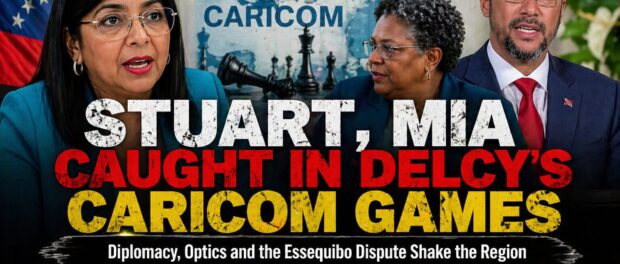
STUART, MIA CAUGHT IN DELCY’S CARICOM GAMES
By Ken Ali
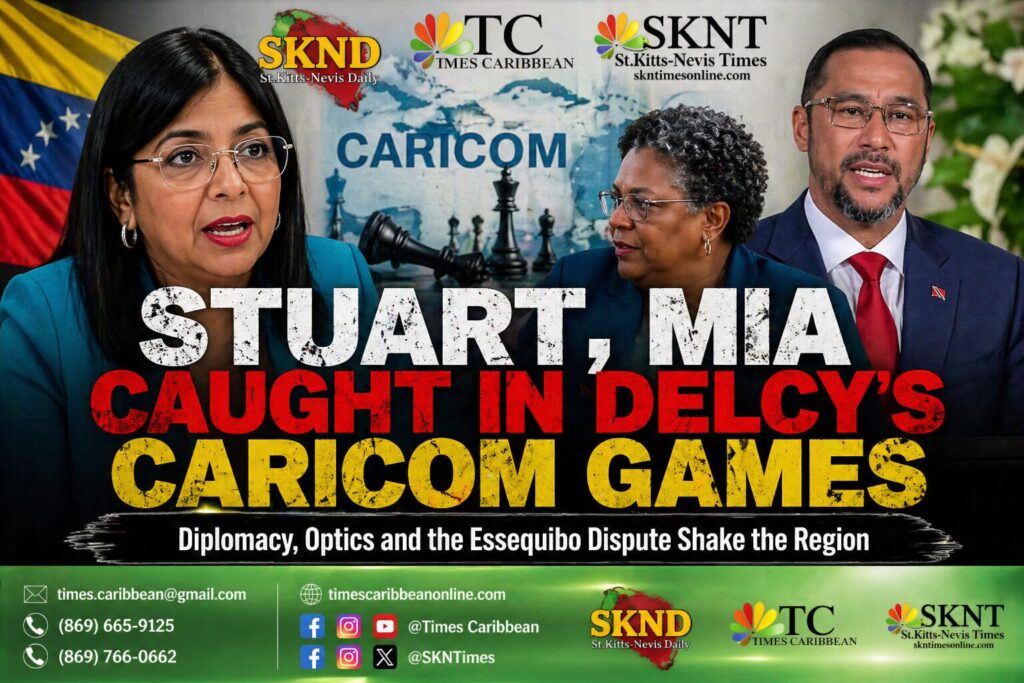
The Caribbean Community now finds itself in yet another uncomfortable spotlight, this time over the diplomatic whirlwind created by Delcy Rodríguez and her recent engagements with regional leaders.
What should have been routine bilateral meetings have instead exposed familiar weaknesses inside CARICOM — inconsistency, division, and an inability to project a clear collective position when tested by geopolitical pressure.
Rodríguez’s latest regional outreach came just days before oral hearings at the International Court of Justice over the long-running Essequibo controversy. That timing was no coincidence, critics say. It was strategic diplomacy designed to build optics, goodwill, and perhaps soften resistance in a region that has often struggled to act with one voice.
Among those drawn into the debate was Mia Mottley, one of the Caribbean’s most internationally recognised leaders. Rodríguez met Mottley in Barbados this week for talks centred on energy, trade and cooperation, including Venezuelan invitations for investment in oil and gas production.
Yet critics argue that while economic discussions proceeded, the wider political symbolism of the visit could not be ignored. Guyana objected strongly after Rodríguez wore a pin depicting Essequibo as Venezuelan territory during official meetings — a gesture Georgetown viewed as provocative and inappropriate amid an active legal dispute.
That protest reportedly prompted direct correspondence from Irfaan Ali to Terrance Drew in his capacity as CARICOM Chair. CARICOM later reaffirmed support for Guyana’s sovereignty and cautioned against attempts to legitimise claims through regional platforms.
Elsewhere in the region, Rodríguez also visited Dickon Mitchell, further expanding Venezuela’s diplomatic footprint at a moment when Caribbean governments are balancing economic interests with territorial principles.
Then there is Stuart Young, whose reported outreach to Caracas has triggered speculation back home about political ambitions and positioning. In regional politics, optics matter — and photographs often speak louder than communiqués.
The deeper issue, however, is not Rodríguez herself. It is CARICOM’s recurring struggle to define common strategic interests when member states face competing pressures. Energy security, trade access, diplomatic courtesy and territorial solidarity do not always align neatly.
That leaves the region vulnerable to being outmaneuvered by larger, more disciplined actors who understand timing, leverage and symbolism.
For all the speeches about Caribbean unity, this latest episode has again shown how fragile that unity can appear under pressure.
If CARICOM wishes to be taken seriously on the world stage, it must become more than a talking shop reacting after the fact. It must anticipate, coordinate and stand firmly on principle before outside players set the agenda.
Because right now, many across the region are asking a troubling question:
Who is really running the game?
















Leave a comment
You must be logged in to post a comment.